Get Full Government Meeting Transcripts, Videos, & Alerts Forever!
Get email alerts on the Tourism Economy topic
No spam. Unsubscribe anytime.
Visitor and Convention Bureau reports stronger web traffic, steady lodging-tax reserves
Summary
The North Bend Visitor and Convention Bureau presented a semiannual report showing an $84,000 rainy-day fund, planned additional contributions this fiscal year, marketing spending of roughly $800,000–$900,000, and digital campaign gains tied to the Denver–OTH flight.
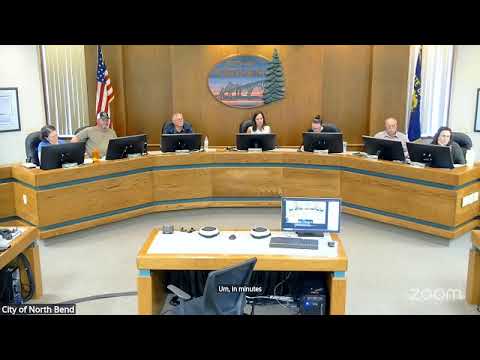
Janice, a representative of the Visitor and Convention Bureau, told the North Bend City Council that the bureau’s semiannual review shows a conservative budget approach, steady carryover and measurable returns from recent digital marketing.
The bureau currently holds approximately $84,000 in a rainy-day fund created from lodging-tax receipts; Janice said the bureau plans to add about $53,000 this year until the fund reaches $200,000, at which point contributions will pause until the fund is used and then replenished. She said the bureau expects carryover to be closer to $300,000 once all receipts are finalized after the audit that will close the last fiscal year in late October.
The VCB’s consolidated budget anticipates roughly $1.4 million in expenditures for the visitor-convention side of its operations, with marketing accounting for about $800,000–$900,000 and the remainder covering administrative costs. Janice said the bureau receives transient lodging tax (TLT) funds not only from the City of North Bend but also from Coos Bay, the Coquille Indian Tribe and Coos County for the area around Charleston.
Janice cited third-party research from Dean Runyon and Associates showing that visitors spent about $147,300,000 in the three communities the VCB serves in 2024, supporting roughly 2,100 jobs; for Coos County overall she said visitor spending was $335,900,000, which supports about 3,800 jobs. She said the bureau estimates its marketing influences about 15% of the spending in the three communities and that “for every dollar that the Visitor and Convention Bureau spends to market our area, we bring $26 back to our businesses and to our communities.”
Janice reviewed digital campaign performance tied to the seasonal expansion of the Denver–OTH flights. She said the Denver marketing campaign—run April through August—drove about 11,000 visits to a dedicated landing page and 307 click-throughs to United Airlines’ booking page. She reported Denver-origin visitors to the bureau’s site rose from about 330 in the earlier quarter to 5,991 after the campaign, an increase she characterized as a roughly 1,600% jump. Airport data Janice referenced showed a reported increase in Denver flight passengers from 2,929 on twice-weekly flights to more than 8,000 on daily service through July, a 173% year-over-year increase.
The VCB said it has shifted some ad spending into targeted ‘buckets’ to promote cultural offerings, forest bathing, mountain biking and multi-night visits (“make a week of it”). Janice described measurable uplifts: a cultural campaign produced a 2,000% year-over-year increase in page visits for that content; a forest-bathing push produced a 1,300% increase year over year; and a winter mountain-biking campaign saw about a 300% increase.
Janice also previewed annual programs, including the third year of holiday-light shuttle service where sponsors cover bus costs; she said the bureau secured $23,000 in committed funds for shuttle buses (Friday–Sunday nights plus four holiday nights), and reported prior shuttle ridership of about 4,000 riders in the first year and 4,400 the next year.