Get Full Government Meeting Transcripts, Videos, & Alerts Forever!
Get email alerts on the Parks Accessibility topic
No spam. Unsubscribe anytime.
Shoreline council backs 70-year target for park ADA transition plan, asks staff to return with resolution
Summary
Consultants and councilors discussed a draft Park Facilities ADA Transition Plan that sets a 70-year funding target (about $300,000 per biennium, roughly 9–10% of General Capital funding). Councilmembers voiced support and asked staff to return with a resolution for Oct. 6; the plan will be placed on a future consent calendar.
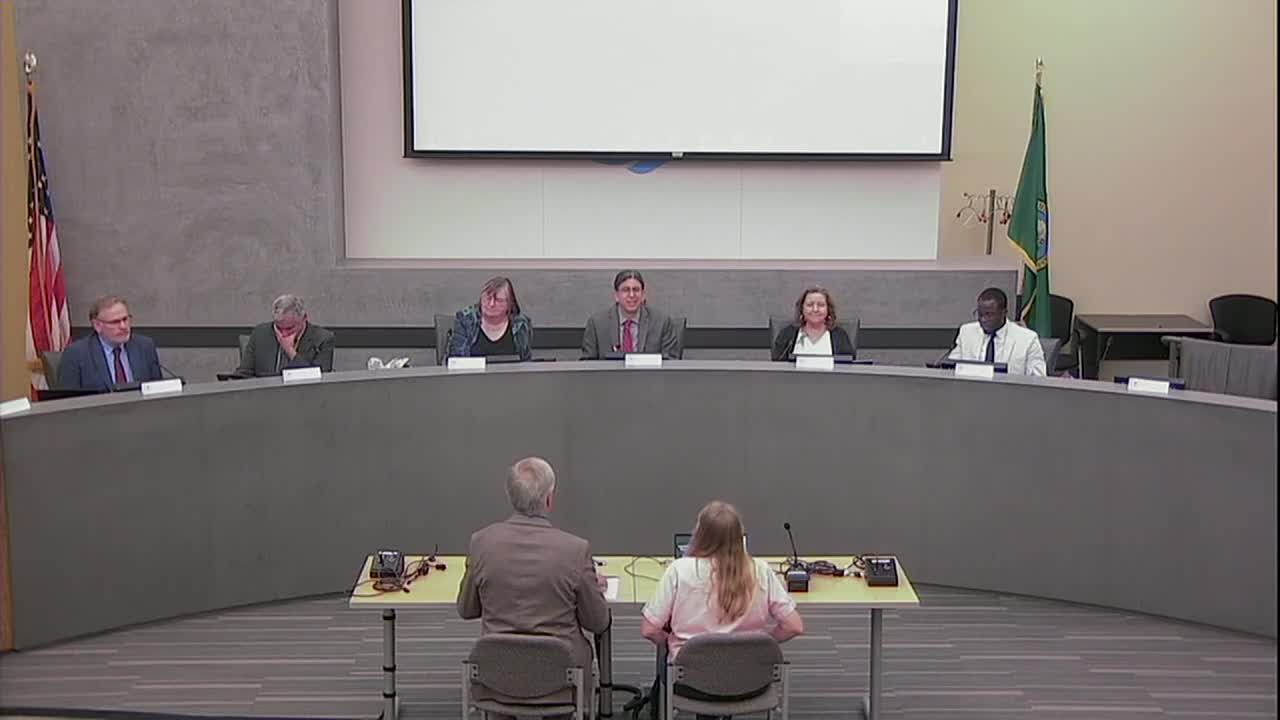
The Shoreline City Council on Sept. 22 heard a staff presentation on the draft Park Facilities ADA Transition Plan and signaled support for a 70-year funding target to complete the city’s park accessibility improvements.
Laurie Strauss, an architect with Design to Last, and Randy Witt, also with Design to Last, reviewed edits made since the council first saw the draft in August and described the plan’s updated funding strategy and ongoing public-comment process. "We settled on a recommendation of using a target of 70 years to complete the projects in the program," Witt said, characterizing the target as a long-range, flexible goal tied to biennial revenues.
The plan sets a target funding level that the consultants described as a little over $300,000 per biennium and roughly 9–10% of available GenCap (general capital) funds if the program runs the full 70 years. Strauss said the plan also adds a grievance procedure, clarifies how progress will be tracked, and frames the plan as a living document to be updated periodically.
Why it matters: the plan lays out the city’s multi-decade approach to bringing park facilities into compliance with the Americans with Disabilities Act and with local equity goals. Councilmembers said the plan’s flexibility and the funding target give staff direction for embedding accessibility work into capital projects, seeking grants, and pursuing legislative funding.
Councilmember Ramsdell called the plan a “fantastic evaluation” that starts to address longstanding accessibility needs and said she would support the proposal. Deputy Mayor Mark and other councilmembers urged staff to minimize repeated park disruptions by bundling ADA work into larger bond projects and capital improvements. Parks staff said the approach would embed ADA improvements into existing capital projects when practical and use grants or fluctuating REIT (real estate excise tax) receipts to accelerate work in stronger funding years.
The council did not adopt the plan on Sept. 22. Instead, staff asked the council to support the 70-year target and to provide feedback; staff will return with a resolution (listed as Resolution 522) for council action on Oct. 6. Councilmembers also agreed by general consent that the resolution, when it returns, may be placed on the consent calendar.
Costs and timing: consultants and staff emphasized the plan’s long timeframe and built-in flexibility. Staff said the plan assumes some years will be heavier and others lighter depending on REIT receipts and grant awards, and that embedding improvements in planned capital projects could reduce net new costs in some years. The consultant and parks staff described the $300,000-per-biennium figure as approximate and subject to future council and budget decisions.
The council’s next steps are review of the resolution on Oct. 6 and, if adopted, iterative inclusion of ADA work in future biennial budgets and capital project scopes.