Get Full Government Meeting Transcripts, Videos, & Alerts Forever!
Get email alerts on the Early College Expansion topic
No spam. Unsubscribe anytime.
Whites Creek cluster outlines K–12 pathway after first cohort earns associate degrees
Summary
Leaders from the Whites Creek Early College cluster told the Metro Nashville Public Schools board the embedded early college model has expanded to health sciences pathways and produced 23 students who graduated with both a high school diploma and an associate's degree; district leaders described funding, partners and program supports.
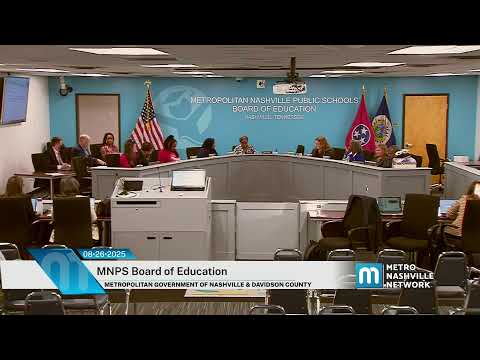
At a Metro Nashville Public Schools board meeting, Whites Creek Early College cluster leaders described how a K–12 pipeline of AVID-based supports, dual enrollment and partner relationships has allowed students to graduate with college credit or an associate's degree while enrolled in high school.
Chief of Strategy Sarah Chan told the board the district has increased early college pathways and highlighted the state accountability metric that motivates part of the work. "Tennessee has a, new measure of accountability that we call the Tennessee ready graduate status," Chan said, explaining the multiple ways a student can qualify as a "ready graduate," including through ACT scores, EPSOs (early postsecondary opportunities), industry credentials or ASVAB results.
The Whites Creek cluster demonstrated how the district’s embedded model runs from pre-K through high school, using AVID (Advancement Via Individual Determination) strategies to prepare students and dedicated campus spaces and partner instructors for college coursework. "At Whites Creek High School last year, we had 23 college graduates that graduated last year," Melissa Brooks, executive principal of Whites Creek High School, told the board, referring to students who completed an associate's degree at the same time as their high school diploma.
Why it matters: district leaders said the embedded early college model reduces family cost and shortens the time to a bachelor's degree by preserving transfer credits. Chan said MNPS covers costs that state grants do not, "including the cost of books, summer tuition, and other fees" for students who participate in dual enrollment and early college courses.
Supporting details and partners: Chan and district staff identified Nashville State Community College as a principal partner and said new health-sciences early college programs would begin at Pearl‑Cone (referred to in the presentation as Pearl Cone) and Maplewood high schools, joining existing pathways at White's Creek, Cane Ridge and Glencliff. District staff said one more site will be announced soon. The presentation described three delivery models for college coursework: courses taught by a Nashville State instructor on MNPS campus, virtual courses, or MNPS teachers who meet college adjunct credentials and teach dual-enrollment classes on campus. Schools have also repurposed campus space (sometimes outfitted with partner support) to give students a college-like classroom experience without daily travel to a college campus.
Access and scale: Whites Creek leaders said the early college option is based on student and parent choice, with students typically electing to continue in the program during their sophomore year and taking more college-level courses in junior year. Whites Creek staff reported roughly 50–55 juniors currently enrolled in the program, which the school estimated is "a little over 20%" of the junior class. District staff noted that the early college model at zone high schools has grown since an initial pilot in 2021; Whites Creek’s first cohort of simultaneous high school and associate-degree graduates completed in 2025.
Instructional supports and outcomes: AVID strategies (writing, inquiry, collaboration, organization, reading) were described as a core academic lever. District staff reported that students who complete early college programs are more than twice as likely to complete college degrees, citing national research on early college outcomes. The district said an associate's degree requires roughly 66 credit hours.
Questions from board members focused on student selection, access to college campuses and which credentials count toward state "ready graduate" status. District staff confirmed students may earn EPSOs through AP, dual enrollment, industry certifications and other recognized options; they said the state’s ready-graduate rules allow multiple pathways.
Looking ahead: district leaders said they will expand embedded early college pathways into additional high schools and continue to strengthen AVID practices and partner relationships to increase the number of students who graduate with college credit or an associate's degree.