Get Full Government Meeting Transcripts, Videos, & Alerts Forever!
Get email alerts on the Housing Development White Junior High topic
No spam. Unsubscribe anytime.
Lapeer workshop reviews incentives, zoning tools for reuse of White Junior High site
Summary
City staff described financing tools developers prefer — including low-income housing tax credits and housing tax increment capture — and presented conceptual site layouts for the city-owned White Junior High property. Commissioners and residents debated density, homeownership versus rental models and how much tax incentive the city should offer.
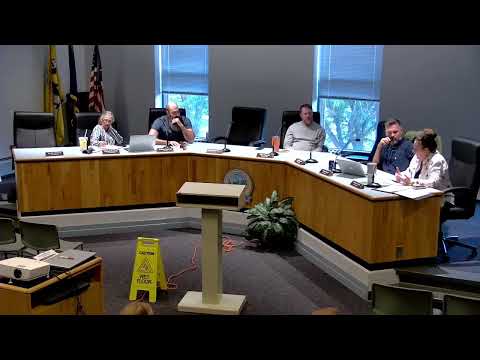
LAPEER, Mich. — City staff briefed the City Commission and members of the public on financing tools, zoning options and conceptual site plans for redeveloping the city-owned White Junior High property during a housing workshop Wednesday night.
The session, led by Denise Soldensky, director of housing for the City of Lapeer, outlined incentives developers typically seek — chiefly low-income housing tax credits (LIHTC), housing tax increment financing (HTIF) and payment-in-lieu-of-taxes (PILOT) agreements — and the tradeoffs those tools create for municipal revenue and long-term property stewardship.
“I'm Denise Soldensky, and I work with the department the housing department for the city,” Soldensky told commissioners and attendees as she summarized meetings with six developers and explained basic income bands used in affordable housing finance. The presentation included example area median income (AMI) thresholds used by developers: a four-person household at roughly $30,300 (30% AMI), $50,500 (50% AMI), $80,800 (80% AMI) and $121,200 (120% AMI).
Why it matters: The White Junior High parcel is city-owned and centrally located, so the commission could shape whether future housing there is owner-occupied starter homes, workforce housing up to 120% AMI, or rental developments aimed at households at 30–80% AMI. The choices affect tax revenue, neighborhood character and which funding sources and approvals will be required.
What staff presented and developers said
Soldensky said most developers she spoke with prefer projects that use LIHTC — a two-rate federal/state tax credit program administered in Michigan through the Michigan State Housing Development Authority (MSHDA). She described the 9% credit as competitive (with MSHDA’s Qualified Allocation Plan released in April and October rounds) and the 4% credit as bond-based and noncompetitive.
She also explained the housing tax increment financing tool introduced in 02/2023 that can capture state and/or local taxes to help finance construction and later operational repayment. Soldensky said developers expect long affordability periods tied to those incentives, often 15–45 years, and that many prospective developers build operations and management companies into their bids so they retain control of maintenance.
City Manager Will Knight framed the workshop as policy education rather than a request for immediate action. “This is the first really kinda community discussion we’re having about housing,” Knight said, noting the commission will ultimately set policy directions that staff and the planning commission would implement.
Concept plans and density options
City-contracted conceptual plans presented at the workshop showed several build-out options for the White Junior High site: roughly 32 single-family lots in one layout; a duplex concept listing 22 lots (about 44 dwelling units); and a higher-density row-house option with about 14 lots that, depending on unit count per lot, could bring the total site capacity toward the 80‑unit range. City staff emphasized these were concepts for discussion, not finalized proposals.
Public comment and commission concerns
Public commenters and several commissioners stressed concerns about large concentrated rental projects and asked for a stronger emphasis on homeownership and mixed-product proposals. Austin Fransell told commissioners: “we are turning a quarter of our community into the ghetto,” and urged caution about concentrated low-income rental development. Business owner and resident Neil Kovlik said he favors duplexes and quads rather than large apartment complexes and asked the city to include an ownership component wherever possible.
Other speakers recommended wider community outreach — including possibly a ballot question — before the commission commits to specific incentives or a redevelopment route. Lynn McCarthy, who identified herself as an incoming city commissioner and as executive director of a local commercial-real-estate organization, said she would not move into a development she considered “affordable or low income” at the proposed site and urged more public input and scrutiny.
Staff cautions and next steps
Soldensky and Knight both said environmental review language in the earlier RFQ may have deterred some developers, and that developers would still perform their own environmental assessments as a contingency in purchase agreements. Soldensky estimated roughly 450–500 subsidized rental units are in the broader Lapeer area (including about 140 units tied to the Lapeer Housing Commission), and she said any new affordable development would be subject to the financing program rules used.
Commissioners and staff identified several policy choices the commission will need to make if it wants to increase developer interest: whether to re-release the RFQ (which could give respondents QAP “points” in the March/April submission cycle), set AMI targets (for example steering a LIHTC project toward a 60% AMI target rather than 30–80%), and whether to offer local tax capture or only pursue state-level incentives. Knight and staff also recommended updating the city’s master plan and zoning ordinances so the city’s policy direction is clear to prospective developers.
Votes at a glance — formal action recorded at the meeting
A procedural motion to excuse Mayor Marklehart and Commissioner Glisten was made and passed without recorded roll-call names. No other binding decisions or ordinance votes were taken; the housing discussion was a workshop and advisory in nature.
What’s next
Staff recommended further developer outreach, possible re-release of an RFQ to match MSHDA application cycles, and use of upcoming master-plan updates to codify the commission’s policy preferences. Commissioners did not take specific authorizing votes on incentives at the workshop; instead they invited continued study, additional public engagement and follow-up reports from staff.
Ending note: The workshop was framed repeatedly as educational. City staff asked the commission whether it wanted staff to pursue any specific incentive packages or to refine site priorities; commissioners signaled interest in balancing increased housing supply with neighborhood context and revenue considerations and asked staff to return with options and more public input.