Get Full Government Meeting Transcripts, Videos, & Alerts Forever!
Get email alerts on the Water Fluoridation topic
No spam. Unsubscribe anytime.
Utilities director: tank leaks have limited fluoride treatment; temporary fix, notification plan discussed
Summary
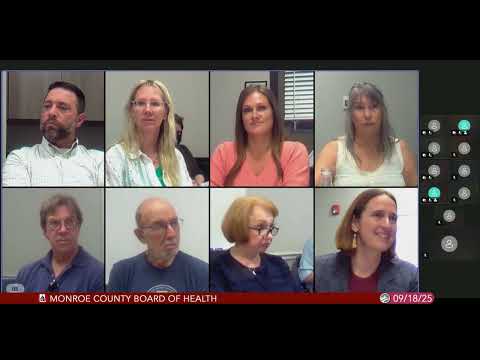
Catherine Zager, director of City of Bloomington Utilities, told the Monroe County Board of Health that leaks in concentrated-fluoride storage have prevented the utility from consistently adding the recommended 0.7 mg/L of fluoride since 2019.
Catherine Zager, director of City of Bloomington Utilities, told the Monroe County Board of Health on Sept. 18 that leaks in the utility’s concentrated-fluoride storage have prevented the system from delivering the U.S. Public Health Service–recommended 0.7 milligrams per liter of fluoride since 2019.
The utility has two storage tanks for the hydrofluoric acid used in fluoridation. Zager said the larger “bulk tank” was relined in 2022 after leaks continued, and that temporary delivery systems tried since then posed safety risks to staff. "Temporary delivery systems were tried, but they pose significant safety risks to staff. With the hydrofluoric acid, that is 1 of the most dangerous chemicals we have at our plant," Zager said.
Board members and staff discussed why the city had not earlier notified the health department, dentists or primary care providers. Sarah Reiterband, the county health officer, confirmed the utility restored reporting to the consumer confidence report for 2024 and 2025 but said fluoride was not included in the utility’s consumer report for two years before the current utilities director took office. "It was not reported at all for 2 years before I became director. We put it back in our report because we thought it was the right thing to do," Reiterband said.
Zager said the utility is testing system components to decide whether additional relining of the 20-year-old tank will be effective and is exploring alternatives if relining is not feasible. "Our goal is to have a safe, temporary, cost effective solution finished by the 2026 so that we can safely continue the use of fluoride," she said. Zager also said a larger capital improvement project to overhaul the chemical building is planned for 2027 and that work is included in a pending rate case that already passed the Utility Service Board and is under consideration at city council and the Indiana Utility Regulatory Commission.
Board members pressed for clearer notifications to the health department and dental and primary care communities while the utility works on a solution. One board member recommended that the utility notify the health department when fluoride returns to target levels; Zager said she can implement internal notification processes and that a formal resolution from the board would create a documented expectation for future directors. "I am happy to implement internal processes to make sure that happens. But I do think it would be nice to have a resolution, and I think that would be great to bring this board and our board together," Zager said.
Several clinicians on the board raised concerns about children who may have had lower fluoride exposure for several years and urged the health department to coordinate distribution of guidance to dentists, pediatricians and other primary-care providers about topical or prescription fluoride options. Reiterband and board members discussed drafting a short advisory the health department could send to local dental and pediatric practices; Reiterband offered to prepare wording for dissemination through professional contact lists.
The utility said it will continue reporting fluoride minimums, maximums and averages in the annual consumer confidence report and has committed to present that report at a regular Utility Service Board meeting to improve public understanding. The board encouraged its members to attend upcoming utility board meetings for additional briefings on the consumer confidence report and the chemical-building capital plan.
Next steps: the utility will continue component testing, pursue a monitored temporary system aimed for 2026, advance a 2027 capital project for a comprehensive rebuild and work with the health department on notification and outreach plans. The board discussed drafting a resolution to formalize notification expectations for future directors.