Get Full Government Meeting Transcripts, Videos, & Alerts Forever!
Get email alerts on the Land Development topic
No spam. Unsubscribe anytime.
Okeechobee commissioners adopt new rules for community development districts and amend land-development rules
Summary
The Board of County Commissioners adopted an ordinance establishing local procedures for community development districts and approved several land development regulation updates after public hearings.
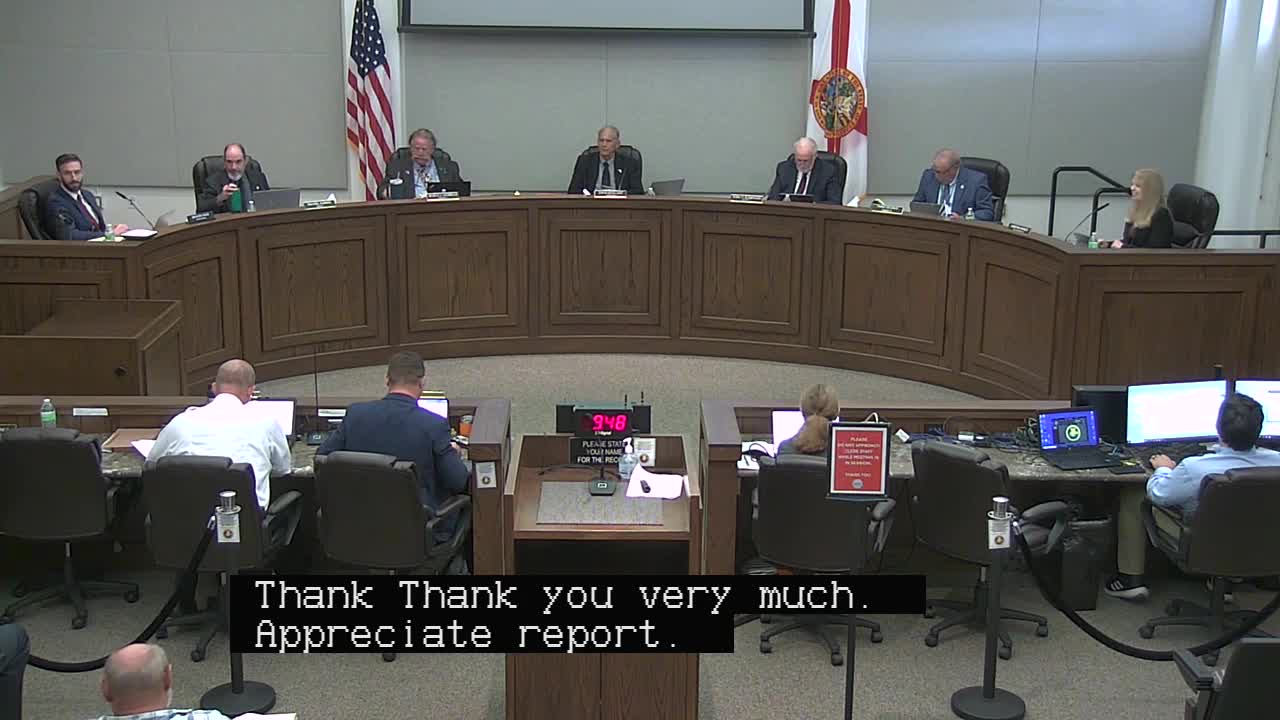
Okeechobee County commissioners on Thursday adopted an ordinance creating a local process for community development districts and approved amendments to the county's land development regulations, after public hearings and a planning-board review that had recommended denial of the CDD language.
The new ordinance — presented as “ordinance number 25 20 25-00009” in the meeting materials — establishes application requirements, review steps and certain financial disclosures for developers seeking to form a community development district (CDD) in the county. The commission also approved separate amendments that change where neighborhood commercial zoning may be located, update setback tables, shorten notice deadlines for planning-board items to 10 days and adjust the administrative review process for final plats.
County attorney Zach Good said the CDD ordinance was drafted to align with state statute and to include “best practices” used elsewhere in Florida. He described submission requirements the ordinance would require, including legal descriptions, ownership consent, proposed CDD board membership, construction cost estimates, and a detailed plan of finance describing proposed bonds and debt service schedules. The ordinance also provides for a dependent special taxing district to “activate” if a CDD becomes insolvent, so local infrastructure costs would be limited to the service area rather than general taxpayers, the attorney said.
The county’s planning board had recommended denial of the CDD ordinance, citing concern that the tool provided limited benefit to existing residents. Commissioners discussed that concern at length; several commissioners said the county should provide a transparent process and criteria rather than “stick our heads in the sand” as developments seek alternative financing tools. Harold Baxter, a member of the public, said CDDs can ensure maintenance obligations and assessments appear on property tax bills and argued that can improve long-term upkeep compared with some homeowners associations.
After discussion, the board voted unanimously to adopt the CDD ordinance. Commissioner Sumner moved to adopt the ordinance; Commissioner Burrows seconded, and the motion passed unanimously. The board also unanimously approved the related land-development regulation amendments after a separate public hearing and brief discussion.
The county attorney and planning staff said the local ordinance does not change the state statutory framework that enables CDDs; it creates local application and review procedures, fees and information requirements so county staff and decision makers can evaluate proposals and hold applicants to local standards. County staff said applicants will still need to pursue required permits and entitlements through the usual technical-review, planning-board and commission hearings.
Commissioners said the action is intended to give the county tools to review proposals and protect taxpayers and that staff and counsel will monitor future applications for needed adjustments.