Get Full Government Meeting Transcripts, Videos, & Alerts Forever!
Get email alerts on the Special Provisional Use Crematorium topic
No spam. Unsubscribe anytime.
Neighbors press commission to deny crematorium use; commission tables decision for more emissions data
Summary
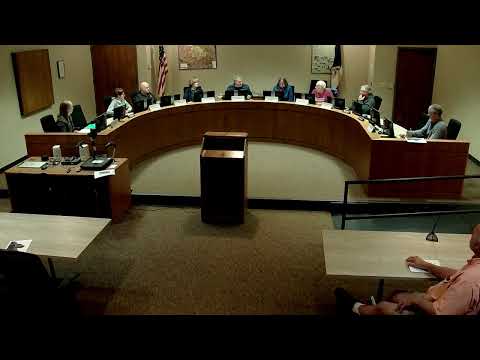
Residents opposed to a proposed crematorium addition at 218 Second Street SE told the planning commission they were concerned about emissions, odors and property values. The commission voted to table a recommendation to the Board of Adjustment until Oct. 2 to allow the applicant to provide additional emissions information.
Residents who live adjacent to 218 Second Street Southeast urged the Waverly Planning and Zoning Commission on Sept. 4 to deny a special provisional use request to allow a crematorium addition to an existing funeral home. After extended public comment and discussion, the commission voted to table its recommendation to the Board of Adjustment until Oct. 2 to allow staff and the public time to review additional emissions testing and product data.
Emily Donski, who identified herself as living at 112 Second Avenue Southeast and "directly across the street from the proposed crematorium project," said she had "major concerns regarding the construction of the crematorium" and asked the commission to deny the special provisional use. Donski cited health worries and pasted language from public-health sources in her remarks, saying emitted pollutants "can even include polychlorinated dibenzo p dioxins" and that such pollutants "are highly toxic, causing a range of serious health problems."
Several other neighbors echoed concerns about air quality, odors and property values. Gary Sainy, who lives at 91 Second Avenue Southeast, said residents had not been adequately informed and called the timing "railroaded through pretty quickly." Destiny Kramer, manager of Waverly Historic Lofts (201 First Street Southeast), said the property provides 34 apartments, including a newborn and elderly residents, and said she was "very concerned for the air quality" and for the complex's reputation as affordable housing.
Representing the applicant, Ryan Tucker, one of the funeral home's owners, described the proposal as part of a feasibility study and said the business performs about "around a 100 cremations a year." He said the proposed on-site crematory is a two-chamber system with safeguards and remote monitoring provided by the manufacturer, and that the stack would be modest compared with industrial portrayals; he said the stack "sticks out of the roofline" about "5 or 6 feet" as a visual estimate.
Staff noted the special provisional use process is the required review path for funeral homes, mortuaries and crematoriums. City staff and several commissioners focused discussion on emissions data and whether the manufacturer test results and monitoring plans were sufficient. One commissioner suggested the item should be tabled to allow submission and review of additional product testing and state-monitoring details.
A motion to recommend approval of the special provisional use was moved but failed for lack of a second. Later the commission voted to table the application until the Oct. 2, 2025 Planning and Zoning meeting to allow time to gather more emissions information; that motion carried on a voice vote with no recorded opposition. The commission’s recommendation will be included in materials provided to the Board of Adjustment; the Board of Adjustment is the body that makes the final decision on a special provisional use.