Get Full Government Meeting Transcripts, Videos, & Alerts Forever!
Get email alerts on the Public Safety Fireworks topic
No spam. Unsubscribe anytime.
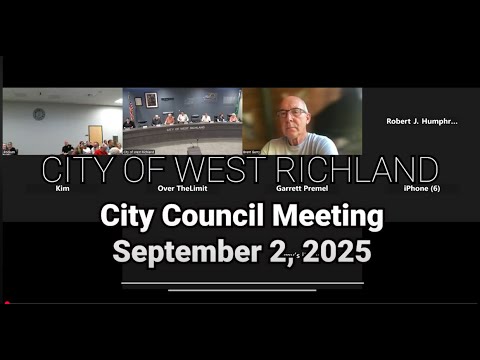
West Richland hears fire district briefing as residents press city to curb aerial fireworks after July 4 blazes
Summary
Benton County Fire District 4 told the West Richland City Council that July 4 weekend strains regional firefighting resources and prompted multiple large responses; dozens of residents urged the council to restrict aerial fireworks sales and use, citing property damage, evacuations and public-safety risks.
Fire Chief Paul Carlisle of Benton County Fire District 4 briefed the West Richland City Council on the district’s staffing, call volumes and July 4 operations, telling the council the holiday has become the region’s most resource-intensive event and often leaves responders stretched thin.
“The July 4 is the most significant event for the fire district that is human caused or we know it's happening in advance,” Fire Chief Paul Carlisle said, outlining multi‑day staffing plans, overtime use and a four‑year average of roughly 20–21 July‑4 responses in the region. He said the district covers roughly 52 square miles and responds to about 2,200 calls per year, 65–70% of which are EMS related.
The briefing cited a 144% increase in annual call volume from 2010 to 2024 and said last year’s totals included 135 fires, about 1,526 rescue/EMS calls and 375 “other good intent” responses. Carlisle described operational changes used during the holiday, including “category 4” dispatching that sends a single apparatus when regional resources are depleted and reliance on automatic and mutual aid among neighboring departments.
Why it matters: Residents framed the city-level policy choices — sales, permitted days and enforcement — as matters of public safety and property protection. Dozens of speakers at two public‑comment periods said this year’s combination of dry fuels, wind and widespread aerial fireworks created a pattern of dangerous ignitions, delayed emergency response and repeated evacuations.
What residents and the fire chief described
- Chief Carlisle said the district often staffs 24 personnel during the holiday period (three duty chiefs, three officers, 15 firefighters and two logistics staff on peak days) and reported single evenings in which dispatchers issued a Category 4 dispatch every 88 seconds during the busiest period, regionwide. He said the district was unable to send units to some commercial structure calls because all units were committed.
- Several residents described near‑house fires, burned fences, roofs struck by falling firework debris and at least one evacuation where people packed essential items and pets and left their homes. James Golovich and Louis Golovitch described two separate July 4 fires on South 30th Avenue; Golovich said his family evacuated after the early blaze and that the fire department arrived about 10 minutes after the fire started.
- Multiple speakers said aerial shells, rockets and mortars landed on private property, parks and public streets and that bystanders sometimes blocked streets or used pallets as improvised ignition stands. Chief Carlisle and other speakers said people lighting in streets or blocking access slowed or complicated response in some instances.
- Residents urged the city to prohibit aerial fireworks, shorten the allowable period for consumer fireworks to a single day, suspend the municipal noise exemption for July 4 and require stronger enforcement and liability for people whose fireworks cause fires or property damage. Several asked that the city require sellers to limit sales to residents only.
Council response and next steps
Council members asked detailed operational questions about staffing, mutual aid and whether the district investigates fire origins. Carlisle said the district often relies on law enforcement (sheriff or police) to hold investigative jurisdiction and that many field ignitions are consumed before cause can be determined; he said video or witnesses make attribution more likely.
Council members and staff said they were listening and that the council would take the matter up in coming months. Mayor Pro Tem Fred Brink said he and other council members plan to pursue discussions — including potentially with neighboring jurisdictions — to seek changes that reduce risk and respond to the level of community concern.
What the record shows and gaps
The presentation included a specific breakdown of July 4 operational hours, man‑hours and call counts; Carlisle said three regional “category 4” escalations occurred and that Baywide mutual aid kept the region functioning. Residents provided multiple first‑hand accounts of fires, property damage and personal disruption; several said they had submitted videos to the city and urged follow‑up. The transcript shows repeated calls from residents to prohibit aerials and to more strictly enforce existing rules.
Ending
Council members acknowledged the volume of public comment and said they will schedule further work on fireworks policy and enforcement. Chief Carlisle recommended continued public education and noted the district had staff injuries during the July 4 responses but no lost equipment. Residents left the meeting urging expedited council action.