Get Full Government Meeting Transcripts, Videos, & Alerts Forever!
Get email alerts on the Education Vouchers Litigation topic
No spam. Unsubscribe anytime.
Moscow School District votes 4-1 to join lawsuit challenging Idaho House Bill 93
Summary
The Moscow School District Board of Trustees authorized the district to join multi‑party litigation challenging the constitutionality of the Idaho parental choice tax credit enacted in House Bill 93 and to execute an engagement letter with attorney Holly Troxell; the board voted 4–1.
The Moscow School District Board of Trustees voted 4–1 on Sept. 16 to authorize the district to join as a petitioner in multi‑party litigation challenging Idaho House Bill 93, the parental choice tax credit, and directed the superintendent to execute an engagement letter with attorney Holly Troxell with suggested edits.
Board members said the aim of the action is to seek a court ruling on whether the tax‑credit program conflicts with the Idaho Constitution and to prevent state funds from being distributed to private schools before the constitutionality question is resolved. The board’s vote followed 90 minutes of discussion about likely enrollment and fiscal impacts, the legal basis for a challenge and the practical implications of joining the suit.
The motion, read aloud during the meeting, authorizes the district "to join as a petitioner in litigation challenging House Bill 93, filing of the petition substantially in the form presented to the board and filing of other necessary memoranda, briefs and pleadings in furtherance of said litigation," and directs the superintendent to "execute all appropriate documents and take all necessary steps in furtherance of the foregoing, including but not limited to execution of the engagement letter with Holly Troxell as presented to the board with the suggested amendments." The motion was approved 4–1.
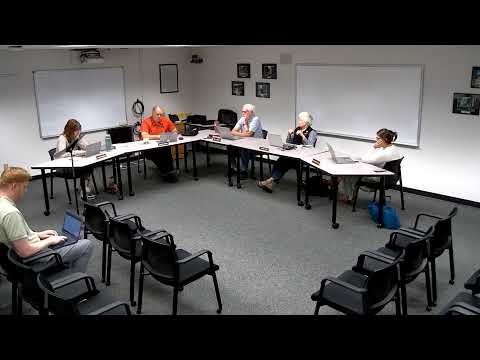
Clerk: "There are 3 trustees in person and 2 trustees attending online. It is determined that a quorum is present." The board met pursuant to Idaho Code sections 33‑5‑10 and 74‑2‑202(b).
During discussion, outside counsel present for the petition described the action as a pre‑implementation challenge intended to block the program from distributing funds until a court resolves constitutional questions. Counsel Brandon (identified in the meeting as outside counsel assisting with the brief) said the goal is to get "a definitive statement on the constitutionality of this program before those funds go out," and added that "once the horse is out of the gate, it's really hard to get it back in the pen."
Trustees raised several concerns and lines of inquiry during the meeting: how the measure would affect enrollment; whether homeschooling or parent‑led schooling pods could exploit the credit; how to quantify financial impact to a single district; and whether the district would face political retaliation for entering the litigation. Board members noted the measure’s potential to divert public funds to private and parochial schools, and discussed the uniqueness of the Idaho program as a refundable tax credit rather than a simple tax exemption or scholarship deduction.
Legal counsel present provided several clarifications recorded in the meeting: parents who directly provide instruction to their own child cannot claim the credit for tuition; the legislation does not permit a parent to charge tuition to themselves and then claim the credit; and the refundable nature of Idaho’s credit means the state could actually disburse funds rather than only forgo tax revenue. Counsel also said other states’ experiences show such programs can expand over time, and that pre‑implementation challenges are one legal approach used to prevent funds from being distributed while constitutional questions are litigated.
Board members asked about timeline and administrative burden. Counsel said the immediate next step, if the board authorizes the filing, would be to file the verified petition and supporting brief; the court could then respond in days to weeks, and a full resolution could take a few months to several months depending on court scheduling. Counsel said there is no expected cost to the district for legal fees under the proposed engagement, and participation would not obligate district staff to travel to hearings.
The final motion passed 4–1. The board recorded no abstentions. The single nay vote was cast on the motion; the transcript does not specify the name tied to the nay vote in the roll call. The board directed the superintendent to execute documents and proceed with the filing and related pleadings.
The board’s action formally makes Moscow School District a petitioner in litigation seeking a writ of prohibition and other relief challenging House Bill 93. The verified petition and engagement letter were presented to trustees in the meeting packet; trustees discussed edits to petition language (for example, changing "severely affect" to "likely affect" regarding enrollment impacts) before the vote.
What happens next: if the petition is filed, the district will be listed as a petitioner in court filings that challenge the constitutionality of the parental choice tax credit. Counsel estimated the range for resolution could be as brief as a few weeks in urgent cases or extend to six months or more.
The meeting ended after the vote. No other formal agenda items were considered.