Get Full Government Meeting Transcripts, Videos, & Alerts Forever!
Get email alerts on the Energy Environment Tapadares topic
No spam. Unsubscribe anytime.
Young County reviews 261-page environmental report for Tapadares Energy project, places copy in public record
Summary
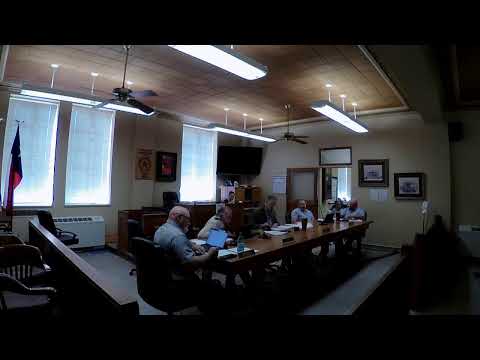
The Young County Commissioners Court reviewed an environmental panel analysis for the Tapadares Energy project and directed staff to place the document in the public record while the court compiles questions for the project's consultant.
The Young County Commissioners Court reviewed an environmental panel analysis for the Tapadares Energy project and directed staff to place the document in the public record while the court compiles questions for the project's consultant.
The report, described at the meeting as approximately 261 pages, was submitted to the county and discussed during the court's public comment period and agenda item for the project. Commissioners said the report appears to be prepared by outside consultants and repeated concerns from residents about potential impacts, including effects on migratory birds, drainage and local land use.
Commissioners and members of the public emphasized that the environmental analysis has been filed with the state and that state agencies retain primary review and enforcement authority. Court members said the county does not have in‑house engineers, biologists or other specialists to reproduce or verify the report's technical findings and therefore intends to rely on the state review process while preparing local questions for the consultant.
The court asked that the report be stamped and a copy be made available for public inspection. Court members encouraged residents and commissioners to read the report, compile questions and submit them through the court so the county can forward them to the consultant. Commissioners discussed holding a public hearing if the developer proceeds; the court noted that, should county action be required, a public hearing would be scheduled in the commissioners' court and that town‑hall style meetings could be held in other parts of the county to accommodate residents.
Court members also asked the consultant and project team (identified at the meeting as the developer and consultant; the transcript references "Titus" in discussion of project coordination) to clarify the report's start date, the consultants' qualifications and whether the study included a full annual cycle of wildlife and migratory data. Commissioners said they expect a debriefing from the developer's consultant and planned to submit a consolidated list of questions to the project team.
No formal regulatory decision or county permitting action was taken at the meeting. The court's actions at this session were limited to accepting a copy of the analysis into the county's public record and instructing staff to collect written questions for the consultant and to notify the public about future opportunities to comment.
County officials urged residents with concerns about runoff, drainage or wildlife impacts to submit written questions so the court can forward them in a single package to the project consultant for response. The county emphasized that any state review and approvals remain under relevant state agencies' authority.