Get AI Briefings, Transcripts & Alerts on Local & National Government Meetings — Forever.
Parents, students urge Prince William County Schools to restore ASL interpreter at Colgan High
Loading...
Summary
Seventeen speakers raised safety, learning and equity concerns after the division moved to replace a live American Sign Language interpreter for a deaf ASL teacher with text-to-speech technology during a trial period. Speakers asked the school board to restore the interpreter and to clarify the district's plan.
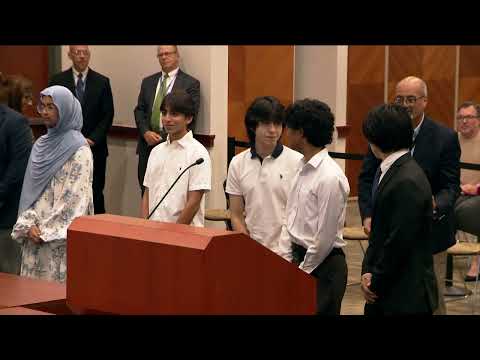
Parents, students and community members told the Prince William County School Board on Sept. 17 that replacing a live American Sign Language (ASL) interpreter for a deaf ASL teacher at Charles J. Colgan Senior High School with a text‑to‑speech device risks student learning and classroom safety.
At the meeting’s citizen comment portion, Colgan students and parents described real‑time communication problems they say emerged during a trial of the technology and urged the board to restore the human interpreter. “Restore Mr. Parks' access to communication, safety, and dignity,” said Christian Anderson, a junior at Colgan High School, referring to the teacher by last name.
The speakers said the text‑to‑speech keyboard and Microsoft Teams require the teacher to type messages and wait for a synthetic voice rather than communicate in real time through an interpreter. Parents and students argued that delay harms instruction — particularly in ASL 1 — and raises emergency‑notification concerns if announcements come through the public address system.
“Without an interpreter, mistakes can easily be made and lives would be at risk,” said Benjamin Guy, a parent, arguing the classroom currently lacks visual alarm indicators and that immediate tactile or visual alerts are a “mandatory life saving measure.” Several student speakers recounted scenarios — lockdowns and medical emergencies — in which they said the delay from typing would make it difficult for the teacher and students to respond.
Speakers framed the issue as both pedagogical and civil‑rights related. Multiple commenters referenced the Americans with Disabilities Act and Section 504 requirements for effective communication in programs that receive federal funds. “This is not just about technology. It’s about connection,” parent Marissa Medsger said, adding that ASL’s visual grammar requires human interpretation that a device cannot replicate.
Student speakers also described the change as an instance of audism, the privileging of spoken or written language over sign language. Several students said the removal of the interpreter isolates Mr. Parks from colleagues and diminishes students’ authentic exposure to ASL grammar, facial expressions and timing that are integral to learning the language.
Board members did not take public, immediate action at the meeting on the interpreter issue. The record shows the remarks were made during the one‑hour citizen comment period; no vote or personnel action about the interpreter was announced at that time.
The board and superintendent were urged by multiple speakers to make decisions based on student learning outcomes and safety rather than minimal legal compliance. The superintendent noted earlier in her report that parents must opt in to telehealth services through ParentVUE to access Hazel Health’s no‑cost mental‑health support, but she did not address the interpreter trial during her remarks.
Affected parties and Colgan students said they have collected petitions, statements and are continuing to press administrators for a resolution. The school board meeting transcript does not show a formal follow‑up motion from the board regarding the interpreter during the Sept. 17 session.
The district’s policies and any ADA determinations that led to the trial were referenced repeatedly by speakers; the board will need to clarify whether the trial is a temporary accommodation review or a permanent change and whether additional safety measures (visual alarms, staff training, written procedures) will be implemented while the district evaluates accommodations.
For now, parents and students left the meeting asking the board to restore the interpreter and to publish the criteria the district will use to evaluate whether technology constitutes an effective accommodation.