Get Full Government Meeting Transcripts, Videos, & Alerts Forever!
Get email alerts on the Strategic Plan Achieve Connect topic
No spam. Unsubscribe anytime.
Nordonia Hills board discusses curriculum, assessments and communications; moves to executive session on security
Summary
At a Sept. 22 work session, the Nordonia Hills City Board of Education reviewed progress on the “Achieve” and “Connect” parts of its strategic plan — covering curriculum maps, assessment data use and a new district communications program — then voted to enter executive session to discuss security arrangements and emergency response protocols.
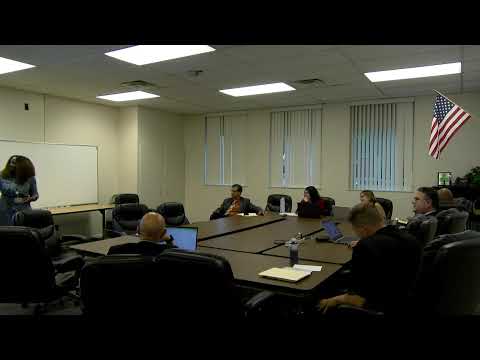
The Nordonia Hills City Board of Education met in a work session at 6:06 p.m. Monday, Sept. 22, 2025, at Northfield Elementary to review progress on the district’s strategic-plan “Achieve” (instruction and assessment) and “Connect” (communications and community partnerships) initiatives and then moved into executive session to discuss security arrangements and emergency response protocols.
District staff detailed steps taken this school year to align curriculum and data use across grade levels. Carol (staff member) said administrators and teacher teams have worked through a five-step process, begun reviewing curriculum maps and are using district and state assessment data, including the new Ohio Readiness diagnostic for middle school. “This year, we took that one step further, and I have been reviewing it with all of our teams,” Carol said, describing in-progress curriculum mapping, benchmark use and formative-assessment planning.
Why it matters: the board’s work on curriculum fidelity and data structures is intended to change classroom practice districtwide and, over time, the district’s state report-card indicators. Board members and staff repeatedly noted that some state indicators lag local practice and that results from current work may not appear in state metrics for two years.
On assessment details, staff said elementary teachers are adapting to a new K–4 benchmark (Benchmark Advance) and that the middle school was administering the Ohio Readiness assessment for the first time. A district item analysis prompted concentrated attention on number sense and algebraic readiness in grades K–12: “Specifically ended up in conversations surrounding number sense that seemed to be an area of deficiency that was kind of hindering them all the way up including into algebra 1 at the high school,” a staff member said. The district is also piloting a fidelity rubric for building administrators to guide classroom-level conversations about instructional practices.
Staff presented a data dashboard built in Power BI to help teachers and counselors track student performance and college- and career-readiness markers. The presentation referenced College Credit Plus (CCP) courses and explained that the state’s college-and-career indicator is highly dependent on graduate surveys and how CCP credits appear on college transcripts; staff warned the metric is survey-driven and therefore can lag instructional improvements by one to two years.
On communications, Sean (staff member) outlined work by a recently formed communications committee that has met three times and will meet monthly. The district has rolled out ParentSquare as a primary parent communication tool and reported early usage metrics: staff said ParentSquare is in use by 1,329 parents, the district has about 3,500 families/students, buildings have sent roughly 1,700 messages districtwide, and newsletters show a 64% open rate. The committee set a three-year goal of at least 100 community partners and reported having recruited about 20 so far. “The connections…are going to have an effect on all aspects of the strategic plan,” Sean said.
Staff said ParentSquare’s forms and translation features will be used for surveys and to make printed and electronic calendars more accessible. The communications effort also plans periodic “pulse checks,” town-hall events, volunteer outreach and family engagement nights tied to district initiatives such as Safe Decisions Week and Build-a-Bus in October.
Board discussion urged continued attention to two academic areas staff flagged for concern: high-school math (algebra/geometry) and fifth-grade science. A board member noted the district’s historical performance and cautioned that new state scoring changes had altered weightings on report-card indicators, making interpretation of current results more complex.
Before adjourning the public portion of the work session, the board voted to move into executive session to “discuss security arrangements and emergency response protocols for a public body or public office.” Meeting chair (unnamed) moved the motion and it was seconded; roll-call votes recorded at the meeting transcript included recorded “yes” votes from Mister Seymour and Miss Saadich. The board entered executive session at 6:46 p.m.; the agenda indicated a regular meeting would follow at 7 p.m. downstairs at Northfield Elementary.
Next steps described publicly include continued monthly communications-committee meetings, further development of the curriculum maps and fidelity rubric, targeted interventions on number sense and algebra, extension of Power BI dashboards to counseling staff, and the district’s plan to report progress on communications and Achieve objectives after year one of the plan.