Get Full Government Meeting Transcripts, Videos, & Alerts Forever!
Get email alerts on the School Facilities topic
No spam. Unsubscribe anytime.
School board concurs with state recommendation to build new K‑5 to replace Rendezvous Elementary
Summary
Fremont County School District #25 trustees voted to concur with the state design team's Mercer study recommendation to build a new K'0 elementary school to replace Rendezvous Elementary and to advance the project to the state select committee; the estimated request totals about $33.1 million.
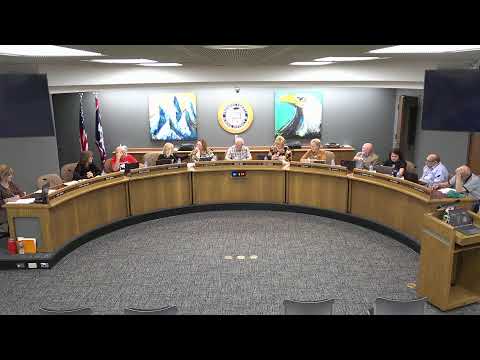
FREMONT COUNTY, Wyo. — The Fremont County School District #25 Board of Trustees voted to concur with the state design team's recommendation to construct a new K-5 elementary school to replace Rendezvous Elementary, advancing the project to the state select committee for further consideration.
The board's action endorses the Mercer study scenario A1, which the district and state consultants identified as the most cost-effective remedy for the district's elementary configuration. The recommendation calls for a new school sized for 220 students; the district's package to the state lists an estimated construction cost of about $29.9 million plus roughly $3.2 million in design fees, for a total request of about $33.1 million. Demolition funds were removed from the current request so buildings under consideration remain available pending final decisions.
District and state officials said the Mercer study is the product of a multiyear review that began with a 2019 diagnostic and included a reconfiguration to K-5 at several sites. The recent study examined multiple options: renovating existing buildings, adding onto current schools, or building a new facility on district-owned property in the same neighborhood. The state's design team and district staff presented the new-build option as the most cost-effective for the district's needs.
Board members and staff emphasized that the recommendation is a planning milestone, not a final design. Superintendent Cody (identified in the meeting as the district superintendent) and state design staff said educational programming and room-by-room design are worked out in the later design phase, when the district specifies classroom, intervention and special-education spaces and the consultants refine layout within the authorized square footage.
Board members raised concerns during debate about prioritizing facility-driven decisions over instructional needs. One trustee questioned the phrase "cost effective," saying they would prefer language that prioritized educational effectiveness. The board asked for clarity that design decisions about specific classroom types (for example, intervention rooms or special-education space) would be made during the design phase and not precluded by the study's square-foot assumptions.
State design staff told the board the Mercer package for this request includes roughly 2,533 additional square feet to reflect the district's relatively high special-education population (reported in the meeting as about 20–21 percent). Officials also noted that the state runs multi-year enrollment projections and will revisit capacity planning if local enrollment trends change.
The motion to concur with the Mercer study scenario A1 passed with no recorded opposition. The district will present the recommended scenario to the state select committee and, if accepted by the committee and appropriations process, proceed to the design phase where district educators will work with designers on final educational programming.
Votes and next steps: the board's concurrence moves the district's Mercer recommendation forward to the state select committee; the district will continue to seek approvals and will return to local stakeholders with design-level plans and cost details if the project is funded.