Get Full Government Meeting Transcripts, Videos, & Alerts Forever!
Get email alerts on the Opioid Settlement Funding Sober Living topic
No spam. Unsubscribe anytime.
Woodbury County approves $176,980.80 in opioid-settlement funds for sober-living program
Summary
The Woodbury County Board of Supervisors approved $176,980.80 from opioid-settlement funds for Comfortstone (Comfort/Copperstone) sober-living operations, a two-year commitment intended to expand housing and services for people in recovery and those returning from incarceration.
The Woodbury County Board of Supervisors on Sept. 16 approved $176,980.80 in opioid-settlement funds for a local sober-living operator after a presentation from Dr. Pam Ingram, owner of Family Access Center.
Dr. Ingram told the board her organization operates recovery residences in Sioux City — including a home at 1720 Summit and a women’s residence at 406 Twelfth Street — and partners with Hope Street of Siouxland for case management. "My name is Pam Ingram. I've lived in the Siouxland community my whole life. I'm an owner of Family Access Center, which does substance abuse and mental health," she said.
The funding will come from the county’s opioid settlement account; Ryan Erickson, board administration, reported the fund currently held about $944,000 available after a prior $125,000 allocation to District Health. Erickson also told the board that future opioid-settlement receipts are expected to continue but will taper compared with earlier, larger disbursements.
Why it matters: The supervisors framed the vote as a way to expand the continuum of care for people who are unhoused or are reentering the community from prison. Dr. Ingram said the program serves roughly "maybe a 100" people per year and provides supported housing, supervised work activities, random drug testing and links to medical and dental care. She also described plans to pursue Medicaid-reimbursable peer-support services and licensing as a substance-abuse provider to improve the program’s sustainability after county funding ends.
Board discussion centered on the term and amount of funding. Supervisors debated whether to fund the full two-year request or to spread funding over a longer period. Supervisors noted the county will receive future settlement payments but that amounts are uncertain; County Attorney James Loomis has also expressed interest in using some settlement funds for jail-based addiction and reentry interventions and may submit a request to the board.
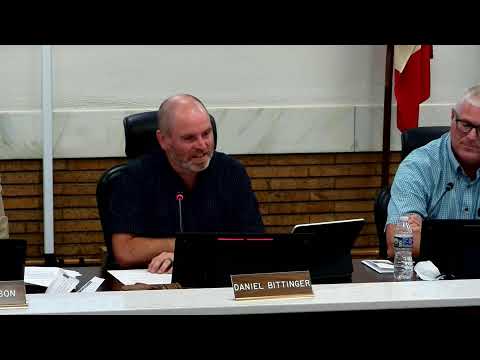
Supervisor Bittinger moved to authorize a two-year commitment of $176,980.80 to "Comfortstone Development, Sober Living Home." The motion was seconded by Supervisor Nelson and approved unanimously, 5-0. The board indicated staff would follow up with Dr. Ingram to finalize paperwork and disbursement arrangements.
Details and conditions discussed: Dr. Ingram said the program has operated without dedicated settlement funding for about four years and that the requested amount would help stabilize placements, partner with landlords to secure apartments as part of the recovery continuum, and cover operations tied to case management and resident supports. Erickson told the board that $125,000 of the settlement fund had already been allocated to the District Health Department and that additional settlement participation forms (including for the Purdue bankruptcy settlement) were on the county’s agenda or forthcoming.
The board and presenter identified sustainability measures the provider intends to pursue, including billing peer-support services to Medicaid and obtaining formal licensure to access additional reimbursement streams if county funding decreases or stops after the two-year period.