Get Full Government Meeting Transcripts, Videos, & Alerts Forever!
Get email alerts on the Public Health Services topic
No spam. Unsubscribe anytime.
Residents and health professionals urge St. Clair County to restore school clinics and keep fluoride as officials outline options
Summary
Dozens of residents, dentists and nurses asked St. Clair County commissioners Sept. 4 to reverse recent closures of school-based clinics and to reject a recommendation to stop water fluoridation. County health officials said they are weighing three options and must decide within weeks to protect $ state grant funding.
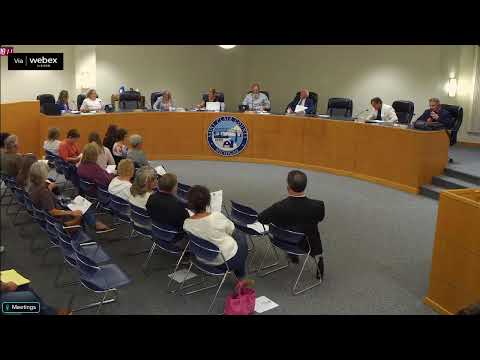
St. Clair County commissioners and health officials heard hours of public comment Sept. 4 as residents, dentists and nurses urged the county to reverse recent closures of school-based clinics and to reject a recommendation to discontinue fluoridation of the county’s public water supply.
Speakers identified closures on Sept. 1 of clinics the St. Clair County Health Department had operated or supported in Algonac, the KPAC school wellness site, Yale and Marysville. The closures, residents said, remove convenient access to sports physicals, flu shots, counseling and other preventive care for adolescents and residents in rural parts of the county.
“Fluoride is a safe and effective way to reduce decay in children and adults,” said Dr. Sherry Newman, president of the Michigan Dental Association and a St. Clair County resident. “The CDC calls fluoridation the greatest public health achievement of the twentieth century.”
The public comments reflected strong consensus among local clinicians and advocates. Retired dentist Dr. Ralph Gilhulam told commissioners he had reviewed the scientific literature and saw no credible study showing harm from community water fluoridation at levels used in the United States: “Please ask Dr. Nevin to come back to this board with one single study that shows that fluoride in the water causes any health issue,” he said.
Several speakers described direct effects from lost school and outreach services. Margo Romero, a Port Huron homeowner, said the closures will force rural parents to travel into Port Huron for routine care: “How does this decision allow these clinics to close help the people that you represent? From where I stand, it just makes no sense.”
Health department leadership described limits on their authority and a narrow set of operational choices. Liz King, the county’s health officer and chief operating official for the health department, told the committee she is committed to maintaining services but outlined three general options for the school-based clinics: take no further action and let current changes stand; identify alternate organizations to administer the grant-funded clinics; or place clinical oversight with a physician focused on primary care so the medical director’s duties would be limited to public-health medical direction.
King said the grants involved run on the fiscal year that ends Sept. 30 and the state grantor has asked the county to indicate a path forward within “the next two weeks.” She warned that, depending on the path chosen, the department could lose “close to $450,000” in revenue including billed services and Medicaid reimbursement tied to the program. King said one earlier grant round had been roughly $180,000 and that grant and contract details vary by site and year; she said precise budget impacts depend on which option the board and administration select.
Medical director Dr. Kevin Nevin had issued a memorandum recommending changes to how his medical license is used for standing orders at outreach sites; several speakers, including former county nursing staff and current clinicians, said limiting standing orders would effectively end many school-based services. King said the department has discussed alternative organizations and community partners and that some conversations were underway with Community First Health Centers and state health officials but that capacity among local providers is limited.
Commissioners pressed both staff and community speakers about alternatives, including school-district funding, use of mobile units and local clinics taking on services. Commissioner Rushing asked whether districts could contract locally for physicals and direct services. Commissioner Samasco urged staff and the medical director to work together to find a solution and said he expected collaboration rather than immediate public-action by the board: “They need to collaborate and partner on operating that facility,” Samasco said. He added that the board must follow the Michigan public-health code and give deference to credentialed professionals while facilitating a negotiated fix.
After discussion, commissioners did not adopt any ordinance or policy change at the meeting. Instead the committee directed county staff and the medical director to continue negotiating solutions and to report back at the next meeting. King told the board she would share a written options document with commissioners and that MDHHS, the state grantor, is awaiting the county’s decision on whether the county will keep the current arrangement, transfer administration of the grant, or change oversight.
Speakers repeatedly urged the board to retain community water fluoridation. Dozens of clinicians — dentists, hygienists, nurses and physicians — described fluoridation as a core preventive service that disproportionately benefits children and low-income residents. Several speakers referenced federal and state public-health guidance, including Healthy People 2030 objectives for adolescent preventive visits and the Michigan Public Health Code’s description of local health department duties such as emergency prophylaxis and vaccine distribution.
No formal vote was taken to remove or restore fluoride. Commissioner discussion emphasized process: Samasco said the board should not act quickly without reviewing legal and operational implications, while other commissioners pressed staff for near-term progress on the clinics because school was already underway.
The committee also received multiple written and verbal requests that the board investigate an advisory-board appointment and disciplinary history of a person on the county health advisory board; those concerns were raised by several public speakers but no formal personnel action was taken at the meeting.
For now, the practical deadline is administrative: King said the state grant year ends Sept. 30 and that decisions on grant administration and clinic continuity must be resolved soon if outreach clinics are to remain funded in their current form. The committee asked King, Dr. Nevin and county administration to meet, compile options and present a progress report to the board at its next scheduled meeting.