Get Full Government Meeting Transcripts, Videos, & Alerts Forever!
Get email alerts on the Public Health Fluoride Cahc topic
No spam. Unsubscribe anytime.
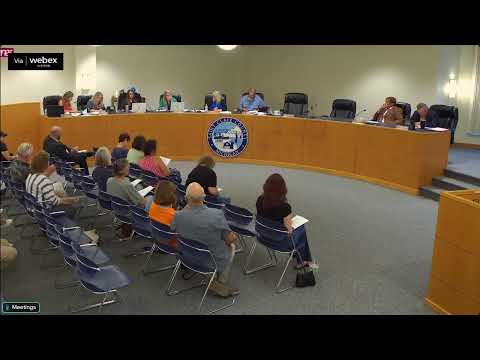
Residents and a health official debate fluoride policy and school-based health centers during St. Clair County public comments
Summary
Public commenters urged the county not to stop water fluoridation, questioned a clinical memorandum recommending withdrawal from the CAHC program, and urged preservation of school-based outreach programs amid recent teen suicides and deaths.
Several residents and a health official used the public-comment period to address drinking-water fluoridation, school-based clinical services and teen mental-health outreach.
Tim Evans, who identified himself as a long-term St. Clair County resident and a chemical engineer, urged the board not to stop fluoridating municipal water supplies. He referenced a memorandum from the county medical director, Dr. Nevin, that recommended stopping fluoride additions. Evans said the studies cited in the memorandum drew largely from research abroad and often at concentrations higher than U.S. municipal fluoridation levels; he said peer-reviewed studies in settings comparable to U.S. water systems have not shown a correlation between community fluoridation and decreased cognitive function. “The overwhelming evidence of the positive impact of fluoridation on dental health,” Evans said, “far outweighs the limited and contradicted studies showing… unproven negative impacts.”
A health-policy speaker who identified herself as Dawn Faulk presented a clinical memorandum about state-funded school-based child and adolescent health centers (CAHCs). Faulk recommended that the St. Clair County Health Department “endeavor to align its practices with the majority of local health departments across the state and reject direct CAHC funding” in favor of facilitating private community health organizations, including federally qualified health centers (FQHCs). She argued that state CAHC participation requires clinical staff to attend mandated state sessions and described those sessions as advocating topics at odds with local values; she recommended exploring space-sharing and partnerships to expand primary-care services and suggested repurposing excess clinic space in the county’s new main clinic for broader primary-care use.
Multiple commenters raised concerns about cuts to outreach services and the effect on youth mental health. Dorothy Yope, a licensed professional counselor with Macomb Family Services, said her agency offers free therapy sessions to middle- and high-school students and that routine screening tools used in teen centers identify suicidality (she referenced the PHQ screening question about thoughts of ending one’s life). She urged commissioners to consider the role of outreach and school-based services in suicide prevention while making budget and program decisions. Another speaker reflected on recent local teen deaths and called for attention to counselors and school staff.
Resident Sarah Dombrowski asked the board to address accessibility of advisory boards, noting that meeting times make participation difficult for people who work standard hours; she connected that access issue to the health-advisory process and worries that limited public participation could reduce oversight of department decisions.
No vote on fluoridation or CAHC participation took place at the meeting; the comments were delivered in the public-comment period. Tim Evans and Dawn Faulk cited a county medical-director memorandum and MDHHS policy as context for their remarks; commissioners did not announce a board-level decision on those matters during the session.