Get Full Government Meeting Transcripts, Videos, & Alerts Forever!
Get email alerts on the Police Transparency topic
No spam. Unsubscribe anytime.
Richmond council directs changes to officer-involved-shooting communications and body‑camera policy
Summary
The City Council voted to require a formal plan for communications after officer‑involved shootings, tighter schedules for public updates and limits on nonessential edits to body‑worn camera footage while directing an assessment of mental‑health supports for people affected by such incidents.
The Richmond City Council on Sept. 23 voted to direct the city manager and police to create a formal policy for communications after officer‑involved shootings, set a timetable for public updates and to study counseling and other services for people affected by those incidents.
The ordinance-like motion, introduced by Councilmember Doria Robinson, requires staff to draft a policy that includes a maximum 24‑hour window for the first press release after an officer‑involved shooting, periodic updates at least every 30 calendar days while investigations continue, and press releases that identify the agencies involved and the sequence of concurrent investigations. The motion also instructs staff to provide information about how to request body‑worn camera footage under AB 748 and how affected people can access counseling and therapeutic services.
Robinson said the package of steps should be returned to the council quickly. “The final project report with recommendations should be completed within 6 months of the executed consultant contract,” she told colleagues while reading the motion.
The council debated one provision at length: whether the city should release only annotated/edited video or make unedited, redacted footage available to the public. Richmond Police Chief French urged caution about releasing footage without context. “It would be irresponsible of us as a police department to put out body‑worn camera footage without any contextual information,” the chief said during the meeting, arguing that narrative material can reduce the spread of misinformation.
That argument clashed with comments from community activists and speakers who pressed for quicker, fuller access to raw footage. “I want to know why the body cam footage has not been released,” said Christopher Taft, a community speaker who identified himself as a member of Showing Up for Racial Justice.
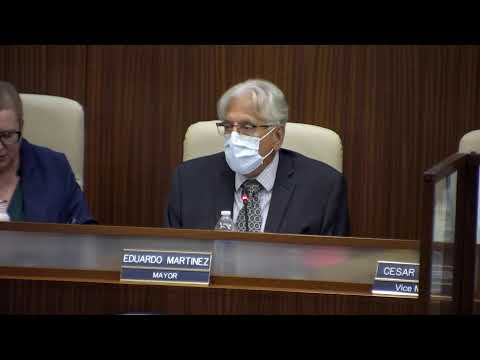
After extended floor debate and a series of procedural votes, the council approved Robinson’s motion. The final roll call on the substantive motion recorded five votes in favor and two opposed: Councilmembers Bono, Jimenez, Wilson, Robinson and Mayor Martinez voted yes; Councilmember Brown and Vice Mayor Zepeda voted no.
In addition to the communications requirements, the council directed the city manager to issue a request for proposals to identify counseling and therapeutic services for families and witnesses directly affected by officer‑involved shootings or in‑custody deaths and to produce a written assessment of mental‑health services in Richmond with recommendations to increase access. The motion asks that assessment — and the recommended service plan — be completed within six months of executing any consultant contract.
Because the motion specifically referenced state law and state practices concerning body‑worn camera access, the council instructed staff to follow AB 748 and applicable California Government Code provisions when posting footage and making redactions.
What happens next: staff will draft the proposed policy language, assemble the consultant scope of work for the mental‑health assessment and the RFP for survivor services, and return the material to the council for approval.
The council’s action frames a new, documented schedule for information releases after officer‑involved incidents while also ordering an assessment meant to expand mental‑health and counseling availability for people directly affected by those events.