Get Full Government Meeting Transcripts, Videos, & Alerts Forever!
Get email alerts on the Economic Development topic
No spam. Unsubscribe anytime.
Pataskala development committee endorses study of New Community Authority, expands housing incentive policy scope
Summary
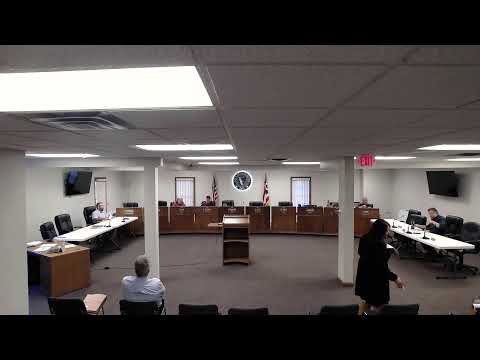
The Pataskala City development committee on Wednesday discussed revisions to the city’s housing incentive policy and directed city administration to prepare a framework for a New Community Authority (NCA) to present to council within 90 days.
The Pataskala City development committee on Wednesday discussed revisions to the city’s housing incentive policy and directed city administration to prepare a framework for a New Community Authority (NCA) to present to council within 90 days.
Committee members and staff focused on two substantive policy changes: including a 30% pilot payment tied to tax increment financing (TIF) for the Western Licking Fire District, and a proposal that the city establish NCAs on property the city owns and require incoming developers to join those NCAs.
The 30% pilot payment would return roughly 30% of the incremental tax value that otherwise would be abated under a TIF agreement to the fire district. Committee members said the Western Licking Fire District indicated a preference for a fixed share rather than developer-level negotiation. Committee members discussed additionally negotiating a separate one-mill contribution from an NCA for the fire district on a case-by-case basis; that would be distinct from the 30% TIF pilot payment and would be available only where an NCA is used.
Committee members said the city-controlled NCA model would give the city more control over appointment of board members and the use of NCA revenues. Staff noted examples of other Ohio communities that have employed city-created NCAs, including Mount Vernon and Circleville, and said NCA revenues are generally limited to public infrastructure and community facilities as set out in state law.
Members also discussed broadening the policy from a housing-specific incentive policy to a general economic development incentive policy covering residential, commercial and industrial projects. Committee members asked staff to check whether that broader policy could affect eligibility for state grants and other outside funding.
The committee voted to ask City administration and the development committee chair to prepare an NCA framework for council consideration within 90 days. The motion was seconded by Walter; the transcript records committee assent but does not provide a complete roll-call record.
Why it matters: Committee members said the changes would give the city additional economic development tools while preserving the option not to use NCAs in every development. They emphasized that NCAs add a supplemental levy (commonly described as an additional 5–9 mills) that increases the tax burden on developments that opt into an NCA and that NCA charges must be used for statutorily allowed community facilities and infrastructure.
What was not decided: Committee members did not approve any specific NCA or TIF agreement, did not set binding commitments to give operational funds to the fire district, and did not adopt a final expanded incentive policy. Staff will return with draft language and further legal and grant-eligibility analysis.
Next steps: Staff and the committee chair were directed to assemble a proposed NCA framework to bring before council within 90 days; the committee discussed aiming to return to the development committee in October to finalize the broader incentive policy for consideration this year.