Get Full Government Meeting Transcripts, Videos, & Alerts Forever!
Get email alerts on the Homelessness Vehicle Sleeping topic
No spam. Unsubscribe anytime.
Delegate pushes bill to bar local criminalization of sleeping in vehicles, cites Grants Pass ruling
Summary
Delegate Josh Cole presented House Bill 2602 to the Virginia Housing Commission work group, proposing limits on local ordinances that criminalize sleeping in legally parked vehicles and directing localities to provide temporary shelter; nonprofit and regional housing advocates urged study and statewide action amid rising enforcement since the U.S.
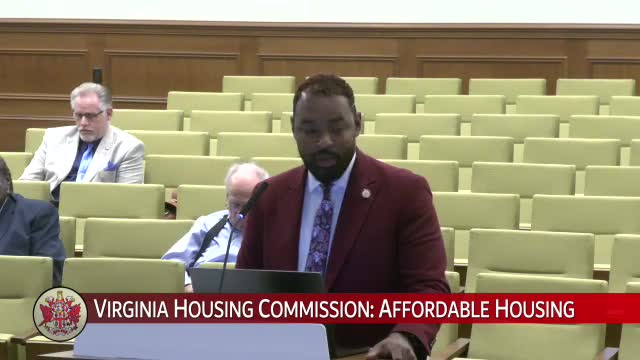
Delegate Josh Cole, sponsor of House Bill 2602, told the Affordable Housing Solutions landlord–tenant and real estate law work group on Sept. 8 that the measure would bar local ordinances that criminalize sleeping in legally parked vehicles and would require localities to make “reasonable efforts” to provide temporary shelter and authorize use of government property for temporary shelters where needed.
Cole said the bill also would restrict enforcement of public camping bans unless alternative shelter was “immediately available for a person who posed a direct threat to the community.” He framed the bill around what he described as a recent federal court development, saying, “back in 2024, the Grants Pass versus Johnson case… basically ruled and said that it’s no longer considered cruel and unusual punishment for people who are unhoused to be removed” from public spaces when shelter is not available. Cole said the legislation was laid on the table during a House committee subcommittee and asked the commission to study the issue.
Why it matters: Advocates and service providers who spoke to the work group said enforcement of local camping and vehicle-sleeping bans is rising in some Virginia localities and that criminalization can push people deeper into homelessness. They urged study of existing local ordinances, expansion of shelter capacity, and coordinated funding to reduce reliance on punitive approaches.
Experts and advocates urged study and statewide action. Isabelle McLean of the Virginia Housing Alliance told the commission the Alliance has identified at least 14 Virginia ordinances that in varying ways criminalize life-sustaining activities of people experiencing homelessness and said there are likely more. McLean cited national research noting hundreds of new ordinances in other states and warned that the Grants Pass decision has encouraged greater enforcement in some places.
Kelly Kinghorn, chief executive officer of Homeward — the regional planning agency for the Greater Richmond Region — said Virginia already has relatively low per-capita homelessness but that local service and shelter systems face capacity and funding pressure. Kinghorn gave a rough funding breakdown for her region, saying about 30% of homeless services funding came from federal sources (notably HUD Continuum of Care), about 7% from state sources (including the Virginia Homeless Solutions Program and the Affordable Housing Trust Fund), and roughly 10% from local public dollars, with the remainder from private fundraising. She told the group arresting people for sleeping outside often shifts costs to the criminal legal system rather than toward housing solutions.
Virginia First Cities executive director Kelly Harris Braxton and Virginia Poverty Law Center staff summarized local research and named a sampling of localities where ordinances are in place or proposed, including Norfolk, Bristol, Danville, Roanoke, Herndon, Hampton, Clark, and Ashland. Renee Pulliam of the Virginia Apartment Management Association asked publicly about public funding sources; McLean and Kinghorn reiterated the heavy federal share and noted the state’s shelter funding had not increased since 2014.
The work group did not take formal action on the bill. Cole said he had agreed to let the measure be studied in subcommittee this session and asked the commission to consider study and next steps. The chair said the work group would take the presentation “under consideration” and would notify Cole if it decided to act.
Ending: Members of the work group and presenters said they would share research on local ordinances and shelter capacity with commission staff to inform any future study or legislative recommendations.