Get Full Government Meeting Transcripts, Videos, & Alerts Forever!
Get email alerts on the Open Space Paving Restrictions topic
No spam. Unsubscribe anytime.
Planning Board urges City Council to reject petition that would ban paved paths wider than 10 feet in open-space zones
Summary
The Cambridge Planning Board voted 5-0 on Sept. 30 to recommend that the City Council not adopt a citizen petition that would prohibit paved ways wider than 10 feet in open-space zoning districts, citing ambiguity in the proposal and the need for local design flexibility to balance tree preservation, accessibility and multiuser safety.
The Cambridge Planning Board voted 5-0 on Sept. 30 to recommend that the City Council not adopt a citizen zoning petition that would prohibit paved ways wider than 10 feet in the city’s open-space zoning districts. The motion, made by Planning Board member H. Theodore Cohen and seconded as recorded by “Miss Berry,” produced a unanimous roll-call in favor of a negative recommendation.
The petition, submitted by a group of registered Cambridge voters, proposed amendments to Sections 4.3 and 4.4 of the zoning ordinance to classify “paved way greater than 10 feet wide” as a prohibited principal use in open-space districts. The draft language would have defined “paved” broadly to include permeable and impermeable materials and listed paths, sidewalks, driveways, courts and similar surfaces as included. The petition also contained a provision limiting increases in paved lane area within a contiguous open-space area to no more than 2% of that area within a two-year period.
Petitioners framed the amendment as an implementation step for the city’s Urban Forest Master Plan (UFMP) and a response to canopy loss and localized heat islands. Petitioner Martin McCall told the board the measure is intended to preserve mature trees, reduce impervious surface and slow high-speed travel through parks. McCall said, “Wider is faster and faster is not safer,” and cited examples such as tree loss at Danehy Park after the 2022 drought and an 18% citywide canopy decline reported in UFMP-related work.
Attorney Heather Hoffman, who also spoke for the petitioners, addressed litigation concerns raised in the staff memo and earlier public comments, saying the legal standard for a lawsuit requires standing and she found it “hard to imagine how many people are going to have a legally cognizable injury over a path in a park.”
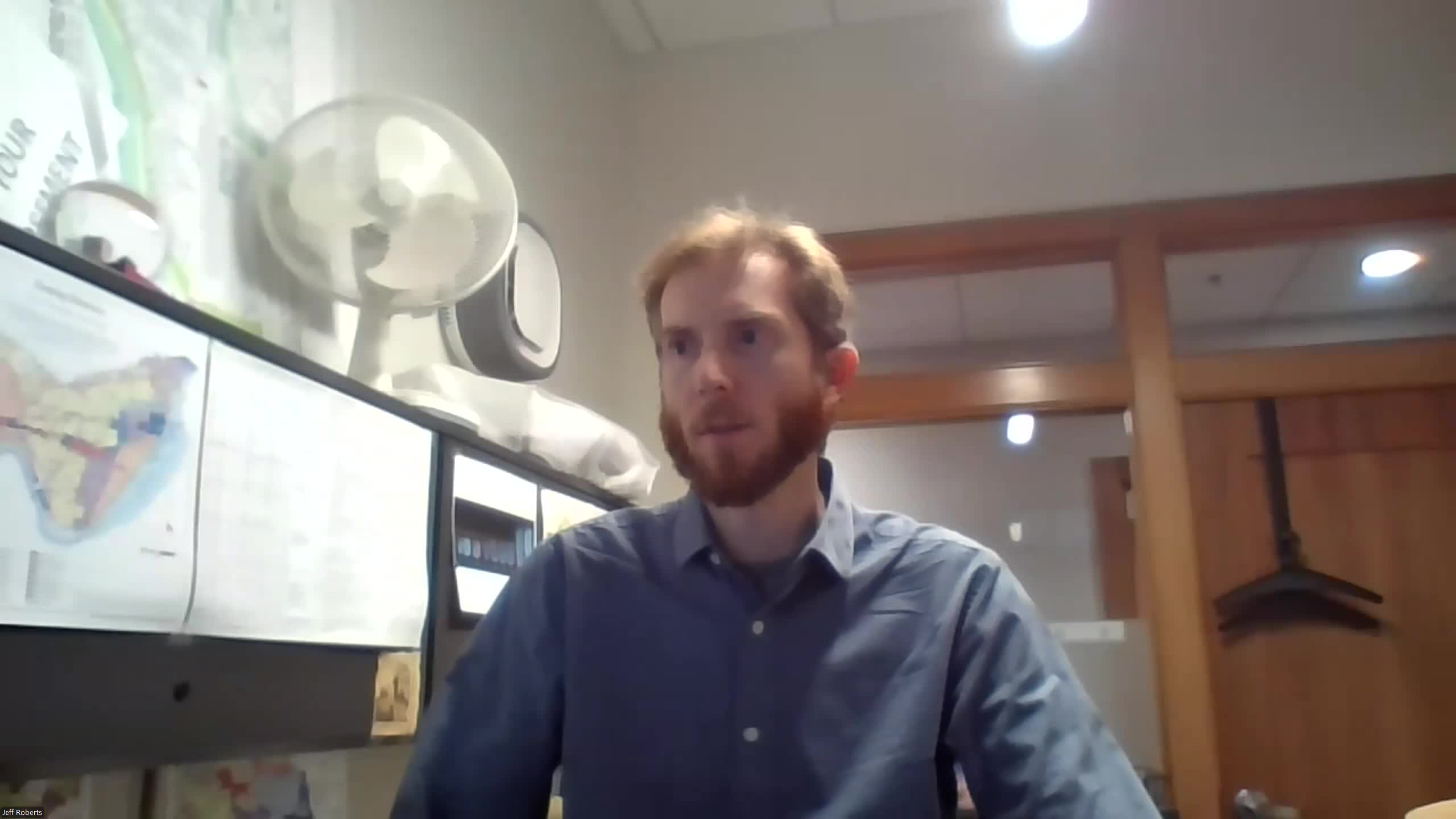
City staff raised procedural and interpretive concerns. Jeff Roberts, Director of Zoning and Development in the Community Development Department (CDD), told the board that “way” is not a defined term in the zoning ordinance and that the petition’s broad list of examples (including “courts”) would likely generate questions about whether features such as basketball courts, plazas or pedestrian plazas would be captured. Roberts said the department expected the petition would create ambiguity about which park improvements would trigger zoning limits.
Several members of the public spoke in favor of the petition or offered technical perspectives. Jeb Mays, a North Cambridge resident, said the nearby Linear Park already experiences high speeds and cited timed observations of riders clocked in the mid-20s miles per hour; he argued narrower paths discourage high-speed motorized traffic and protect park users. Environmental scientist Marina Atlas urged continued use of permeable paving technologies and green-infrastructure practices to preserve infiltration and biodiversity. Resident Tom Goro raised groundwater and stormwater concerns and said permeable approaches should be part of a larger city strategy to manage rising groundwater and heavier rainfall.
Board members who spoke during deliberations said the petition raised important issues but that zoning is the wrong tool. Planning Board member H. Theodore Cohen said the proposed restriction would “tie the hands of the city” and could limit legitimate design choices for accessibility and multiuse circulation. Chair Mary Flynn and member Mary Liedecker likewise said neighborhood-level design, community engagement and project-specific review would be more appropriate ways to balance tree preservation, accessibility and safety. The board discussion repeatedly noted that the petition’s broad wording and the inclusion of “courts” could produce unintended consequences and would likely require frequent variances or amendments to accommodate legitimate park features.
After discussion, the board voted to send a negative recommendation to the City Council and asked staff to include the concerns raised in the Planning Board’s comments to the Council. The board encouraged the petitioners and staff to continue working together on measures to implement the Urban Forest Master Plan goals and better integrate tree preservation, stormwater infiltration and multiuser safety into project design and city guidance.
The Planning Board meeting record shows the board received 31 written comments on the petition as of 5 p.m. the day before the hearing; additional written submissions received after that time were entered into the record, as noted at the hearing. The petition now proceeds to the City Council where the council will hold its own hearings and decide whether to adopt the proposed zoning change.