Get Full Government Meeting Transcripts, Videos, & Alerts Forever!
Get email alerts on the Federal Troop Deployment topic
No spam. Unsubscribe anytime.
City attorney updates committee on restraining orders as other cities describe National Guard, ICE tactics
Summary
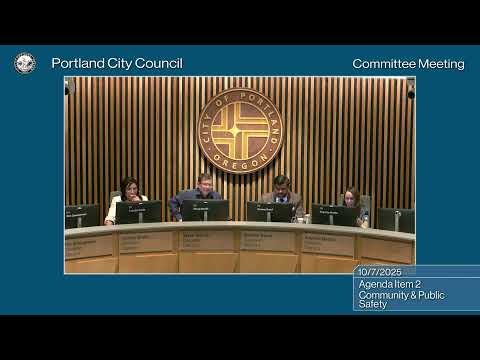
The Community and Public Safety Committee met Oct. 7 and heard a legal update from Robert Taylor, Portland’s city attorney, about federal deployments and temporary court orders, followed by descriptions from staff in Washington, D.C., Los Angeles and Chicago about how National Guard and federal immigration operations played out in their cities.
The Community and Public Safety Committee met Oct. 7 and heard a legal update from Robert Taylor, Portland’s city attorney, about federal deployments and temporary court orders, followed by descriptions from staff in Washington, D.C., Los Angeles and Chicago about how National Guard and federal immigration operations played out in their cities.
Taylor told the committee the U.S. District Court in Oregon granted a temporary restraining order and later issued a second TRO enjoining any National Guard deployment from other states to the city of Portland. He said that order lasts two weeks, that the city may ask to extend it, and that a preliminary injunction hearing in the district court is scheduled for Oct. 29. Taylor also said the federal government has appealed an earlier TRO to the Ninth Circuit and that the court will consider a motion to stay at a hearing Thursday morning at 9 a.m.
The committee then heard from staff members who described how federal actions affected residents in their cities. Jen Kaufman, policy adviser to D.C. Council member Janice Lewis George, described a month-long period when federalized and out‑of‑state National Guard troops were highly visible in tourist corridors and near checkpoints. Kaufman said troops were reportedly armed and sometimes present alongside federal raids or checkpoints, and that the heightened presence contributed to a broader campaign of federal enforcement that, in her view, heightened the risk of rights violations. “This is the reason why military forces shouldn't be deployed to cities,” she said.
Kate Paitous, deputy chief of staff to Los Angeles Councilmember Hugo Soto‑Martinez, described ICE raids in Los Angeles beginning in June that targeted worksites, including Home Depot locations and car washes, and that she said included rapid, often under‑15‑minute operations and warrantless detentions. Paitous said media were at times embedded with federal agents during those operations and that the raids and the National Guard presence depressed restaurant patronage, strained construction schedules, and reduced 911 calls and school attendance in some neighborhoods.
Chicago staff member Lisonbee Murphy told the committee of mass detentions in a South Shore apartment building, the use of crowd control chemical agents against protesters and residents, and incidents in which local claims about federal actions were contradicted by later video evidence. Murphy said National Guard troops from Texas arrived in Chicago and that the city attorney had sought a restraining order. She urged cities to clarify protocols for mutual aid requests and for reporting and auditing interactions with federal immigration enforcement.
Presenters from the three cities offered operational recommendations to Portland: strengthen “know your rights” and rapid‑response outreach, track and audit mutual aid or requests for assistance from federal agencies, create clear protocols for when policing will assist with federal operations, and document data‑sharing arrangements for automated systems such as license‑plate readers. Los Angeles and Chicago presenters also emphasized the convening role of local governments in coordinating legal services and community organizations.
Committee members asked about local enforcement options such as “ICE‑free zone” executive orders, data‑privacy risks from FOIA responses and contractor data, and the health and oversight impacts of crowd‑control agents. Speakers stressed limits to local authority over federal agents but urged clearer local protocols, reporting requirements, and public information when local resources assist federal operations.
The discussion concluded with thanks to the visiting staff and to Taylor’s office for the legal work that produced the temporary restraining orders. No formal action or vote was taken on the item during the meeting.
Ending: Committee members said Portland could learn from other cities’ experiences and pledged to continue clarifying protocols and strengthening community outreach as the federal court process proceeds.