Get Full Government Meeting Transcripts, Videos, & Alerts Forever!
Get email alerts on the Housing Rent Stabilization topic
No spam. Unsubscribe anytime.
St. Paul council grants six rent‑stabilization appeals for Ashland Avenue properties after split votes
Summary
After extended debate about inspection processes and policy clarity, the St. Paul City Council granted six appeals related to rent‑stabilization determinations for units at 934 and 942 Ashland Avenue. Council repeatedly split 4–3 on final votes; members raised concerns about Department of Safety and Inspections processes and the ordinance’s tools.
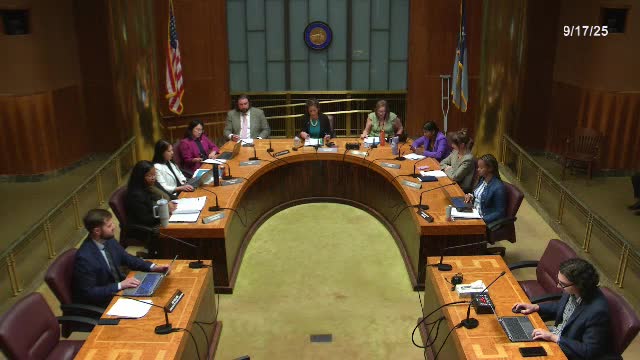
The St. Paul City Council granted six appeals of rent‑stabilization determinations for units at 934 and 942 Ashland Avenue after extended public hearing and deliberation. The appeals tested how the city applies its rent‑stabilization ordinance when inspectors and the department do not document “substantial deterioration” separate from routine wear and tear.
The cases before the council were filed by attorneys from the Housing Justice Center representing tenants at 934 Ashland (Unit 1 and Unit 2) and multiple units at 942 Ashland. The appeals challenged city staff determinations that had authorized rent increases above the 3% default cap for certain landlords; council members debated whether the Department of Safety and Inspections (DSI) had followed the ordinance’s requirements to establish substantial deterioration and code violations before the rent increases were approved.
Councilmembers disagreed about both legal role and process. Some members said the council is not the proper forum to establish the implied warranty of habitability or to make binding legal findings about habitability; they said those determinations typically occur in housing or district court. Others said the council’s ordinance requires the city to establish certain facts (for example, substantial deterioration and code violations) before an administrative rent increase is granted and that those processes were not always followed. Several councilmembers called for improved staffing and clearer procedures at DSI to ensure consistency going forward.
Key factual clarifications in the record include: the landlord’s initial request in one matter was for approximately a 30% increase; city staff documents show a combined operating‑cost increase figure of 28.5% across the properties (taking into account property taxes, insurance, utilities and other operating expenses) and the transcript notes a consumer‑price‑index increase of about 19% over the period cited. The record includes inspections dated Sept. 7 for at least one building; the legislative hearing officer and staff noted the city currently relies in part on a fire certificate of occupancy to document some conditions and does not have a separate, systematic measure of “substantial deterioration.”
Council action and votes: For each appealed unit (agenda items 26–31), the council ultimately granted the appeals by a 4–3 roll call vote. The roll calls show the same split of votes for each final motion: councilmembers Kim, Yang, Johnson and Council President Naker voted to grant the appeals; councilmembers Joest, Buie and Coleman voted against granting them. In several cases a motion to deny an appeal or an amendment proposing phased increases was offered but failed; a subsequent motion to grant the appeal passed.
Consequences and process notes recorded during the meeting: councilmembers and the legislative hearing officer discussed that if the council grants an appeal based on habitability the immediate effect is to deny the requested rent increase; landlords can still enact the standard 3% increase that does not require city approval, and landlords may later reapply once repairs are completed and inspected. Several councilmembers urged that the city develop clearer administrative processes—such as automatic inspections tied to large requests for rent increases and a more robust path to document substantial deterioration—so future determinations are consistent and do not place the burden on tenants.
The meeting record shows the council adopted the legislative hearing officer’s recommendations as amended to grant the appeals. The council directed staff discussions and flagged the issue for inclusion in broader housing policy work to improve DSI capacity and ordinance clarity.
Votes at a glance (final outcomes): - Item 26 (RLH RSA 205-8; 934 Ashland Ave Unit 1) — Appeal granted, roll call 4–3. - Item 27 (RLH RSA 205-10; 934 Ashland Ave Unit 2) — Appeal granted, roll call 4–3. - Item 28 (RLH RSA 25-13; 942 Ashland Ave Unit 8) — Appeal granted, roll call 4–3. - Item 29 (RLH RSA 25-14; 942 Ashland Ave Unit 9) — Appeal granted, roll call 4–3. - Item 30 (RLH RSA 205-15; 942 Ashland Ave Unit 11) — Appeal granted, roll call 4–3. - Item 31 (RLH RSA 25-17; 942 Ashland Ave Unit 12) — Appeal granted, roll call 4–3.
Councilmembers who voiced concerns said the outcome underscores the need for clearer administrative processes and additional staffing so DSI can consistently document deterioration, perform timely follow‑up inspections and ensure records support administrative decisions on rent increases. Several members proposed that the council’s pending housing study or budget deliberations consider staffing and regulatory changes to address those gaps.