Get Full Government Meeting Transcripts, Videos, & Alerts Forever!
Get email alerts on the Higher Education Coordination topic
No spam. Unsubscribe anytime.
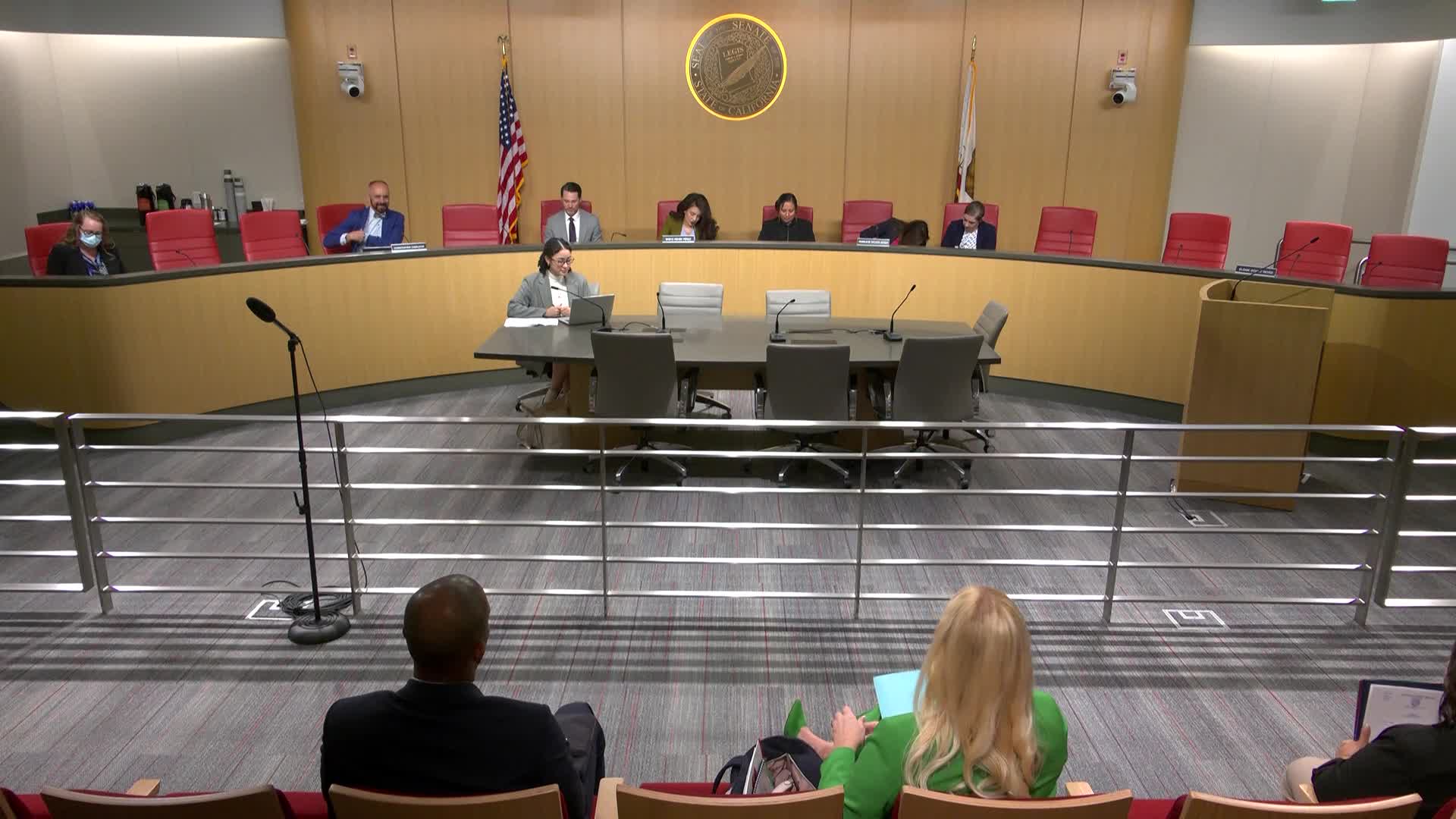
Senate education committee advances bill to create California Education Interagency Council
Summary
The Senate Committee on Education voted 5-0 to pass AB 1098 (Fong) to the Senate Appropriations Committee. The bill would establish a statewide council to coordinate K-12, higher education and workforce agencies; supporters said it will reduce siloed programs, while some senators warned coordination alone won't fix deeper structural problems.
Assemblymember Fong’s AB 1098, which would establish a California Education Interagency Council to coordinate K‑12, higher education and workforce programs, was advanced to the Senate Appropriations Committee after a 5‑0 vote in the Senate Committee on Education on Oct. 25.
The bill would create a council composed of the heads of K‑12, higher education and workforce and labor agencies, plus representatives of independent colleges, to align state education systems with workforce needs and reduce program duplication. The committee approved the bill on a motion to pass it to the appropriations committee moved by Senator Cortese.
Supporters told the committee the state lacks a permanent coordinating body. Jesse Ryan, president of the Campaign for College Opportunity, said Californians are “the only state in the nation that does not have some version of higher ed coordination,” and argued the council would provide a “permanent table” for K‑12, higher education and workforce leaders to pursue cross‑sector planning and data‑informed policy.
Jason Henderson of the California EDGE Coalition, which backed the bill, said California invests billions in career technical education and workforce programs that operate in silos. “AB 1098 addresses these long‑standing structural challenges by coordinating the systems, identifying gaps and disparities, and ensuring opportunity youth and adult learners can access pathways to economic security,” Henderson said.
Several witnesses representing statewide education groups registered support, including the Association of Independent California Colleges and Universities and Immigrants Rising. The author said the bill is tied to recommendations in the governor’s master plan for career education and to the state’s cradle‑to‑career data work.
Not all committee members were unreservedly supportive. Senator Cabaldon said he had long experience with higher education coordination and cautioned that creating another coordinating body does not guarantee results: “We suffer from a collective delusion in California that creating structures and assigning intent about what those structures will accomplish is the same as accomplishing the thing,” he told the committee. Cabaldon said the effectiveness of past coordinating bodies depended on close legislative oversight and appointment relationships that are absent today.
Senator Choi expressed concern that another statewide council could duplicate existing bodies and layers of governance and become “less efficient.” Senator Cortese and others acknowledged those concerns but said the council could provide a forum for implementation and for aligning recent state investments in career education.
On funding, the author said AB 1098 has a baseline appropriation of $1,500,000 in the budget to launch the council, and that fully staffing or scaling the body would require additional funding in future budgets. When asked for ongoing operating cost estimates, the author said the committee would be provided more detailed numbers during the budget process.
The committee recorded the bill as “passed to the Senate Appropriations Committee.” The committee’s clerk confirmed the final vote as 5 ayes, 0 noes. The committee chair closed the hearing and placed the bill on call for the full committee’s next steps.
AB 1098 now moves to the Senate Appropriations Committee for fiscal review and potential placement on a later floor calendar.