Get Full Government Meeting Transcripts, Videos, & Alerts Forever!
Get email alerts on the Veterans Benefits Protections topic
No spam. Unsubscribe anytime.
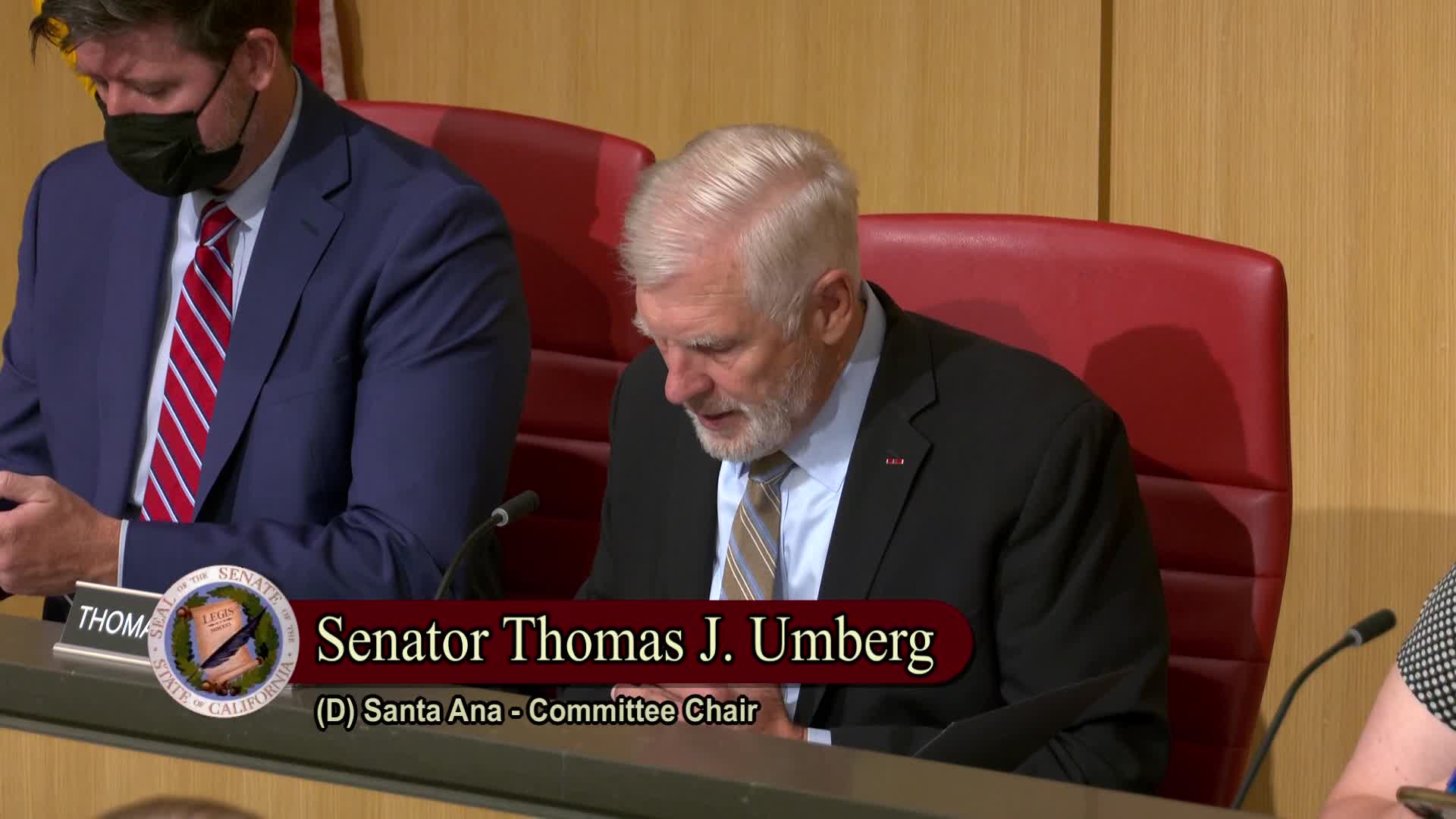
Senate Judiciary panel refers SB 694 to rules after hearing on protections for veterans against for‑profit 'claim sharks'
Summary
The California State Senate Committee on Judiciary voted 12-0 to re‑refer Senate Bill 694 to the Senate Rules Committee after a lengthy hearing in Room 1200 of the 0 Street Building that drew dozens of veterans, veterans service organizations and companies that assist veterans with Department of Veterans Affairs claims.
The California State Senate Committee on Judiciary voted 12-0 to re‑refer Senate Bill 694 to the Senate Rules Committee after a lengthy hearing in Room 1200 of the 0 Street Building that drew dozens of veterans, veterans service organizations and companies that assist veterans with Department of Veterans Affairs claims.
Sponsors said SB 694 would strengthen consumer protections by making state law consistent with federal restrictions on who may prepare or present veterans’ benefits claims. "SB 694 strengthens California's commitment to protecting veterans from exploitation in the federal claims process," said Senator Archuleta, the bill's author. He told the committee he had consulted industry groups and veterans organizations and concluded California lacks the federal authority and resources to replace the VA accreditation system, but can act to stop unaccredited actors from charging for initial claims.
The bill’s text, as presented to the committee, would: mirror the federal prohibition on preparing or presenting VA claims unless an individual or organization is accredited under federal law; increase penalties for unauthorized access to veterans’ data in VA systems; and bar fees that exceed what a VA‑accredited attorney or claims agent may legally charge, sponsors said. The office of California Attorney General Rob Bonta provided a letter of support that was read into the record.
Supporters — including county veteran service officers (CVSOs), the American Legion, Veterans of Foreign Wars, Vietnam Veterans of America, and numerous county boards of supervisors and chambers of commerce — told the committee that unaccredited, for‑profit companies sometimes called "claim sharks" charge veterans thousands of dollars for help the VA and accredited VSOs provide for free. "This is the moment. This is the time to protect our veterans, to ensure that for‑profit companies are not making millions off the backs of those who have served," Archuleta said.
David West, president of the California Veterans Service Organizations coalition, said the goal is to prevent exploitation. "This is about stripping away federal protections for veterans so that for‑profit companies can exploit them," West said. Retired Army Lt. Col. William (Will) Swenson, a Medal of Honor recipient and chief strategy officer of TurboVets, urged passage: "On behalf of my fellow veterans, I urge you to pass SB 694 and send a clear message. California will not tolerate the exploitation of those who wore the uniform."
Opponents, including William Taylor, founder of Veterans Guardian (VBG), and other private providers, said some companies provide intensive, paid services that many veterans choose after trying free options. Taylor described his company as "a veteran owned and veteran employed company" with about 200 employees and said his teams frequently spend many hours preparing "fully developed claims" that they contend produce faster decisions. He and others proposed a set of consumer‑protection amendments intended to cap fees, ban upfront nonrefundable fees, require written disclosures about free VSO options, and prohibit certain collection practices while allowing private companies to continue operating under oversight.
Several witnesses and some legislators raised a practical concern: thousands of veterans are already represented by private firms. Committee members repeatedly asked whether the bill would leave those veterans without representation if enacted immediately. Opponents and some committee members urged a negotiated path forward or interim protections that would not strand existing claimants.
Committee debate focused on the balance between protecting veterans from predatory practices and preserving access to paid services for veterans who prefer them. "We should require accreditation and consumer protections, but we also must avoid abandoning veterans currently represented," said Senator Laird, who described the county VSOs’ workload and the limited ratio of CVSOs to veterans in California.
Senator Wahab moved to re‑refer SB 694 to the Senate Rules Committee to allow further work. Senators voted 12‑0 to re‑refer the bill; the roll call recorded ayes from Umberg, Nilo, Allen, Ashby, Caballero, Laird, Reyes, Stern, Valadares, Wahab, Weber Pearson and Weiner. The committee record shows the motion carried and the bill will remain active while Rules and authors continue negotiations on technical fixes and possible interim protections.
What the bill would not do immediately: the committee record contains no final amendments, and no new accreditation pathway created by California was adopted at the hearing. Sponsors and some opponents described federal legislation (referred to in testimony as the Choice Act) that could create a federal accreditation path, but committee members emphasized California cannot usurp federal authority. Several speakers urged the Legislature and advocates to establish an interim working group to negotiate consumer protections, transition plans for veterans currently using private representatives, and a timeline for implementation.
The hearing included testimony from dozens of veterans and representatives of statewide organizations. Supporters included the American Legion, Veterans of Foreign Wars, AMVETS, Disabled American Veterans, California Association of County Veterans Service Officers, county boards of supervisors and chambers of commerce; opponents included Veterans Guardian and other private providers that said they serve veterans who fall through the cracks of existing free services.
The committee’s referral keeps SB 694 alive for further drafting and negotiation in Rules and potentially in the Assembly if and when it is amended. Authors signaled they would continue talks with stakeholders about amendments intended to protect veterans while addressing concerns about veterans who are already in the intake pipeline with private firms.
Votes at a glance
- Motion: Re‑refer SB 694 to Senate Rules Committee (motion by Senator Wahab; second not specified in record). - Roll call: Umberg (aye), Nilo (aye), Allen (aye), Ashby (aye), Caballero (aye), Laird (aye), Reyes (aye), Stern (aye), Valadares (aye), Wahab (aye), Weber Pearson (aye), Weiner (aye). - Tally: Yes 12, No 0. Outcome: referred to Senate Rules Committee.
Sources: Hearing testimony and letters entered into the record, including an Attorney General support letter; witnesses: Senator Archuleta (author), Pilar (co‑author, identified as chair of the Assembly Military and Veteran Affairs Committee), David West (president, California VSOs), William Swenson (retired Lt. Col., Medal of Honor recipient; chief strategy officer, TurboVets), William Taylor (founder, Veterans Guardian), and multiple CVSOs and veterans organizations.