Get Full Government Meeting Transcripts, Videos, & Alerts Forever!
Get email alerts on the Downtown Revitalization Family Housing topic
No spam. Unsubscribe anytime.
Mayor Lurie pitches downtown revitalization, backs 'family zoning' and business protections
Summary
Mayor Daniel Lurie told the San Francisco Board of Supervisors the city will pursue a downtown revitalization directive focused on housing, jobs, culture and education and voiced support for supervisor Melgar's family housing proposal while promising small-business protections and tenant safeguards.
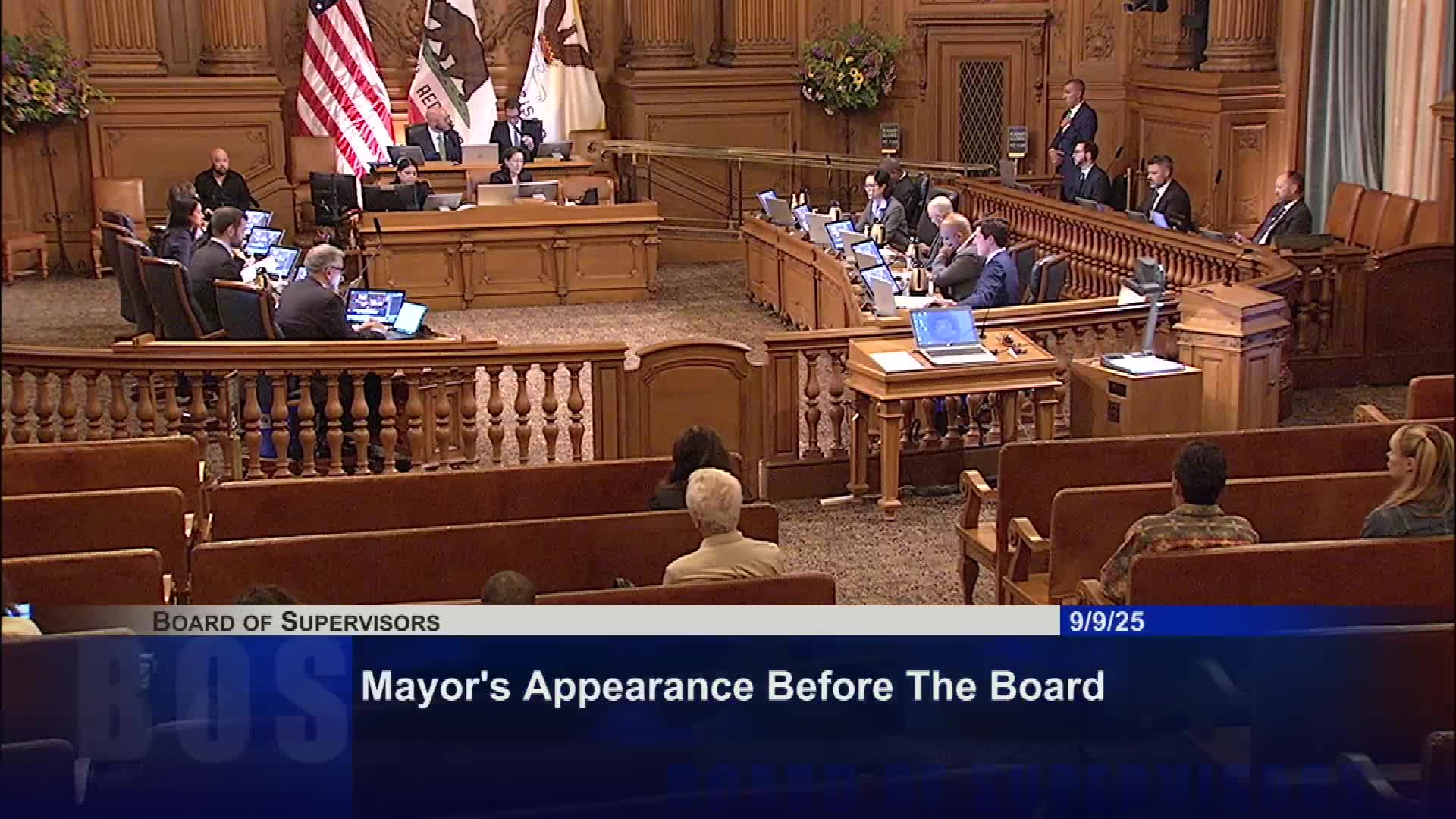
Mayor Daniel Lurie told the San Francisco Board of Supervisors on Sept. 9 that his newly announced “heart of the city” executive directive aims to make downtown San Francisco a 24/7 neighborhood where people can “live, work, play and learn.” The mayor said the strategy combines housing conversions, business incentives, cultural programming and education partnerships to restore downtown activity.
Lurie said the city will create a downtown revitalization financial district to make office-to-residential conversions easier, streamline permitting through PermitSF, modernize older office stock, and activate public spaces with more concerts and entertainment zones. He told the board that in the first 100 days his team secured more than $40,000,000 in private commitments for street beautification, small-business support and plaza activation, and outlined a phased timeline for conversion applications, entertainment zones and placemaking over the next six to 12 months.
Supervisor Melgar, who requested the District 7 topic discussion, pressed the mayor on risks the plan could pose for small businesses and renters on the West Side, noting demolition of rent-controlled units and a lack of dedicated funding for affordable housing in her district. Melgar said West Side neighborhoods have seen comparatively little affordable housing development and asked for specific protections and funding commitments for those residents.
Lurie responded that the plan would “not leave small businesses, renters, or affordable housing behind” and endorsed a small-business rezoning construction relief fund that would provide grants and loans and connect businesses with leasing and financial counseling. He also said the planning department, with Supervisor Chen, is working to strengthen tenant protections and noted that demolition of rent-controlled housing is “extraordinarily rare” under current law and that existing statutes require one-for-one replacement when demolition occurs.
On inclusionary requirements, Lurie said the family zoning proposal would give developers the option to add new rent-controlled units to their inclusionary obligations, and that the plan creates opportunity sites suitable for wholly affordable developments. Melgar raised specific legal gaps she sees in state law — citing SB 330’s (commonly cited by stakeholders) limitations on look-back periods and right-of-first-refusal protections — and asked for stronger local protections and a dedicated local funding source for West Side affordable housing. Lurie committed to working with Melgar on tenant-protection proposals and to collaborate on funding ideas, including the resolution Melgar submitted urging the city to explore tools such as dedicating future property tax growth.
Why it matters: Downtown tax revenue and business activity underwrite many city services. Converting office space to housing and activating downtown could increase housing supply and economic activity, but may also cause localized construction impacts and raise displacement concerns. The mayor and board framed their exchange as a collaboration to expand housing while protecting existing tenants and small businesses.
The discussion ended with the board filing the matter for the public comment period and with the mayor indicating his office will continue working with supervisors on draft legislation and implementation details.