Get Full Government Meeting Transcripts, Videos, & Alerts Forever!
Get email alerts on the Curriculum topic
No spam. Unsubscribe anytime.
District outlines five-stage curriculum review cycle; personal finance to become required high-school course
Summary
Teaching-and-learning staff described the district's five-stage curriculum review cycle, listed subject areas in each stage for 2025–26, and said Pennsylvania will require a personal finance standard at the high-school level for 2026–27.
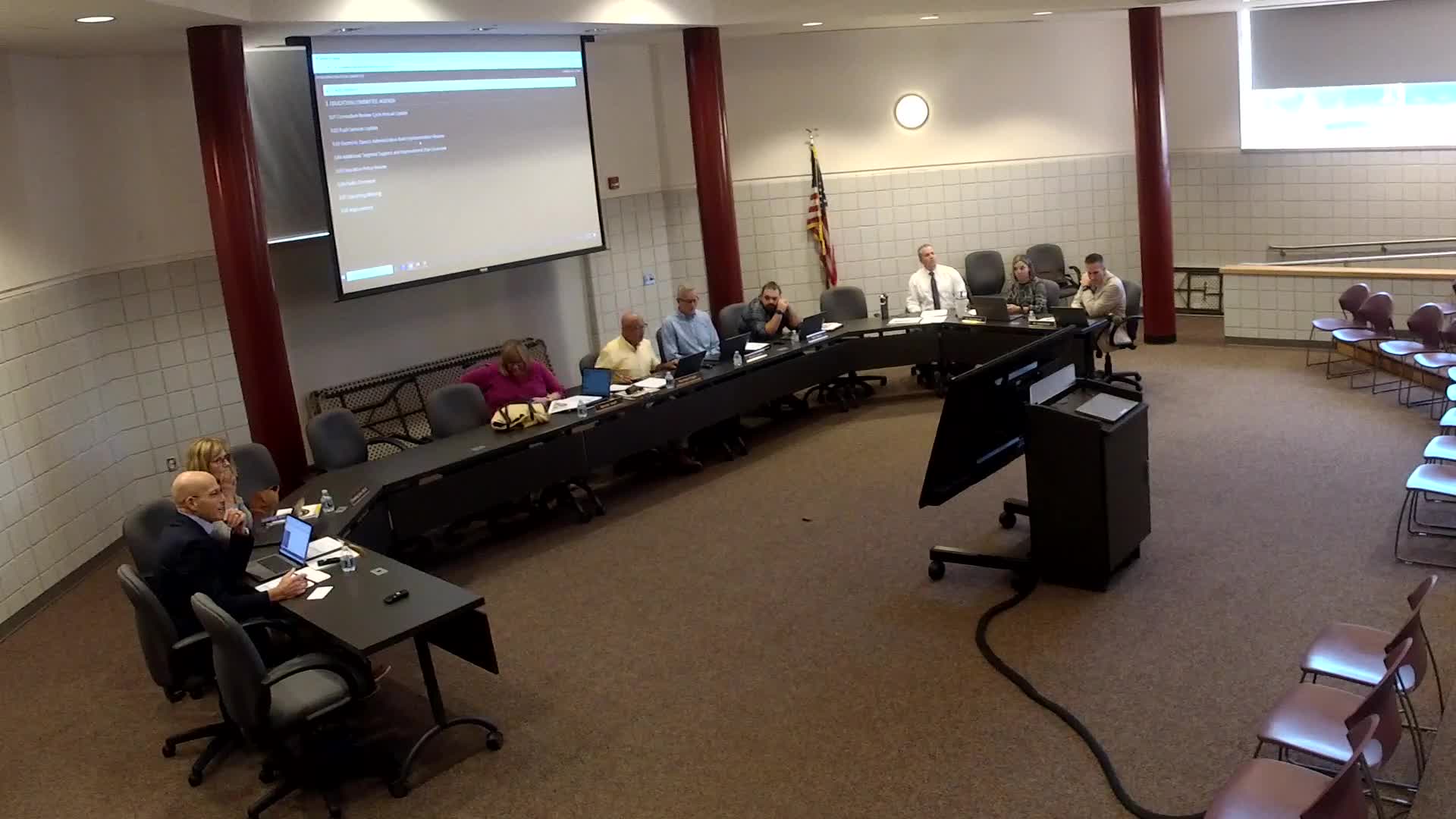
District curriculum staff presented the teaching-and-learning department's five-stage curriculum review cycle to the education committee and listed the subject areas in each stage for the 2025–26 cycle. They also highlighted a new state requirement for personal finance instruction and said the district is planning materials and scheduling to meet the mandate.
Cycle overview: presenters described a five-stage process — assess/research/develop; continued development and field study; initial implementation and professional development; needs assessment; evaluation and monitoring — that moves resources from writing to classroom implementation and longer-term evaluation. The presenter said the curriculum is teacher-written and tied to Pennsylvania standards; the district also provides community reviews of new instructional materials for 30 days during the process.
Subjects and schedule: staff listed subject areas in each stage for the coming years; highlights include English language arts (ELA) grades 6–8, a personal-finance course (the result of a new PDE requirement for 2026–27), and integrated science resource updates. The presenter noted the cycle is intended to produce a "guaranteed and viable" curriculum (consistent student experience across grade level) and to synchronize professional learning with new resources.
Personal finance mandate: curriculum leaders confirmed personal finance is a state requirement that becomes effective in the 2026–27 school year and said the district views it as an unfunded mandate. "It's an unfunded mandate," a committee member said during discussion; presenters said the district will examine schedule and staffing implications, credit allocation and whether the content will be distributed across grades as PDE finalizes standards.
Why it matters: the review cycle shapes what students will learn year-to-year and how the district funds and schedules new requirements. Committee members asked for the results of needs assessments (for example, health curriculum gaps) and whether world-language offerings might expand; staff said the district posts curriculum overviews and year-at-a-glance documents on the academic web page for public review.