Get Full Government Meeting Transcripts, Videos, & Alerts Forever!
Get email alerts on the City Grants And Staffing topic
No spam. Unsubscribe anytime.
Sunbury City discusses retaining grant administrator for $12,000 while advertising new grant-writer post
Summary
City officials debated how to manage 23 outstanding grants and whether to hire a new grant writer. Council members proposed a $12,000 retainer to complete existing grants and to advertise a new, commission‑style grant‑writer position; no formal vote was recorded.
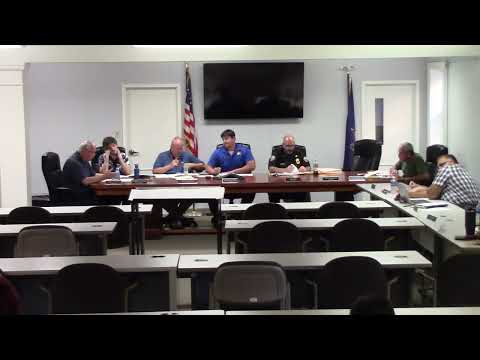
Sunbury City officials discussed staffing and grant-management plans during a city meeting. Participants considered a proposal to retain an existing grants administrator to finish roughly two dozen outstanding grants for $12,000 while advertising for a new grant writer whose pay would combine a base salary and incentive fees. No formal vote on the proposal was recorded in the transcript.
The discussion centered on preserving institutional knowledge on active grants while building capacity to pursue new funding. Officials said the city currently has about 23–24 grants “on the table” (some speakers used 23, others 24), and that several large projects rely on continued grant administration. City participants said losing continuity could jeopardize projects described in the discussion as a major expansion of Susquehanna Avenue (referenced in the meeting as “the Susquehanna phase 2”), which speakers said represents a multi‑year, multi‑million‑dollar commitment.
Participants sketched a two‑part approach: pay a short‑term retainer to the existing administrator to close out active grants while immediately advertising for a centralized grant writer who would handle new grant applications and coordinate with department supervisors. The proposed job model discussed included a base salary with commission or admin fees tied to grants the hired person applies for and secures; speakers cited a common practice of budgeting a 2% administrative fee into some grant applications. For the existing portfolio, the group discussed a $12,000 flat fee and a per‑grant arithmetic example discussed in the meeting (a cited $521.74 per grant figure as one way to prorate the flat fee if grants closed).
Several speakers emphasized the city’s past success at securing grants and warned that disrupting current processes could reduce future awards and slow multi‑year infrastructure work. Others urged caution about rushing the hiring process and recommended a short (two‑week) period to finalize the job description and recruitment plan so supervisors from each department could contribute a “wish list” of grant priorities. The group discussed models in which department supervisors help identify targeted grants and a centralized grant writer coordinates applications across departments to avoid duplicated effort.
The meeting also touched on related staffing items: a downtown manager position (the “downtown management program”) that would support small businesses, help with Main Street designation and facade grants, and administer a $10,000 program allocation if approved. Participants discussed how a downtown manager and a centralized grant writer could coordinate on facade grants and other downtown revitalization funding.
On the question of retaining the existing administrator, the transcript shows back‑and‑forth: an offer to stay on for $12,000 to finish the current grants was discussed, there was at least one speaker who said they were withdrawing an earlier offer to continue, and later a participant asked directly whether the administrator would accept the $12,000 arrangement. The exchange did not culminate in a clear, formal vote or signed contract within the recorded discussion. Several participants recommended advertising immediately for a new grant writer and running the two arrangements in parallel so the new hire could learn ongoing procedures as outstanding grants closed.
Next steps recorded in the discussion: advertise the grant‑writer job, solicit departmental input on grant priorities, and revisit the staffing/grants arrangement after a short planning interval (participants suggested roughly two weeks). The transcript does not show a formal contract award, budget appropriation, or a recorded motion with a roll‑call vote on the $12,000 retainer or the job posting.