Get Full Government Meeting Transcripts, Videos, & Alerts Forever!
Get email alerts on the Municipal Finance topic
No spam. Unsubscribe anytime.
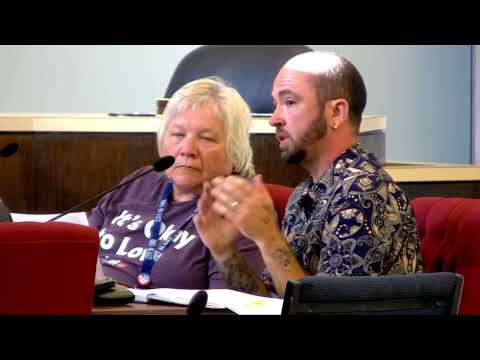
Erie council split over $52.35M bond authorization for Miller Brothers project; members seek narrower option
Summary
Council and bond advisers discussed a not‑to‑exceed bond authorization for the multi‑phase Miller Brothers public‑safety project, with debate over whether to limit the ordinance to fund only phase 1 or the first two phases; no formal vote recorded in the transcript.
Erie city councilors and bond advisers debated a proposed bond authorization for the multi‑phase Miller Brothers public‑safety project and differed on how much the city should commit now.
Alicia Henry of PNC Capital Markets presented financing options and structuring choices for a proposed series of 2025 tax‑exempt general‑obligation bonds meant to fund the Miller Brothers renovation. Henry said a proposed structure would fund roughly $30 million in project work and wrap the new debt around the city’s existing schedule in order to limit near‑term budget impacts. She described three alternatives: (1) new‑money financing with no capitalized interest, which would put the largest budget impact into the next fiscal year; (2) partial capitalized interest to phase in debt service over two years; and (3) full capitalization of interest during construction to delay budget impact for two years.
“Federal tax law requires a commitment to spend five percent of the proceeds within six months,” Henry said, describing timing requirements for tax‑exempt bond proceeds. Bond counsel Tim Wachter of the Knox Law Firm explained the Local Government Unit Debt Act implications and how call dates and existing debt affect long‑term amortization. Henry said closing typically takes seventy‑five to ninety days and that the city currently has about $53.57 million in outstanding principal.
Council discussion focused on three choices: approve the broad not‑to‑exceed amount on the agenda for the next day (the document as proposed carries a not‑to‑exceed authorization larger than the likely project size to give the underwriter flexibility), amend or reissue the ordinance to specify a smaller project cap (members discussed numbers in the $20–30 million range), or table the ordinance for two weeks so staff and bond counsel can rework specific not‑to‑exceed figures and provide more budget detail.
Several council members said they support completing Phase 1 — the fire service garage — and some said they would back authorization that covered Phase 1 and Phase 2 but not the full three‑phase plan. One councilor said she would not vote for the full bond authorization as proposed, while others said they would support the ordinance as written if it included verbiage limiting what could be spent on projects beyond the phases council approves.
Council members raised budget concerns: the city’s existing debt schedule includes a large step‑up in 2033 when several older issues mature, and members warned the proposed bond would add roughly $1.57 million of annual debt service under the example Henry showed if structured without capitalized interest. Henry said capitalized interest reduces near‑term budget hits but increases total interest cost over the life of the bonds.
Councilors also discussed alternatives to a single large issuance. Henry and Wachter said issuing bonds in phases can increase repeated issuance costs (they estimated roughly $75,000 in issuance costs each time), but it reduces near‑term borrowing and gives the city flexibility if market rates or grant prospects change.
By the end of the discussion members were split: some favored tabling the ordinance and returning with a not‑to‑exceed number tied specifically to two phases (councilors discussed $20 million to $30 million project caps as compromise figures), while others signaled support for placing the existing ordinance on the next agenda with an added provision to limit what PNC may fund without return authorization from council. The transcript records no formal vote on the ordinance during the meeting.