Get Full Government Meeting Transcripts, Videos, & Alerts Forever!
Get email alerts on the Housing Rentals Zoning topic
No spam. Unsubscribe anytime.
Resident urges council to clarify zoning interpretation after large-rooming rental properties reported in Muhlenberg-area neighborhood
Summary
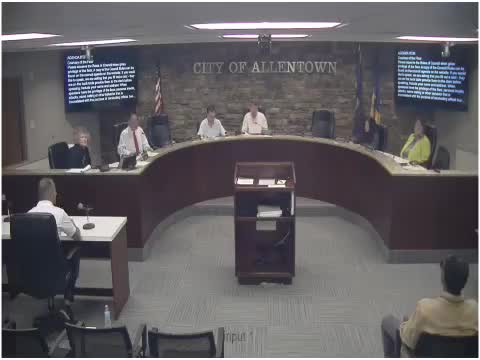
A resident told council she has observed houses converted to high-occupancy rentals and urged the city to address a recent zoning interpretation she says allows more nonrelated adults to live in a single-family house.
A resident raised concerns at the council meeting about a perceived change in the city’s interpretation of the zoning ordinance that she says has enabled high-occupancy rental houses in her Muhlenberg-area neighborhood.
Christina Schwer told the council she previously spoke to the city in June or July and returned to “reiterate some issues” about rental properties. She said the current interpretation allows four renters on a lease and then effectively allows each of those lessees to bring additional family members or friends into the house, resulting in far more nonrelated adults living in what had been single-family homes.
“Two houses in my neighborhood have 14 to 17 people living in them, including children,” Schwer said in public comment. She described impacts including seven or more cars parked at a single property, shouting, rock throwing, smoking and confrontations between residents and neighbors. Schwer said the issue is not primarily a tenant problem but “a landlord issue,” adding that outside investors are buying single-family homes and converting them into high-density rentals while the city receives no additional tax revenue for the increased occupancy.
She said she had contacted council, zoning, planning, police and engineering about the properties and had not received a satisfactory remedy. “My counsel asked me after I stated my concerns…why do you stay there?” she said, adding she hopes the city will “fix this misinterpretation with zoning because ultimately, it's hurting all of our neighborhoods.”
Why it matters: The complaint raises questions about how the city interprets limits on nonrelated adults occupying single‑family dwellings, the enforcement role of zoning and rental registration, and the neighborhood impacts of high-occupancy conversions.
Record limitations: The resident framed the issue as a change in “interpretation” rather than an amendment to the zoning ordinance; the meeting record does not include a legal citation, ordinance number, or an administrative memorandum showing the change. Council and staff response in the meeting was limited to an acknowledgment that staff would “look into it.”
Next steps noted in meeting: Council accepted the public comment and a meeting official said city staff would look into the complaint; no formal direction, motion or enforcement action was recorded on the transcript.