Get Full Government Meeting Transcripts, Videos, & Alerts Forever!
Get email alerts on the Nondiscrimination Ordinance topic
No spam. Unsubscribe anytime.
Chester County commissioners approve ordinance creating local Human Relations Commission, 2-1
Summary
After hours of public comment and questions about cost and authority, the Chester County Board of Commissioners voted to adopt Ordinance 2025-03 to establish a county Human Relations Commission to receive, investigate and adjudicate discrimination complaints; the vote passed 2-1.
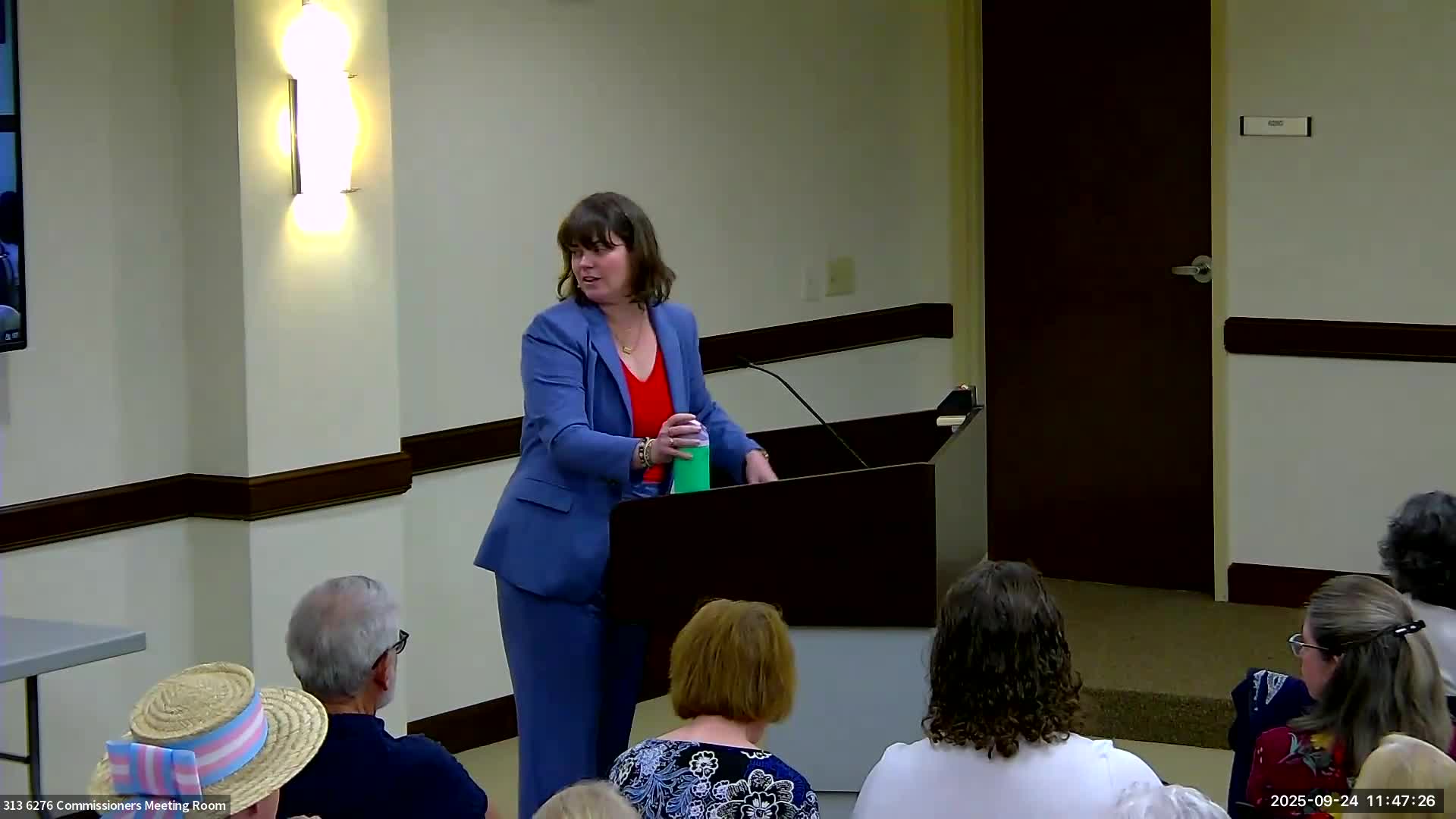
Chester County commissioners voted to adopt Ordinance 2025-03 on Sept. 24, 2025, creating the Chester County Human Relations Commission to receive, investigate and adjudicate complaints of discrimination in employment, housing and public accommodations. The measure passed on a 2-1 vote: Commissioners Josh Maxwell and Marion Moskowitz voted in favor; Commissioner Eric Rowe voted against it.
The ordinance lays out procedures for filing complaints, conducting investigations and holding hearings and declares protections on a range of categories including race, color, religion, ancestry, national origin, citizenship status, gender identity or expression, sexual orientation, marital or familial status, disability, source of income, age and veteran status. County counsel said the commission would operate under long‑standing local agency law and that decisions could be appealed to the Court of Common Pleas.
Supporters said a local body would give residents faster, local recourse than state or federal agencies. Dante Deandre, a Downingtown resident who identified themselves as having a nonbinary partner, urged the commissioners “with urgency and expediency to pass ordinance 20 25 dash o 3” so people in Chester County would “have my back.” Several parents and members of the LGBT Equality Alliance testified that local protections would provide safety and peace of mind for families and employees.
Opponents focused on legal risk and cost. Bethanne Reseca asked, “What is the annual cost going to be for the commission?” and raised questions about subpoena power, mediations and the qualifications and supervision of volunteer commissioners. Legal concerns were echoed by attorney Jean Locastrove, who said the proposal could invite litigation under the Supremacy Clause or due‑process claims and urged more legal review. Commissioner Rowe said he was concerned about fiscal stewardship and potential lawsuits and said he would vote no: “I will be voting no on this ordinance.”
County solicitor staff told the board the ordinance was intended to “support and supplement existing federal, state, and municipal nondiscrimination protections” and noted that, in many instances, comparable protections already exist through federal statutes, the Pennsylvania Human Relations Act and case law such as Bostock v. Clayton County. Solicitor staff also said the ordinance explicitly includes some items not currently uniform at the state level—most notably local protection for “source of income” and an explicit listing of victims of domestic and sexual violence among protected statuses.
The board debated operational details at length before the vote. Commissioners asked whether the commission would be bound by rules of evidence, how frivolous‑claim fee awards might be handled on appeal, and what standard of proof would apply; counsel said the ordinance contemplates a preponderance‑of‑the‑evidence standard and that parties could seek review in the Court of Common Pleas. Counsel also said the initial line item in the draft budget was $500 and that many peer counties run volunteer commissions with minimal direct expense, though counsel acknowledged that significant use of the commission could require more staff time or attorney support.
The ordinance drew nationwide and regional comparisons during debate: speakers referenced ordinances in Phoenixville and Downingtown, litigation involving Delaware County, and national court developments. Commissioners said the measure was intended as a local, accessible forum so residents would not necessarily need to wait for state or federal processes. Rowe and other opponents argued the county should avoid duplicative or potentially costly structures; Moskowitz and Maxwell said local protections would fill gaps and reiterate county values.
The board adopted the ordinance after public comment and extended discussion. Implementation details — including budget lines for any reimbursements to volunteer commissioners, required training, and a plan for notifying state and federal agencies when cases overlap — were left to county staff and counsel to develop following the vote.