Get Full Government Meeting Transcripts, Videos, & Alerts Forever!
Get email alerts on the Economic Development topic
No spam. Unsubscribe anytime.
County executive previews FY26 budget, highlights $600 million downtown plan and air-monitoring after Clarendon coke works tragedy
Summary
Allegheny County’s chief executive delivered a quarterly address outlining economic development plans, a $600 million downtown revitalization effort and a $1.57 billion airport terminal modernization, and described the county’s response to an August accident at the US Steel Clarendon coke works that hospitalized 10 and killed two.
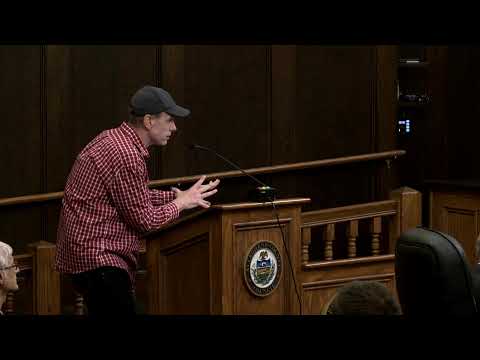
County Executive (name not specified) told Allegheny County Council on Tuesday that the county will present its fiscal 2026 budget next month and outlined a slate of development and public-safety priorities intended to grow the tax base and protect residents.
In a roughly 75-minute quarterly address, the county executive highlighted a $600 million revitalization plan for Downtown Pittsburgh that officials say will include more than 1,000 new housing units and upgraded public spaces, and a $1.57 billion terminal modernization program at Pittsburgh International Airport. The executive also described the county’s emergency response after an Aug. 11 accident at the US Steel Clarendon coke works that sent 10 people to hospitals and resulted in two deaths.
The address matters because county leaders say flat or shrinking state and federal funding will force them to rely on local economic growth to maintain services. The chief executive said the administration plans targeted, place-based investments in housing, workforce development and industry-specific clusters such as advanced manufacturing, life sciences and clean energy.
County Executive (name not specified) described short-term actions and longer-range planning. “Growth matters because it creates opportunities for our residents, more good jobs, stronger neighborhoods, and the ability to keep families rooted here in Allegheny County for generations,” the county executive said. He told council that the county is coordinating a comprehensive planning process to guide investments over the next 10 to 30 years.
Key details and funding
The county executive provided the following figures and program highlights during the address and subsequent exchange with council members: - Downtown revitalization: a $600,000,000 plan announced last year that the county says will support more than 1,000 new housing units, new retail and office space, upgraded public spaces and short-term construction jobs ahead of the NFL draft. - Airport modernization: a $1,570,000,000 terminal modernization program at Pittsburgh International Airport backed by airlines (the executive stated the project was “backed by the airlines, not by local tax dollars”). - County investment in conversions: Allegheny County Development (ACD) has invested more than $3,000,000 directly in housing conversions downtown; the county’s economic development arm (ACED) reported $17,000,000 in investments or commitments this year, including $8,000,000 targeted at projects expected to support more than 50 employees, $2,000,000 for small-business growth and $7,000,000 for facilities and infrastructure. - Parks and services: county parks had about 200,000 users at four county pools this summer; concession sales cited in the address included 22,048 orders of French fries and 14,219 orders of chicken tenders.
Response to Clarendon coke works accident
The county executive thanked first responders, the Medical Examiner’s Office and county agencies for their response to the Aug. 11 Clarendon coke works incident. “That day, 10 people went to the hospital, and tragically, 2 people lost their lives,” he said. He said two county Health Department employees who were on site for routine inspections were not seriously injured.
The county worked with the Pennsylvania Department of Environmental Protection and Carnegie Mellon University to deploy mobile air-quality monitoring after the accident. The county executive thanked “Dr. Vann and her team” at the health department for “clear and quick communications” and said the monitoring set “a new precedent” for post-event emissions data collection.
Council questions: reassessment, state budget and air monitoring
Council members pressed the executive on a countywide property reassessment and on how the county will draft a budget when the state budget remains unsettled. "My first question is... is there any update on the plan for a countywide reassessment?" Council member Hallam asked. The county executive replied that work is underway to finalize enabling legislation and to stand up a Government Review Commission that would examine reassessment options.
On the late state budget, the county executive said staff will press ahead with a local budget and asked council members to urge state lawmakers to act, calling a timely state budget “very important for us, to deliver an honest and comprehensive county budget.”
The county executive also answered questions about air monitoring and data-sharing after the Clarendon incident. In response to Council member Nacharetti Chavkas’s request for monitoring results, the executive said initial findings have been shared with the health department and that county staff would work to synthesize the data for public consumption and to present it at upcoming community meetings.
Public-safety and workforce initiatives
The county executive said he recently signed an executive order on worker safety and protection and credited county personnel for handling the Clarendon response. He highlighted workforce programs and training hubs the county is supporting, including predevelopment funding for reuse of an industrial building in McKees Rocks as a workforce hub and investments supporting advanced manufacturing on Neighborhood 91 at the airport.
Looking ahead
The executive said the administration will deliver the proposed fiscal 2026 budget to council next month. He framed the budget presentation as a balance of cost-saving measures and targeted investments, and urged continued collaboration with municipalities, regional partners and the private sector to grow the tax base without increasing tax burdens on current residents.
Ending
The county executive closed by promoting “County Connect” outreach events and inviting council members and residents to upcoming community engagement sessions tied to the county’s comprehensive planning process. He then opened the floor for questions from council members.