Get Full Government Meeting Transcripts, Videos, & Alerts Forever!
Get email alerts on the Coastal Resiliency topic
No spam. Unsubscribe anytime.
Planning commission outlines timeline to draft zoning changes tied to Chesapeake Beach coastal resiliency plan
Summary
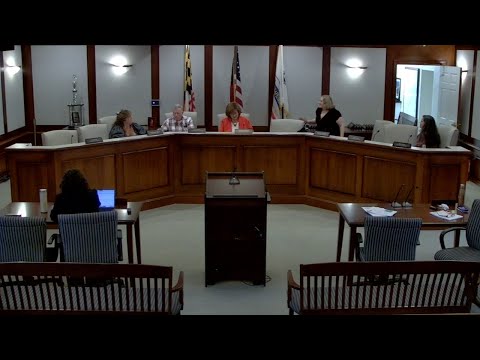
Planning staff briefed the Chesapeake Beach Planning and Zoning Commission on Sept. 24 about zoning recommendations drawn from the town's 2023 Coastal Resiliency Plan and proposed next steps for translating those recommendations into ordinance text.
Planning staff briefed the Chesapeake Beach Planning and Zoning Commission on Sept. 24 about zoning recommendations drawn from the town's 2023 Coastal Resiliency Plan and proposed next steps for translating those recommendations into ordinance language.
Staff emphasized zoning changes would focus where projected sea-level rise and flooding most affect town parcels, recommending an overlay mapped to the plan's 2100 flood-area projections. The staff presentation highlighted several zoning-related actions in the plan: require engineering certification for buildings in mapped flood areas, require stormwater practices to be effective under a 2.4-foot sea-level-rise baseline, and consider restrictions on certain vulnerable uses (for example, group homes or nursing facilities) in the most at-risk zones.
"The Chesapeake Beach Coastal Resiliency Plan was adopted in 2023. It has a lot of recommendations. Not all of them are zoning related, but I have pulled out the ones that are zoning related for us to discuss," Miss Franklin said.
Staff proposed an approach that would: 1) map the areas identified in the resiliency plan into a zoning overlay; 2) use the overlay to permit specialized construction approaches (for example, amphibious or elevated structures) and to require higher stormwater and mitigation standards in areas projected to be affected by sea-level rise; and 3) establish a fee-in-lieu program or similar mechanism to fund neighborhood-scale mitigation projects when individual lots cannot meet on-site mitigation requirements.
Commissioners asked staff to bring in additional technical advisers in coming months, including representatives from the Critical Area Commission and the town's public-works staff, and to invite an insurer or insurance advisory representative to explain flood-insurance implications. Staff outlined a preliminary timeline: October'November to evaluate zoning and overlay mapping, December through March to draft ordinance language, and a target of spring (April) for public hearings and Town Council consideration, noting the timeline could shift depending on technical analysis and stakeholder input.
Staff said the overlay approach would focus zoning changes and mitigation funding on the properties and neighborhoods that will be most affected, rather than applying uniform changes across the entire town. Commissioners discussed the need to identify specific projects and funding mechanisms for mitigation and asked staff to coordinate with county and state partners.
No formal votes were taken; commissioners asked staff to proceed with planned outreach and to return with draft language and a proposed project timeline.