Get Full Government Meeting Transcripts, Videos, & Alerts Forever!
Get email alerts on the Housing Policy topic
No spam. Unsubscribe anytime.
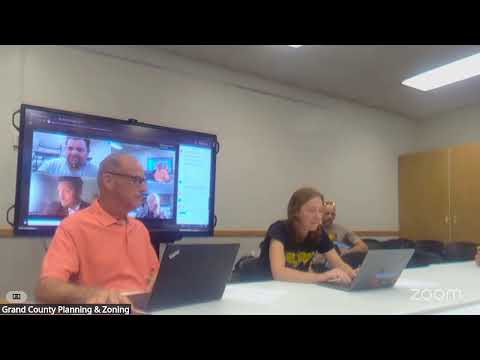
Commission schedules workshop on higher‑density multifamily zone after commissioners debate feasibility
Summary
Planning commissioners agreed to hold a workshop to refine a proposed MFR‑45 multifamily residential standard and to coordinate with state housing funding agencies; commissioners emphasized matching any new density rules to the county’s future land‑use map and infrastructure capacity.
The Grand County Planning Commission scheduled a workshop to examine a proposed higher‑density multifamily residential standard (referred to by some participants as "MFR‑45") after a wide-ranging discussion about feasibility, water and sewer capacity, parking and the relationship between density and affordability.
Commissioners and staff said they want to align any new density designation with the county’s future land‑use map and with infrastructure constraints. Several commissioners suggested that a numeric density target be tested against real parcels in the county to see whether the policy would be practical where the county intends growth to occur.
Background and concerns Commissioner Aaron (last name not specified) and other members noted that higher density does not automatically produce affordability and that water and sewer capacity, parking and the need for costly underground structures can raise development costs. Commissioner Tony reminded the body that Moab’s geology, slopes and high water tables in parts of the valley can make underground parking and deep foundations expensive, reducing the developer economics needed to produce affordable units.
Staff and outside references Commissioners asked staff to invite representatives from state housing programs (including the Low‑Income Housing Tax Credit program and state housing finance agencies) and regional housing partners for the workshop so commissioners could understand funding opportunities and constraints. Commissioner Brian and others suggested including developers with experience building at higher densities to provide real‑world cost guidance.
Scheduling and next steps The commission set a workshop for 03:30 p.m. on September 22 (date and time to be confirmed in staff notices) to review draft ordinance language, map the areas likely to be affected, and hear from housing‑funding experts and developers. Staff said they will prepare GIS maps showing which parcels would be affected to test whether the proposed densities align with the county’s future land‑use plan and utility capacities.
Why this matters Commissioners described the workshop as an early, technical session to reduce guesswork before any formal ordinance amendment. The aim is to ensure any new MFR standard supports housing goals without creating unintended engineering or infrastructure costs that would undermine affordability.