Get Full Government Meeting Transcripts, Videos, & Alerts Forever!
Get email alerts on the Land Use Chamorro Land Trust topic
No spam. Unsubscribe anytime.
Guam Legislature advances bill permitting commercial extraction on Chamorro Land Trust lot after heated debate
Summary
The Guam Legislature advanced Bill 7-38 COR to third reading after floor debate over commercial extraction at Lot 5412 in Mangilao. Supporters say revenue could fund homesteads; opponents warned of health, cultural and aquifer risks and said families already live on the parcel.
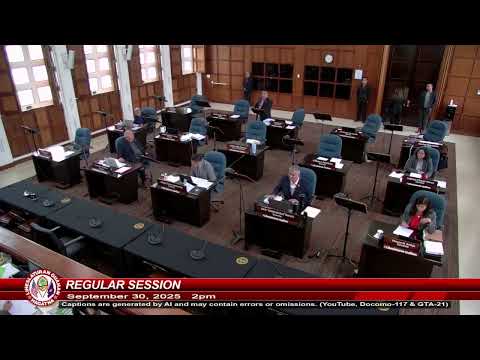
The Guam Legislature voted on the floor to send Bill 7-38 COR, as amended, to the third-reading file after several senators debated whether the measure should move forward or be returned to committee.
The bill would authorize the Chamorro Land Trust Commission (CLTC) to pursue commercial leases for Lot 5412 in Mangilao (listed in the bill as Lot 5412), including competitive bidding for aggregate extraction that supporters say could generate revenue to prepare homestead lots and fund infrastructure.
Supporters framed the measure as a pragmatic revenue source to help the CLTC prepare lots for residential leases. “I remain in support of this legislation,” said Senator Cesar Smasi, citing the need to create cash flow so the land trust can develop infrastructure. Proponents told colleagues the CLTC board approved the measure and that extraction could generate funds that would be reinvested in homestead development; one senator’s estimate cited during debate put potential annual revenue at up to $1,000,000.
Opponents said the bill posed risks to residents, cultural resources and Guam’s groundwater. Members on the floor read written testimony from residents of Lot 5412-10, Manila, who said ongoing quarrying by Hawaiian Rock Products already exposed them to dust, blasting, noise and habitat loss. The written testimony from Andrew M. Cruz and Marie D. Cruz, submitted to the record and read aloud, said in part: “the generation of white dust from blasting and excavation settles on our property and in the air we breathe, leading to respiratory irritation and contributing to an overall decline in our health and quality of life.” That submission urged the committee and Legislature to reject the bill.
Floor debate also cited Title 21, Section 65104, calling for protection of traditional rights of way to coastal access; hiking groups’ testimony asking that access to Fadean Cove be preserved was referenced in opposition remarks. Several senators warned that extraction on limestone forest could threaten the aquifer and that the CLTC’s primary mission is land restoration and homesteads, not serving private commercial interests. “This is the reason why we were able to obtain a settlement,” a senator said when describing the original purpose of the Chamorro Land Trust Act: to return lands and prioritize beneficiaries, not to prioritize private industry.
Supporters countered that the bill, as amended on the floor, includes safeguards, a competitive leasing process and stronger permit requirements. Sponsor Senator Shonaksteen said the measure “will not result in a traditional quarry” and emphasized the bill’s stated intent to generate resources for surveying and infrastructure so homestead lots can become habitable.
A motion by a senator to send Bill 7-38 COR back to committee failed on a raised-hand vote. A subsequent motion to send the amended bill to the third-reading file passed on the floor; the bill was ordered to the third-reading file as amended (voice/hand vote; no roll-call tally for the third-reading motion was recorded in the transcript). The CLTC and other agencies, as well as residents and community groups, were repeatedly identified in debate as stakeholders that must be consulted if the bill proceeds.
Questions on enforcement, monitoring of commercial leases, the CLTC’s ability to collect revenues from existing commercial activities, and the potential need for additional environmental study remained a central part of the floor exchange. Several speakers asked that the CLTC pursue existing revenue sources before expanding new commercial leases and urged stronger safeguards for cultural sites, public access routes and groundwater protection.
The bill’s floor advancement does not itself authorize extraction; it sends the measure to the third-reading file where a final vote will be scheduled and recorded.