Get Full Government Meeting Transcripts, Videos, & Alerts Forever!
Get email alerts on the Military Personnel topic
No spam. Unsubscribe anytime.
Utah National Guard pilot says he was grounded after refusing COVID-19 vaccine; recounts lost flight status and restrictions
Summary
An Apache pilot who identified himself as a Utah Army National Guard warrant officer told a Davis County forum he was grounded after refusing the COVID-19 vaccine and described a series of personnel actions and obstacles to reinstatement.
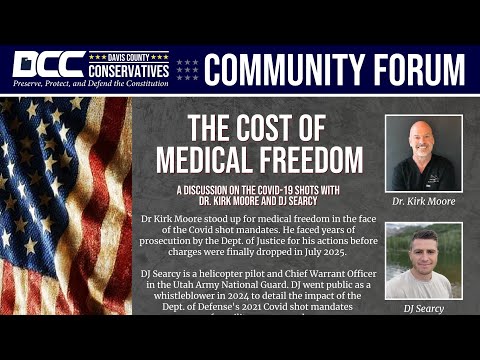
A Utah Army National Guard chief warrant officer who spoke at the Davis County Conservative Community Forum on Sept. 11 said he lost flight status after refusing a COVID-19 vaccine mandate and remains barred from certain Guard facilities.
The speaker, introduced by the forum organizer as "DJ," said he is an Apache helicopter pilot with the Utah Army National Guard and that he refused vaccination on the grounds that accepting an exemption would signal the military had authority to compel the treatment. "When the vaccine mandate dropped, I took a very strong stance, and I refused it," he said. The speaker said he declined both medical and religious exemption processes.
He told the forum that as a result he was grounded from flying and placed in administrative limbo. He said he requested the policy in writing from his commander and that the commander refused to provide it. He described subsequent restrictions: he said he was banned from some National Guard buildings and that if he entered them he would be subject to arrest or trespass actions.
On communications with elected officials: The speaker said he reached out to Congressman Burgess Owens, which prompted a response from the Utah adjutant general in memo form that the speaker described as inaccurate. He said the congressman’s office ultimately told him it could not help and referred him to free legal resources.
On reinstatement and back pay: The speaker said a small number of soldiers have been reinstated but that there has been "no accountability" for leaders who ordered mandates, and that soldiers who were discharged and later reinstated face complicated pay rules that could reduce back pay by earnings obtained while separated from service. "If that soldier left the military and went out and got another job, all that promised back pay, they're gonna deduct anything that they made outside, from that back pay that they're promised," he said.
On leadership concerns: The speaker recounted a meeting with his brigade commander in which the commander expressed concern about whether the speaker would follow an alleged illegal order to fire upon a child; the speaker said the commander told him he was a liability. The speaker characterized the military as "corrupt" or "corruptible" and said he expected broader institutional changes.
Limitations and verification: The account summarizes the speaker's onstage remarks. The reporter did not independently verify personnel records, the specific orders cited, or the status of any individual reinstatements or back-pay arrangements. Military personnel policy and records held by the Utah National Guard or the Department of Defense would be necessary to corroborate these claims.
Ending: The speaker urged continued public attention and said he would continue speaking publicly about his case; he said he had no fear of disciplinary consequences and framed his stance in oath-related terms.