Get Full Government Meeting Transcripts, Videos, & Alerts Forever!
Get email alerts on the Public Engagement Demographics Equity topic
No spam. Unsubscribe anytime.
Consultant outlines demographic shifts and engagement approaches; urges problem‑first planning and fairness
Summary
Mitchell Silver briefed multiple Hampton boards on demographic trends (aging population, rise in single‑person households), public engagement strategies to reach underrepresented groups and equity as fairness, and urged leaders to focus outreach and test implementation feasibility early in the planning cycle.
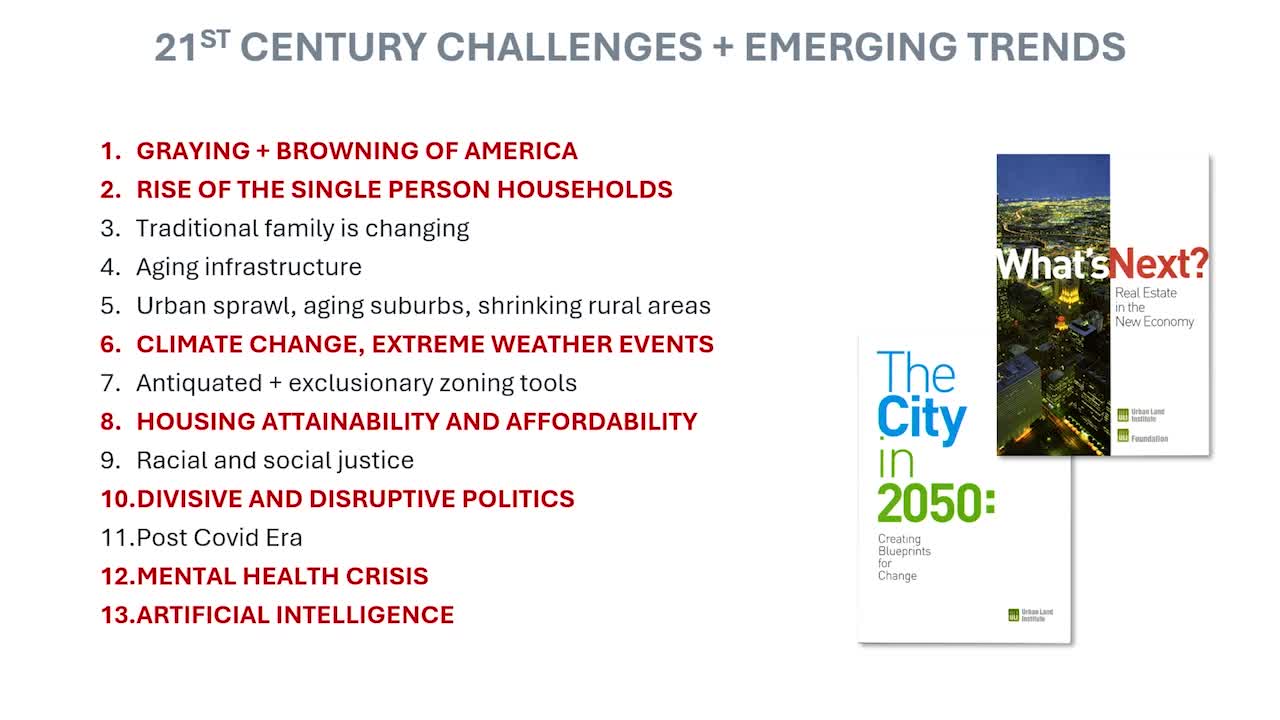
Mitchell Silver spent a portion of the joint retreat reviewing national and local demographic trends, cautioning local leaders that who shows up to public meetings is not always representative of who will live in a community in 10–15 years. He urged leaders to frame engagement around the problems the city needs to solve rather than open‑ended lists of desired amenities.
Silver highlighted several demographic trends that should inform planning: an aging population and increases in single‑person households; declining marriage rates and greater racial/ethnic diversity in the coming decades. He noted that different generations and groups engage differently and that public outreach must be designed to reach those who do not typically attend evening town halls. He recommended outreach by geography, demographics and topic, and suggested pairing younger residents or newcomers with long‑term residents in facilitated conversations to surface different priorities.
On equity and inclusion, Silver said he avoids acronyms and defines the terms plainly: diversity as “the value of different perspectives”; equity as “fairness”; and inclusion as creating places where people feel they belong. He warned that the shorthand “DEI” has become charged in some forums and recommended that Hampton emphasize transparent definitions and practical outcomes in outreach materials.
On gentrification and affordability, Silver said municipal control over housing prices is limited, but local governments can deploy anti‑displacement strategies proactively by identifying vulnerable neighborhoods and targeting preservation resources or overlays where appropriate. “Rather than a broad brush on gentrification, let us focus on the communities that are vulnerable,” he said.
Why it matters: Participants from council, the school board and other authorities repeatedly said retaining young families and improving neighborhood livability are priorities. Silver argued that better-designed, problem‑based engagement and explicit anti‑displacement work give leaders more credible tools for responding to resident concerns and delivering outcomes.
What wasn’t decided: No formal public‑engagement program was adopted at the retreat. City staff and the consultant will refine outreach approaches; the consultant recommended immediate actions to ensure engagement is representative and that plan recommendations are vetted for implementation feasibility and equity impacts.
Next steps: Silver and staff urged the city to pair public education about tradeoffs with early, realistic vetting of funding and staffing for proposals so the public’s time is matched by concrete deliverables and so unintended effects such as displacement can be anticipated and addressed.