Get Full Government Meeting Transcripts, Videos, & Alerts Forever!
Get email alerts on the Planning Implementation topic
No spam. Unsubscribe anytime.
Consultant urges Hampton to convert plans into action with clear priorities and implementation tools
Summary
At a special joint retreat, planning consultant Mitchell Silver urged Hampton leaders to “plan with purpose,” prioritize problems before solutions and adopt a transparent implementation system tying policies, code changes and funding to specific tasks and timelines.
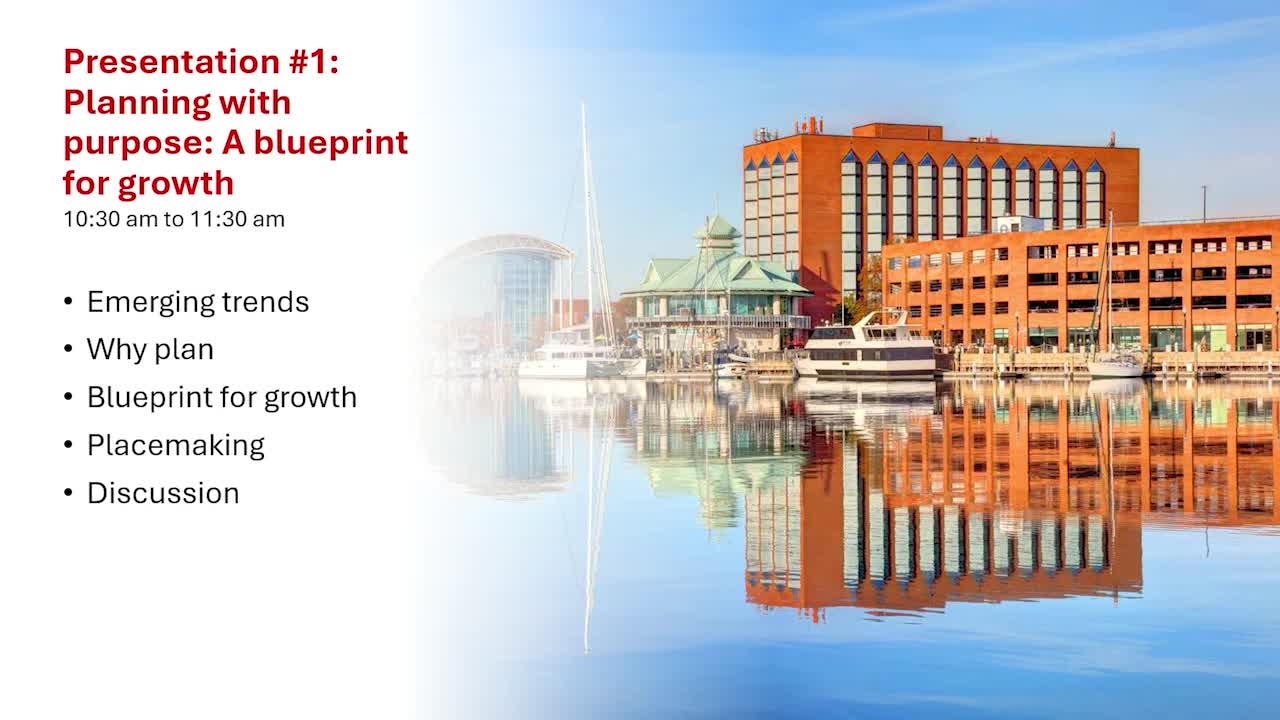
Mitchell Silver, a planning consultant and facilitator brought in for a special joint retreat, told members of the Hampton City Council, Hampton School Board, the Hampton Economic Development Authority, the Hampton Planning Commission and the Hampton Redevelopment and Housing Authority that the city must link its many planning documents to a firm implementation strategy. The presentation, delivered at the city’s multi‑agency workshop, focused on identifying the problems a plan should solve and creating a predictable blueprint for growth that officials and developers can follow.
Silver said the first question a planning process should answer is not “What do you want to see?” but “What problems are you trying to solve?” He warned that plans that collect aspirational wishes without a reality check leave staff and the public with promissory notes rather than deliverable projects. “Fall in love with the problem, and not the solution,” Silver said.
Why it matters: Hampton has multiple policy documents and several area/master plans with varying vintages; staff and board members repeatedly flagged limited staff and funding as barriers to moving recommendations into construction. Silver argued that a clear implementation framework — one that assigns a lead department, a timeline, funding expectations and a cadence of accountability — makes it easier for elected officials to prioritize and for developers and residents to understand what is likely to be approved.
Key elements Silver recommended include: a) framing a plan around clearly stated problems and prioritized outcomes; b) using a compact implementation matrix tying each recommended action to a lead agency, supporting partners, a time frame and a capital designation; and c) creating an annual public progress report so the community can see which items moved from policy to funded projects.
Silver described three implementation “levers” for turning plans into built outcomes: policy/guidance (the plan itself and departmental programs), regulatory change (zoning/code updates), and funding (capital improvement budgets or public‑private partnerships). He emphasized early vetting of recommendations with the implementing departments to avoid creating expectations the city cannot meet. “If you prioritize everything, you prioritize nothing,” he said.
Presentation examples: Silver drew repeatedly on Raleigh and New York City case studies. He described Raleigh’s approach to compressing priorities into a manageable queue and tying capital projects to a tracker used to brief council, and he said that implementation success required limiting the number of top priorities and protecting staff capacity for delivery. He also recommended a combination of short‑term “quick wins” (small, low‑cost actions delivered within months), short‑ and mid‑term capital projects, and a narrower set of long‑term priorities rather than hundreds of unsequenced recommendations.
Local follow‑up: City Manager Mary Bunting told participants staff will assemble an internal team to review the retreat outputs and coordinate next steps with the mayor and boards. Bunting said staff will meet in the coming week to process retreat feedback and begin prioritizing plan recommendations for implementation. Silver said he will continue to provide observations and recommendations to the mayor and city manager following the retreat.
What wasn’t decided: The retreat produced no formal votes or regulatory changes; it was a facilitated strategy session. Any specific code amendments, capital funds or project approvals will require separate public processes and formal action by the relevant boards and council.
Looking ahead: Silver recommended treating comprehensive planning as a living document with regular (about five‑year) updates and building in a realistic implementation checklist from the project’s start, not as an afterthought. That approach, he said, reduces time and cost overruns and improves public trust in the planning process.