Get Full Government Meeting Transcripts, Videos, & Alerts Forever!
Get email alerts on the Zoning Rezoning topic
No spam. Unsubscribe anytime.
Virgin council approves rezoning along SR‑9 with development agreement limiting commercial frontage to 400 feet
Summary
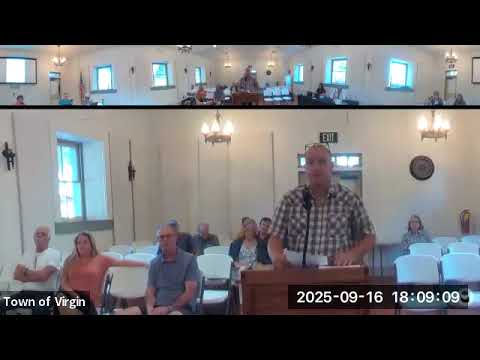
The Virgin Town Council voted Sept. 16 to rezone a parcel fronting State Route 9 from rural residential to commercial, subject to a recorded development agreement that limits commercial uses to the first 400 feet from the SR‑9 right‑of‑way.
The Virgin Town Council voted on Sept. 16 to rezone a parcel fronting State Route 9 (parcel referenced in the hearing as B‑22‑1‑21‑226) from rural residential to commercial, subject to a recorded development agreement that restricts commercial development to the first 400 feet measured from the SR‑9 right‑of‑way. Council members also agreed that any proposed uses for the portion of the parcel behind that 400‑foot strip would require a subsequent development agreement, public hearings and planning commission review.
Why it matters: The parcel sits at an entrance corridor and council members said the rezoning could create smaller commercial pads for local businesses. Opponents and nearby residents argued the change would reduce the town—s remaining rural residential land, create potential land‑use conflicts with adjacent homes and worsen pressure on housing affordability.
What the council decided: The motion approved rezoning the identified parcel to commercial with a recorded development agreement limiting commercial uses to the first 400 feet from SR‑9; council members agreed the back portion of the lot would be subject to a second development agreement if the owner seeks different uses there. The development agreement language was to be negotiated with the applicant and recorded against the property so restrictions would run with the land.
Key points from the hearing: Town planning staff and the planning commission reviewed the application and returned it to the commission for additional public input after questions about applicability of a recently adopted ordinance on commercial depth. The town—s attorney and staff advised the council that court precedent and land‑use practice give councils wide discretion on legislative actions like zone changes and that development agreements can be used to impose recorded restrictions binding on future owners.
Speakers and positions: Jared Bates, the applicant—s engineer, told the council the applicants preferred not to repeat a lengthy application process and supported getting the 400‑foot frontage rezoned now while negotiating protections for adjacent residential areas later. Several council members and members of the public urged careful transition standards and protections for existing homeowners; others argued the town needs more commercial land to broaden the local tax base and allow businesses such as a grocery store to locate in town.
Votes and procedure: The motion to approve the rezoning with a development agreement limiting commercial use to the first 400 feet passed in a recorded council roll (members recorded on the transcript as: Jean — yes; Misty — yes; Valerie — yes; Paul — no; April — no). The council instructed staff and the applicant to draft the development agreement for signature and recording; the council also discussed whether the first development agreement required another council review before recording and directed staff to produce draft language.
Implementation notes: Council members said the recorded development agreement will run with the land and bind future owners. Any future change to the uses on the back portion of the parcel will require a second development agreement, planning commission public hearing and council approval. Town staff and the applicant will draft the first development agreement, and the council asked staff to return with final language for recordation.