Get Full Government Meeting Transcripts, Videos, & Alerts Forever!
Get email alerts on the Capital Finance topic
No spam. Unsubscribe anytime.
Pottsgrove board approves design phase for athletic complex; financial advisor outlines borrowing options
Summary
The school board approved contracts to move forward with design work for an athletic‑complex renovation; PFM presented financing options including an $8.995 million borrowing scenario and explained IRS rules that affect timing and interest rates.
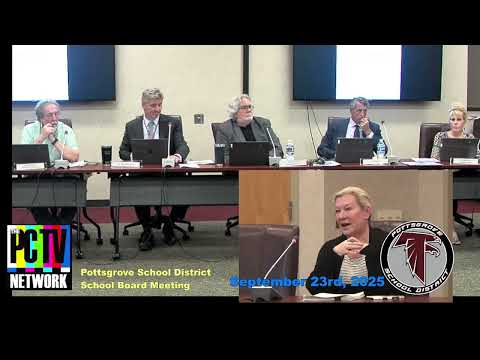
The Pottsgrove School Board on Sept. 23 authorized the district to proceed with the design phase of a proposed athletic complex renovation and reviewed financing options presented by PFM Financial Advisors.
Jamie Doyle of PFM told trustees the district is well positioned to borrow on a tax‑exempt basis given current market conditions and outlined an analysis of an $8,995,000 potential borrowing to fund the project. Doyle described three IRS tests that affect tax‑exempt financings — reasonable expectations for spending, entering a substantial binding obligation within six months to spend at least 5% of proceeds, and proceeding with due diligence — and said the district would qualify for the "small issuer" exception because planned borrowings would be under the $15 million calendar‑year threshold.
"This evening is an initial presentation to the board," Doyle said, adding that the district would have several structuring options if it chose to enter the market. He described a possible 13‑year financing with a "pro rata wrap" structure that phases new debt service to align with scheduled drop‑offs in the district’s existing debt portfolio. Doyle also explained capitalized interest options that would phase debt‑service costs into future budget years and highlighted the potential to earn positive arbitrage if investment yields exceed borrowing costs.
Trustees asked about timing and urgency. A board member asked whether there was immediate pressure to use 2025 calendar‑year limits; Doyle said only if the board wanted to capture the current calendar‑year bank‑qualified or small‑issuer advantages. "Not unless you want to use the $10,000,000 limit for '25," he said. Doyle also noted that the district’s existing debt issues have scheduled drop‑offs in 2029, 2030, 2031 and 2033 that give flexibility in structuring new debt.
Board members voted to approve two design‑phase contracts (agenda item 9.1) — one with the construction manager and one with the architect — subject to solicitor review. Trustees did not approve the full estimated $13.6 million project; board members emphasized the vote authorized only design work. "To be clear, there's another decision point once the design process is finished," a board member said during deliberations.
Doyle reviewed a sample timeline: if the board adopted a parameters resolution at a future meeting (the adviser cited Nov. 11 as an example), the district could enter the market immediately afterward and, if timing allowed, settle by mid‑December to take advantage of calendar‑year limitations. He cautioned that timing, market conditions and the final project scope would determine the ultimate borrowing amount and interest costs.
The board approved several related items during the meeting: the consent‑agenda personnel items; contracts for substitute nursing services and communications for three elevators (agenda items 9.2–9.3); creation of an athletics Instagram account (9.4); and the design contracts (9.1). The design contracts carry a maximum not‑to‑exceed estimate of $13.6 million for the concept presented, but board members and presenters said the final scope and cost could be reduced during design development.
What this means: the vote allows architects and the construction manager to develop drawings, cost estimates and phased options. A later vote would be required to proceed to construction or to issue debt. The finance presentation left open multiple financing paths — borrowing under small‑issuer limits, engaging a bank‑qualified structure or pursuing a parameters resolution to lock in timing — and stressed that choosing to enter the market would be a separate decision after design work narrows scope and cost.
The board’s next regular meeting is Oct. 14, when administrators said they could return with additional documents and, if the board chooses, a parameters resolution to authorize finance staff to enter the market on predetermined terms.