Get Full Government Meeting Transcripts, Videos, & Alerts Forever!
Get email alerts on the Bicycle And Pedestrian Infrastructure topic
No spam. Unsubscribe anytime.
St. Tammany Parish reviews draft comprehensive bicycle and pedestrian plan; officials ask about tunnels, Military Road
Summary
St. Tammany Parish officials on Monday heard a presentation of a draft comprehensive bicycle and pedestrian plan prepared by a consultant working with the Regional Planning Commission (RPC), outlining a parish-wide network of bike lanes, side paths, paved shoulders and intersection treatments and a set of supporting policies and project prioritizations.
St. Tammany Parish officials on Monday heard a presentation of a draft comprehensive bicycle and pedestrian plan prepared by a consultant working with the Regional Planning Commission (RPC), outlining a parish-wide network of bike lanes, side paths, paved shoulders and intersection treatments and a set of supporting policies and project prioritizations.
The draft plan assembles existing facilities and proposed routes from local municipal plans, identifies roughly 160 linear route segments and more than 168 locations for intersection treatments, and pairs those with cost estimates, design guidelines and suggested programs such as a model complete streets policy, maintenance recommendations and community encouragement programs.
The plan’s consultant said the effort included two public-engagement phases (January–February and July–August), online mapping tools and pop-up events at farmers markets and other community sites; the consultant said each outreach phase received about 300 responses. The consultant described the network as a mix of paved shoulders in rural north parish areas, side paths and sidewalks in more urbanized southern areas and separated shared-use paths like the Tammany Trace.
"We're the lead consultant on this project, which is being done actually by the regional planning commission in coordination with the parish," the consultant said. The presentation included a draft network map, a matrix linking each proposed segment to a project definition, responsibility (parish, municipal or DOTD roadway), and preliminary cost estimates; the consultant said right-of-way cost estimates remain under review.
Why it matters: the plan attempts to knit together municipal and unincorporated-parish routes to improve safety, connectivity to schools and businesses, and access to existing amenities such as the Tammany Trace. It also establishes design standards, identifies likely funding sources and recommends a parish-level maintenance and advisory structure to preserve new facilities.
Council members praised the outreach and raised several implementation questions. Councilman Smith called the proposal "exciting" and asked whether the public had requested tunnels underneath state highways at key crossings; the consultant said about four comments mentioned tunnels and that some locations—such as the Claiborne Hill/Highway 190 area—might be candidates for grade-separated crossings but that funding sources would need to be identified outside the parish general fund.
Councilman Bender expressed concern about on-street bike markings seen in other cities and asked, "Isn't somebody gonna get killed with this?" The consultant responded that most parish residents preferred separated facilities and that only four on-street bike lanes appear in the draft network; most proposed on higher-speed corridors are separated side paths or paved shoulders, not painted lanes within travel lanes.
Military Road was a recurring focus. Councilman Kugel and other members asked about the length, cross-section and drainage implications of a proposed side path along Military Road. The consultant said the draft network includes side paths along much of Military Road, described approaches such as enclosing ditches with drop inlets to save right-of-way, and said Military Road ranked highly in the public prioritization results.
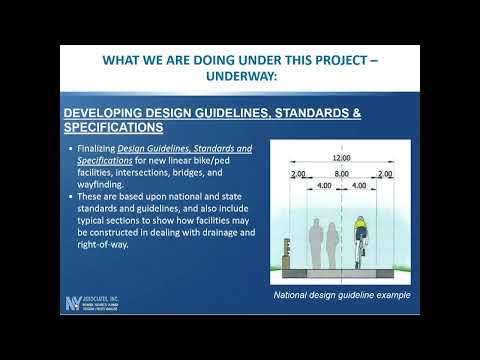
The presentation listed draft policy and program recommendations including a model complete streets policy, maintaining the parish sidewalk incentive for new subdivisions, a pedestrian-and-bicycle advisory committee, wayfinding and app-based walking maps, and design standards for linear facilities, intersections and bridges. The consultant said the RPC had accepted the design guidelines and the parish engineering department would review them next.
Next steps: the consultant said RPC and parish staff will finalize the prioritization (the draft prioritization was submitted to the RPC for review), compile project sheets for top projects and prepare a master plan document with maps, graphics and cost estimates to present to the Planning Commission likely in December. The consultant said the parish and RPC will work together to pursue federal and state funding and to coordinate with DOTD on projects affecting state highways.
Votes at a glance -Reverse agenda order (motion to move item 2 to item 1): Motion made by Mr. Burke; second not specified. Council took the vote and, "Hearing no opposition," moved the bicycle and pedestrian plan discussion first. Outcome: passed (no opposition recorded). -Delay capital outlay discussion to next meeting: Chair requested a motion to delay; Councilman Smith was asked to make the motion. Second not specified. Outcome: passed (vote recorded as "All in favor; Opposed? Okay."). -Adjournment: Motion and second not specified; outcome: passed.
The presentation, associated maps, matrix lists, prioritization draft and the complete-streets model are available on the project website the consultant provided; the consultant said public comment received during the formal period will continue to be considered and staff will accept emailed feedback.