Get Full Government Meeting Transcripts, Videos, & Alerts Forever!
Get email alerts on the Infrastructure Development Districts topic
No spam. Unsubscribe anytime.
City hears overview of new state Infrastructure Development District laws and their mechanics
Summary
Legal and financial consultants briefed the Gallatin Council Committee on two recent Tennessee laws that let developers create Infrastructure Development Districts, explaining petition rules, eligible costs, levy methods and differences between the 2024 and 2025 statutes.
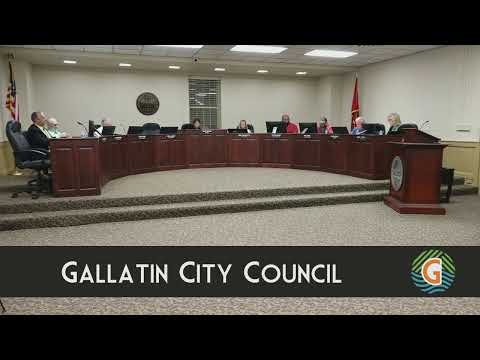
City of Gallatin officials on Sept. 23 heard from legal counsel about two new Tennessee statutes that allow developers to form Infrastructure Development Districts (IDDs) to fund public infrastructure through a special assessment on property within a district rather than general city taxation.
Attorney Jim Murphy of the Bradley Law Firm told the Gallatin Council Committee the 2024 statute and a related 2025 statute create a “special assessment district” mechanism that permits issuance of bonds or notes to pay for infrastructure and then levies an annual assessment on properties in the district to service that debt. “It basically is a special assessment that is assessed on all the property within the district, and then that money is used to pay for the public infrastructure,” Murphy said.
Murphy said the 2024 act required a district to be at least five acres, have at least $5 million in planned capital costs and ensure at least half the district area is residential. The petition establishing a district must be signed by the developer and the owners of all parcels inside the proposed boundaries and must include a name (containing “Infrastructure Development District”), the host municipality, parcel list, a site development plan and an estimated infrastructure cost and proposed levy rate. After filing, the host municipality must hold a public hearing 30–45 days later and approve the petition by resolution. The municipality may authorize issuance of bonds directly or delegate issuance to an industrial development board or public building authority; bond terms cannot exceed 30 years.
Murphy described three practical features municipalities and developers should expect: (1) the assessment lien generally ranks behind state, county and municipal property taxes but ahead of typical mortgages or mechanics’ liens; (2) local policy or procedural rules can require disclosures to buyers (Knox County adopted language that requires sales contracts to state a special assessment will be imposed); and (3) penalties and oversight — the statute allows a 1% monthly penalty for delinquent assessments and requires an annual audit of the special assessment fund by the state comptroller.
He contrasted the 2025 law, labeled the Real Estate Infrastructure Development District act, which removed the 5-acre and $5 million minimums, removed the 50% residential-area requirement, allows commercial projects as well as residential, and explicitly permits bond proceeds to fund impact fees. “The 2025 act is much more flexible from the standpoint of which projects can use it,” Murphy said.
Council members asked how petitions work, who qualifies as a developer, whether the city’s credit or bond rating is implicated, and what happens if assessments do not generate enough revenue. Murphy said landowners can be petitioning developers if they can provide the required infrastructure plan and cost estimates, but in practice single large developers typically sponsor these petitions. He said the bonds are typically revenue bonds payable from special assessments and need not be backed by the city’s full faith and credit — that option exists but is an affirmative pledge that the city must approve. He added private lender protections and developer guarantees are commonly part of the financing.
Council members also pressed on consumer disclosure, prepayment options, phasing, and administrative costs. Murphy and staff said municipalities can adopt policies and procedures to require developer disclosures at sale, to set prepayment rules, and to cap administrative costs (Murphy noted administrative costs can be capped by local policy and later referenced a 5% administrative-cost cap in discussion). Several council members expressed skepticism that IDDs will reduce market prices for homes, with one member noting developer behavior and broader construction costs will still influence final sale prices.
Why this matters: IDDs change how infrastructure for new development can be financed and shift the immediate financing mechanism from private mortgages or developer-paid up-front costs to a public bond-and-assessment structure. That can lower the financing rate for infrastructure (Murphy noted tax-exempt bond financing typically carries a lower interest rate than mortgage financing), but also creates long-term assessment obligations attached to property and potential project risk if lots do not sell.
Council next steps and local controls: Murphy repeatedly emphasized that under state law the legislative body retains final discretion; local councils can (but are not required to) adopt detailed policies and procedures for when and how they would consider IDD petitions. Staff recommended the council consider an initial set of minimum policies and to require project-specific policies for early cases while the city learns from other jurisdictions.
Provenance: first discussion of IDDs in the meeting packet and presentation began with the mayor’s introduction of the topic and Rosemary Bates. The committee’s Q&A and staff remarks followed the Bradley Law Firm presentation and concluded before the meeting moved to a sports-tourism presentation.