Get Full Government Meeting Transcripts, Videos, & Alerts Forever!
Get email alerts on the Higher Education And Employment topic
No spam. Unsubscribe anytime.
State task force launches to recommend a statewide "Connecticut Promise" and bolster local programs
Summary
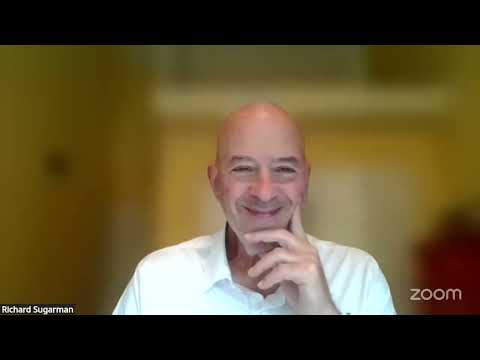
Co-chairs Kelvin Roldan and Richard Sugarman opened a task-force kickoff to review existing city-based Promise programs, form work groups, and deliver recommendations to the legislature by Jan. 1 on sustaining and expanding Promise-style college-access programs across Connecticut.
Kelvin Roldan, co-chair of the state task force to support Promise programs, opened the group's first meeting and outlined a charge to review existing city-based Promise programs, recommend ways to sustain and grow them, and propose what a statewide Connecticut Promise might look like.
The task force was created by a legislative special act referenced at the meeting ("special act number 20 five-ten") and is expected to deliver a report with specific recommendations to the legislature by Jan. 1, the co-chairs said. "We're gonna end up with a report. We're gonna end up with a report that includes specific recommendations to the legislature, hopefully, by the January 1. That's our timeline," Richard Sugarman said.
The work will proceed through two designated work groups: one to focus on supporting existing Promise programs and recommending how to create new local programs, and a second to develop recommendations for a statewide Connecticut Promise. Members volunteered for each group during the meeting. The co-chairs said they expect to balance efficiency with member availability by doing most product work in the smaller work groups and bringing drafts back to the full task force for review.
Participants emphasized collaboration among city programs, higher-education institutions, state agencies, foundations and employers. Patricia Melton, president of New Haven Promise, said a coordinated, statewide effort could allow communities that currently lack Promise programs to replicate effective models. Savon Hines, president of Hartford Promise, and the founding executive director of Waterbury Promise (name not specified in the transcript) described existing programs' successes and urged state attention to scale financially sustainable models.
University and state staff described how higher-education and state systems would fit into a network. Nathan Furst, vice president for student life and enrollment at the University of Connecticut, and Mona Lucas, UConn assistant vice president for enrollment, said institutions could partner to deliver financial aid and student supports. Dan Giugi, CHESLA's senior government-relations specialist, and Dr. Jeffrey Barry of the Office of Higher Education said state-administered grant programs (CONCAP, PATH) and financial-literacy work are complementary but not sole sources of sustained operating funds.
Speakers repeatedly flagged funding and data needs as central. Barry noted OHE grants are limited and typically cannot be the only source to operate a full program. Patricia Melton and others urged access to state data systems and aggregate measures (FAFSA, Student Clearinghouse, employment data) to demonstrate outcomes and return on investment when seeking additional public or foundation funding. "We have to be able to show the data that the legislature and national funders will want to see," Melton said.
The co-chairs proposed a schedule of full-task-force meetings and meeting norms: October 8 and October 22 (in person), November 5 and November 19 (virtual), and a December 3 in-person meeting to review a draft report; December 10 was held as an optional backup. The group agreed to aim for lunchtime meetings at 12:00 p.m., with planned durations of roughly 75 minutes but flexibility for longer sessions when work requires.
Members also discussed logistics for work groups (virtual by default, in-person as needed) and plans to set up additional, smaller meetings for the work groups to draft recommendations. No formal votes were recorded; the meeting produced agreed next steps, membership of the two work groups and a timeline for a Jan. 1 report to the legislature.
The task force will continue meeting in October and November, and work-group meetings will be scheduled separately to produce the materials and data that will inform the group's final recommendations.