Get Full Government Meeting Transcripts, Videos, & Alerts Forever!
Get email alerts on the Disability Accessibility topic
No spam. Unsubscribe anytime.
Hearing on House Bill 840 proposes mandatory disability training, certification and fines for private businesses
Summary
A Sept. 25 public hearing in San Juan reviewed House Bill 840, which would require annual trainings, a point of contact, visible signage and a two‑year certificate from the Defensoría de las Personas con Impedimentos; presenters warned the office lacks staff and funding to implement the proposal as written.
San Juan — The Comisión de Adultos Mayores y Bienestar Social held a public hearing Sept. 25 on Proyecto de la Cámara 840 (Rivera), a bill that would require private businesses open to the public to provide annual training on interacting with people with disabilities, designate internal points of contact, display approved signage and obtain a certificate of compliance from the Defensoría de las Personas con Impedimentos of Puerto Rico.
The bill, as read into the record during the hearing, would make those trainings mandatory, create a voluntary certificate of inclusion that must be renewed every two years, establish administrative fines up to $5,000 for noncompliance and direct funds collected from fees and fines to the Defensoría’s general fund to support implementation.
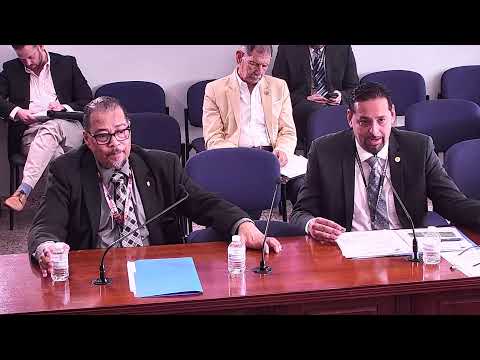
Licenciado William Pillot of the Defensoría, who presented the office’s written testimony, told the commission the measure “representa un paso histórico hacia la construcción de una sociedad verdaderamente inclusiva,” while also warning the Defensoría currently lacks the staffing and budget to carry out the new duties the bill would impose. “No podríamos afrontar las responsabilidades que nos recomienda la presente pieza legislativa ... con los recursos con los que contamos al presente,” Pillot said during his remarks.
Pillot’s presentation outlined specific provisions the Defensoría supports and the operational challenges it foresees. The bill’s key provisions presented to the commission include:
- Mandatory annual trainings for employees of private establishments open to the public, including security staff, to be designed or validated by expert entities and offered through the Defensoría; - Requirement that establishments name an internal contact for handling complaints and post the Defensoría’s contact information and a notice of administrative-complaint rights; - A two‑year renewable “certificado de cumplimiento” issued after inspection and subject to fees established by regulation; - Administrative fines up to $5,000 for violations; and - An effective date set at 180 days after approval.
Pillot and other witnesses described the scale of demand they expect if certification becomes desirable to businesses. In the Defensoría’s presentation they reported regional caseload figures and estimated roughly 8,934 businesses per region under the agency’s coverage that could seek certification, and presented a payroll table indicating the office would need “de 100 a 300 posibles empleados” with salary ranges shown in the submission (figures described in the record as 3,233,286 to 9,347,859; the table, Pillot said, did not include travel, mileage, vehicle or per diem costs).
Multiple legislators and witnesses pressed the Defensoría on implementation details and funding. Representative Ángel Folquet and others said they support the bill’s objectives but repeatedly asked how the Defensoría would carry out mandatory training and inspections without additional personnel or a dedicated budget. Pillot acknowledged the office currently has two field intercesores per region (eight total) and said that level of staffing is insufficient to administer the training, inspections and certification the bill anticipates. “No tengo el recurso humano,” he said.
Several members suggested implementation steps and alternatives the commission could consider, including:
- Phased or regional rollout and use of standardized online modules to limit travel and costs; - Free online modules combined with required in-person sessions or testing for certification; and - A regulatory framework that would specify warning periods, corrective windows (for example, a 30‑day notice to cure), mediation steps and that reserve fines for repeated or uncured violations.
Witnesses representing small businesses said training should be affordable and proportional to business size. One business owner who spoke during the hearing described existing mandatory trainings (for example, food safety courses) and suggested the proposed trainings be framed as an investment in service quality rather than a punitive cost.
The Defensoría’s testimony also proposed several substantive amendments the office expects to submit, including objective intervention protocols, confidentiality principles for interactions, requirements for a designated on‑site responsible person, short mediation procedures before fines are applied and explicit regulatory authority for the Defensoría to set fees and inspection procedures. The written submission read at the hearing amends definitions in the draft bill (for example, refining the statutory definition of “persona con impedimento”) and proposes that the Defensoría be permitted to charge fees to help defray implementation costs.
Presenters and legislators repeatedly noted the bill’s relationship to existing law. Witnesses referenced federal protections under the Americans with Disabilities Act (ADA) and Puerto Rico statutes including Ley 238 de 2004 (the local law referenced in testimony as the carta de derechos de las personas con impedimento) and Ley 158 de 2015 (which governs the Defensoría’s mandate); the Defensoría’s representatives said the measure is intended to reinforce enforcement and daily application of those rights in private establishments.
No formal vote was taken at the hearing. Several legislators asked the Defensoría to provide the office’s proposed amendment text to the commission and to return the documentation for members’ review; Pillot said the office would provide the enmiendas and that staff were already preparing draft regulations to enable implementation if the law passes.
The hearing record shows the commission and witnesses agreed on the law’s policy goal — improving daily access and respectful treatment for people with disabilities in private establishments — while expressing concern about fiscal and staffing requirements necessary for meaningful enforcement. The public hearing concluded with representatives asking for written enmiendas and for the Defensoría to provide implementation cost estimates and a regulatory timetable; the session ended at 10:28 a.m.
Community groups, affected individuals or agencies seeking copies of the Defensoría’s written submission were told the office would distribute the full ponencia and amendment language to the commission and to members who requested it.