Get Full Government Meeting Transcripts, Videos, & Alerts Forever!
Get email alerts on the Financing Development Fees topic
No spam. Unsubscribe anytime.
Big Bear Fire Authority explores special‑tax district (CFD) to fund future staffing; staff and consultants to return with options
Summary
The authority reviewed four scenarios for a community facilities district (CFD) that would levy an ongoing special tax on new development to help fund additional ambulances, paramedic squads and firefighters; board gave staff and consultants direction to develop options and return with more analysis.
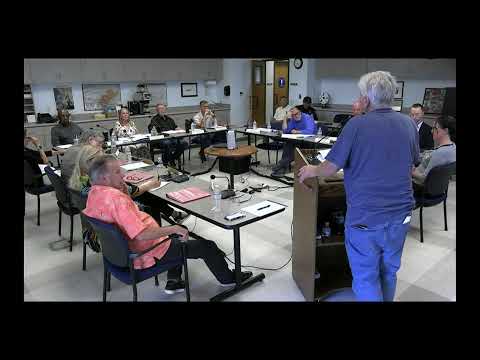
The Big Bear Fire Authority spent most of its June 10 meeting discussing possible formation of a community facilities district (also called a CFD or Mello‑Roos district) to generate ongoing revenue from new development to fund additional staffing and equipment.
Staff and consultant DTA presented four scenarios that range from a small incremental increase in emergency medical services to a full staffing build‑out that would add an ambulance, a paramedic squad and three top‑step firefighters. The largest option described a roughly $2.6 million increase in annual operating cost associated with an expanded response model; staff estimated current and projected property‑tax gains from new development would offset a portion of that cost and that a special tax on new development would be needed to cover the remaining amount.
Consultants and legal counsel told the board the CFD would be an annual special tax tied to property tax bills for annexed parcels, not a one‑time development impact fee. Formation requires a public process and typically a landowner election for initial formation; once formed, the CFD boundary can be set up to allow future annexations of undeveloped parcels. Counsel explained formation mechanics, including the possibility of conditioning project approvals on CFD annexation and the two‑thirds threshold for certain voter actions in district formation.
Directors asked detailed questions about the scenarios’ assumptions, how the tax would be applied by square footage or by unit type, whether additions or accessory dwelling units (ADUs) would trigger the tax, and how the district would interact with existing CFDs. Consultants said these are policy choices the board can make during formation and that the modeling can be tailored to address concerns about fairness, impact on development, and administrative complexity.
Several board members and a public commenter urged moving ahead expeditiously so that major upcoming projects would be subject to any new framework. Others urged caution, requested additional data on local tax flows and historical revenue, and said the board should more clearly define which improvements (e.g., ADUs or additions) would trigger the special tax.
By the end of the session the board reached consensus to have staff and the consultants further develop formation options, answer follow‑up questions (including ADU and redevelopment implications, how existing CFDs interact, and a clearer breakdown of current tax revenues), and return to the board with refined recommendations at an upcoming meeting. There was no formal vote to form a CFD during the meeting.