Get Full Government Meeting Transcripts, Videos, & Alerts Forever!
Get email alerts on the Public Safety Equipment topic
No spam. Unsubscribe anytime.
Board authorizes sheriff to pursue future purchases of military equipment under AB 481; supervisors and public divided
Summary
The Board of Supervisors authorized the Sacramento County Sheriff’s Office on Sept. 23 to pursue future purchases of specified armored vehicles, robots and drones under AB 481 rules after a presentation showing prior deployments and a discussion of funding and oversight.
The Board of Supervisors on Sept. 23 voted unanimously to authorize the Sacramento County Sheriff’s Office to acquire specified categories of military equipment and to proceed with procurement steps required under Assembly Bill 481 (AB 481), the state law governing public notice and board authorization for use and acquisition of such equipment.
Sheriff’s tactical commander Lt. James Petrinovich presented video excerpts and described recent deployments in which armored vehicles (Bearcats), explosive-ordnance-disposal and robotic platforms, and drones were used to protect officers and civilians, to undertake rescue operations and to assess hazards (including incendiary booby traps). The presentation noted several uses in the prior 12 months and outlined a request that would replace or upgrade some older items and provide potential options for remote/docked drones and a Boston Dynamics Spot-like robot with manipulator arm to support EOD and CBRN detection.
Deputy County Executive Eric Jones and county fiscal staff clarified procurement funding: the sheriff’s office said some purchases would use a restricted “Tucker Fund” balance (a dedicated fund outside general discretionary funds) and would still require separate board budget adjustments before actual purchases occur. County budget staff said the funds are staged in restricted accounts and transfers and budget appropriations would be processed before payment.
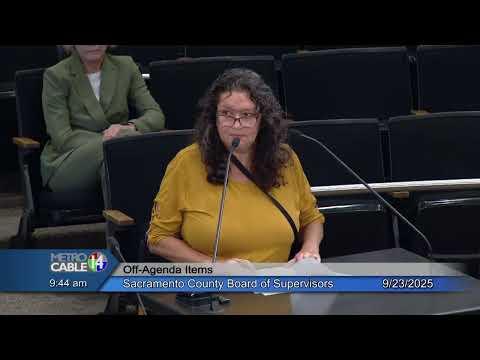
Public speakers were sharply divided. Members of advocacy groups urged the board to deny authorization, arguing the department could not demonstrate necessity or cost-effectiveness as AB 481 requires, highlighted disproportionately high deployment rates in Black and Brown communities, and questioned whether mutual-aid or neighboring-agency options provide reasonable alternatives. Speakers cited data and alleged failures or high non-deployment rates in some use categories. Other speakers, including business leaders and community representatives, supported the sheriff, saying the equipment protects officers and citizens and is necessary for high-risk situations.
Supervisors discussed compliance with AB 481 and requested follow-ups on public-records queries and ordinance text. Supervisor Hume said he would move the resolution; he characterized the purchases as undesirable but necessary and asked county staff to brief him after the meeting on compliance questions. County counsel confirmed the presentation and public hearing satisfy statutory requirements; staff and the sheriff said actual purchases would require subsequent board budget actions. The board approved the authorization vote unanimously with all present supervisors voting yes and one absent member.
The authorization permits the sheriff to pursue procurement planning and to request future appropriations and purchase approvals consistent with board policy and state law; specific purchase orders will return to the board for appropriation and contract authority.