Get AI Briefings, Transcripts & Alerts on Local & National Government Meetings — Forever.
Douglas County public health outlines 0 Suicide rollout, flags rising local suicide counts
Loading...
Summary
Lawrence–Douglas County Public Health presented data showing a rise in suicides and described countywide steps — including a new suicide fatality review board, training, and the 0 Suicide framework — to improve prevention and post-crisis care.
Lawrence–Douglas County Public Health presented county suicide data and an update on local implementation of the 0 Suicide framework at a Douglas County Board of County Commissioners work session on Wednesday, Sept. 24. Presenters described higher recent suicide counts in Douglas County, plans for a local Suicide Fatality Review Board and expanded training and data-sharing to improve prevention and continuity of care.
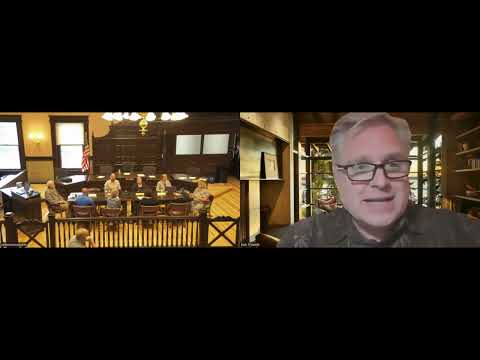
The presentation, delivered by a public-health team led by Bob Trianski, director of behavioral health for Douglas County, and by public-health staff including Jonathan Smith, Dee Kynard and Sarah Landry, emphasized that the work session was informational only; no formal actions or votes were taken. Trianski said the county has set a target in its Community Health Improvement Plan to reduce the age-adjusted suicide mortality rate from 14.3 per 100,000 to 12.8 by 2029.
Why this matters: Douglas County has seen increases in suicide over recent years, presenters said, and local data show patterns distinct from national averages — including high rates among middle-age adults and a continued predominance of firearms in suicide deaths among males and older adults. Public-health staff said these patterns, together with national evidence that many people who die by suicide interacted with health care in the year before their death, create opportunities to improve early identification, safety planning and follow-up.
Local data and trends
Trianski described baseline emergency-department and crisis-system figures from earlier work: “In 2018 there were about 40,000 visits to the emergency department at LMH … about 4,200 — about 10 percent of them — were going into the emergency department in the midst of a behavioral health crisis,” he said. He said roughly 1,100 of those visits involved suicidal ideation or an attempt and that 319 recorded suicide attempts in the ED in 2018.
Dee Kynard, informatics manager at Lawrence–Douglas County Public Health, reviewed death-certificate and ESSENCE emergency-department data. Kynard said county suicide counts in recent reporting periods rose: “In 2019 to 2023 … we had 90 suicides. That translates to about 18 suicides a year. And then if we look just at 2023, we had 25 suicides, the highest number of suicides we've ever had in Douglas County before,” she said. Kynard noted the health department is using coroner reports and other sources to add context to the death-certificate data and to support the newly established Suicide Fatality Review Board.
Presenters provided demographic detail the department has identified in the available data: people ages 25–54 account for a disproportionate share of suicides (56 percent while representing roughly 40 percent of the population), about 89 percent of suicides in the reviewed period were among people who are white non-Hispanic, and males accounted for roughly 78 percent of deaths. Among males who died by suicide, presenters said, firearms were the most common external cause (about 57 percent); among people aged 65 and older, firearms accounted for about 71 percent of suicides.
Attempts treated in emergency departments show a different pattern: females accounted for about 62 percent of ED visits for suicide attempts, presenters said, and poisoning and cutting were commonly recorded mechanisms in those visits. Kynard and Landry flagged coding limitations in ED data, including cases coded as “unspecified” that reduce clarity about method.
What the county is doing
Sarah Landry, the county 0 Suicide coordinator, outlined the framework and local implementation steps. She described the 0 Suicide model’s core elements — routine screening for suicide risk, collaborative safety planning with attention to lethal means reduction, and direct treatment plus post-discharge follow-up — and cited national examples of impact presented in a video from the Zero Suicide Institute shown during the session.
Landry summarized recent local work: convening county partners (including LMH, Heartland Community Health Center, Heartland RADAC, DECA and other agencies), sending a core team to a Zero Suicide Academy, participating in a state community-of-practice grant, hosting a site visit by Zero Suicide Institute experts, and providing QPR (Question—Persuade—Refer) and counseling-on-access-to-lethal-means training to staff and peer fellows. She said the health department’s goal is to support a countywide quality-improvement approach so partners can standardize screening, share a common risk language and improve care transitions.
A new Suicide Fatality Review Board, started with a mock review in September, will examine recent deaths with consent from next of kin and aim to identify practical community interventions. Jonathan Smith described how fatality reviews elsewhere prompted interventions outside health care — for example, by identifying the humane society as a point of contact in some past cases — and said the Douglas County board will include health providers, law enforcement and community partners.
Discussion and questions
Commissioners asked about data sources (Kynard said the health department uses KDHE death-certificate data and ESSENCE ED data and is working with coroner scene reports), limitations on demographic breakdowns because of confidentiality and federal privacy rules (42 CFR Part 2), and whether the county will track social-media influences. Landry said a credible data source would be needed to study social media and that it is an item for further research.
Commissioner Anderson and others also asked whether the county could expand training to a wider set of community organizations; presenters said mental-health-first-aid and QPR modules already exist and the health department and partners can provide trainings to nonclinical groups.
No formal actions; next steps
The work session was informational. No motion or vote occurred. Presenters said next steps include the first formal fatality review in October, continued partner training and quality-improvement work to standardize screening and strengthen transitions of care.
Ending
Presenters urged continued collaboration among health care, schools, community agencies and emergency responders and asked commissioners to view the effort as a long-term, data-driven quality-improvement process. “Suicide is preventable,” Trianski said in his closing emphasis, “and we should be aiming for 0 suicides because 1 suicide in a community of our size is 1 too many.”