Get Full Government Meeting Transcripts, Videos, & Alerts Forever!
Get email alerts on the District Finance topic
No spam. Unsubscribe anytime.
Santa Cruz Valley Unified board approves FY2025 annual financial report, hears details on reserves and school projects
Summary
At its Sept. 23 meeting the Santa Cruz Valley Unified School District No. 35 Governing Board approved the district's Fiscal Year 2025 annual financial report and heard briefings on carryovers, capital projects, federal grant drawdowns and a Saturday school fee later approved on the consent agenda.
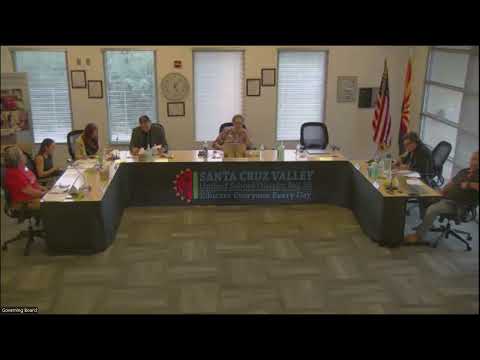
RIO RICO, Ariz. ' The Santa Cruz Valley Unified School District No. 35 Governing Board on Sept. 23 approved the district's Fiscal Year 2025 annual financial report after a presentation from district finance staff and a question-and-answer period with board members.
The report showed the district's operating (M&O) revenue "we came in at $30,000,000," district finance staff said during the presentation, with operating expenditures of about $27.5 million, a roughly 10% increase from the prior year. Board members were told the district maintains a multi-million-dollar contingency and is closing out one-time federal COVID funds.
The annual financial report summarises the district's revenues and spending for the year ended June 30 and covers the operating fund, capital fund (district additional assistance), classroom site fund / Proposition 301 allocations, federal grants and food service operations.
Why it matters: board members used the report to probe reserves, how one-time federal ESSER (COVID-relief) funds were used, and the status of capital projects funded through the School Facilities Program and bond receipts. The presentation and discussion clarified that ESSER funds are exhausted, some positions were temporarily paid from ESSER and later shifted back to M&O, and that the district has carried over capital funds and contingency dollars to address future needs.
Key details from the presentation
- Operating (M&O) revenues totaled roughly $30 million; the district reported a net decline in revenues of about 1% year over year, attributed to a loss of roughly 33 students.
- Operating expenditures were reported at about $27.5 million (a 10% increase). Staff said 45% of operating spending (' about $12.4 million) went to general instruction and instructional support; 17% (' about $4.6 million) to maintenance and security; 15% to special education and CTE; 12% to school and central administration; 7% to transportation; and 3% to athletics and band.
- By type, M&O spending was about 75% salaries and benefits, 19% purchased services (including high-cost contracted student services), and 6% supplies.
- Capital fund (district additional assistance) revenues were a little over $1 million; capital expenditures totaled about $2.3 million (a reported 43% increase year over year). The district said the capital spending included two vehicle purchases (one yellow bus and one white bus) and curriculum, construction and technology outlays.
- Classroom Site Fund / Proposition 301: staff reported base pay amounts tied to the program and noted a shift toward placing a larger portion of funds into base pay rather than exclusively as an end-of-year performance payout. The presentation listed a base amount of about $12,215.50 and an additional performance component of roughly $3,917 for those who met performance criteria. Staff explained Prop. 301 requires a performance component but that recent statutory changes removed a state-mandated split, allowing districts more local discretion in allocating base vs. performance pay.
- Federal grants: the district reported total federal revenue of about $3.3 million in the year, with final federal COVID/ESSER reimbursements largely spent. Staff said a small prior-year reimbursement of $97,815 was recorded and that, overall, ESSER funds are now expended.
- Bond receipts and School Facilities Program (SFP): the district reported bond-funded expenditures of $843,006 last year and a current bond balance of $534,001.61. On SFP projects, staff said Rio Rico High School received an SFP award for an expansion (total award cited as about $10.8 million) and that, in the prior fiscal year, the district spent roughly $1.3 million of that award to add approximately 26,000-27,000 square feet and capacity for about 200 additional students. Building renewal grant awards of about $1.2 million were used to renovate boys' locker rooms and replace HVAC equipment; the district is replacing a main electrical breaker and expects completion in the fall.
- Calabasas school weatherization and drainage: staff said the Calabasas weatherization project has been approved but repeatedly pushed back by the state School Facilities Board's prioritization process. The district said it expects an award letter in October but cautioned that the project requires drainage work to prevent recurring flooding before weatherization is completed. Staff noted prior spending on mitigation and said the district has pursued the project for several years.
- Food service: the food-service operation operates 12 months (including a summer feeding program using a food truck). Staff reported a beginning fund balance of about $1.2 million, revenues near $2.4 million, expenditures near $2.6 million, and total meals served of more than 180,000 breakfasts and over 454,000 lunches.
Board questions and context
Board members asked for explanations of carryovers and why capital expenditures could exceed current-year additional assistance revenue (staff explained carryover balances and prior-year reserves). One member asked about long-term maintenance for a planned aquatic center; staff said maintenance funding is largely part of the district's voter-approved override and that the district is exploring partnerships and contingency funds (the county contributed about $60,000 for summer help in one cited year).
Several board members praised the district's conservative approach to ESSER and one-time funds, noting that the district used temporary funds for experimental positions where appropriate and planned to continue only those initiatives that proved sustainable.
Actions and votes at the meeting (at a glance)
- Fiscal Year 2025 annual financial report: motion to approve the FY2025 annual financial report as presented; motion moved and seconded on the record and passed by voice vote. (Formal mover/second not recorded in the transcript; outcome: approved.)
- Consent agenda: the board approved the consent agenda with the removal of item No. 7 for separate consideration. (Motion and voice vote; outcome: approved.)
- Consent item No. 7 (Saturday school fee / half-credit): after separate discussion, the board moved and seconded approval of item No. 7 (a $75 fee for a half-credit Saturday school offering) and approved it by voice vote. Staff described Saturday school as a four-hour morning program (typically 8 a.m.-noon) that commonly takes students about four to six weeks to earn a half credit; the fee helps sustain supervision and instruction outside regular hours. (Outcome: approved.)
Quotes
- Celeste (district finance staff), presenting the report: "We came in at $30,000,000" when describing M&O revenue and later, when asked about reserves, "We have $7,000,000 in contingency."
- On Proposition 301 and pay structure, staff said the district redirected portions of the program toward base pay in response to statutory changes and local requests from teachers.
What happens next
Board members discussed upcoming agenda items and meetings: the next regular board meeting is scheduled for Oct. 7, and an executive session on the school emergency response review is planned for Oct. 20. Staff said the information in the AFR is used by the Auditor General for comparative reports the board will receive when available.
Ending
The annual financial report was approved by the board and becomes the official FY2025 financial summary for the district; board members indicated they would continue to present and discuss capital project timelines (including the Calabasas weatherization) and the use of contingency funds at upcoming meetings.