Get Full Government Meeting Transcripts, Videos, & Alerts Forever!
Get email alerts on the Post Conviction Counsel Appointment topic
No spam. Unsubscribe anytime.
Utah Court of Appeals hears argument in Washington v. State over post-conviction counsel, competency and pleading rules
Summary
The Utah Court of Appeals heard oral argument in Washington v. State about whether the district court erred by failing to consider a pro se post‑conviction claim and whether it should have applied statutory appointment factors before denying counsel. The panel took the case under advisement and will issue a written opinion.
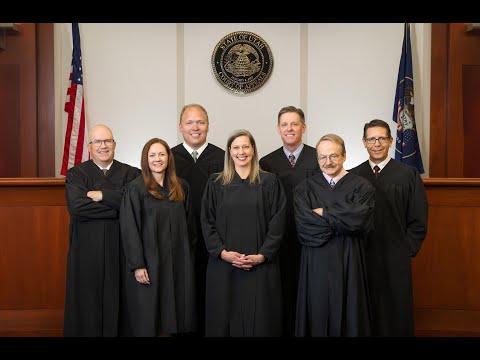
The Utah Court of Appeals on a panel heard oral argument in Washington v. State over whether a district court improperly dismissed a pro se post‑conviction petition and whether it should have applied statutory factors before denying appointment of counsel.
Appellant counsel Benjamin Miller argued the district court committed three errors that together require reversal: it did not treat the pro se filings with the deference courts must afford unrepresented litigants, it failed to read filings “as a whole to promote justice,” and it declined to apply the appointment‑of‑counsel factors in the post‑conviction statute. "Reversal is required here due to 3 mistakes by the post conviction court," Miller told the panel, adding that the case’s competency concerns made the procedural errors particularly consequential.
The issues at the core of the argument were (1) whether an argument Miller said was included in a memorandum in support of the petition—though not enumerated in the form petition itself—was properly raised for decision, and (2) whether the district court abused its discretion by not engaging the discretionary appointment factors in Utah’s post‑conviction scheme (cited in argument as 78B‑9‑109 / related rule text) before denying counsel.
Why it matters: the panel’s decision could affect how district courts treat pro se petitioners who submit longer memoranda alongside a short form petition and how strictly they must show on the record that they considered discretionary statutory factors before denying appointed counsel. Appellate guidance would also shape how courts reconcile older and more recent Utah precedent on “[may]” clauses and judicial discretion.
What counsel said Benjamin Miller, attorney for appellant Terry Washington, told the court Washington was "incarcerated, indigent, and unrepresented" and that the district court should have engaged with a competency claim and with the statutory counsel‑appointment factors. Miller argued the memorandum in support—filed with the form petition—contained additional claim material filed contemporaneously and that the court had an obligation to read the filings together. "Because as the court said in McNair, you review filings as a whole and the court had a responsibility to read everything he filed," Miller said.
Tanner Hafen, for the State, urged the court to affirm the district court’s rulings. Hafen argued the petitioner presented his claims in a manner that clearly enumerated three grounds in the form and that the memorandum’s additional paragraph was not presented as a separate, properly pleaded post‑conviction ground. He told the panel that courts must be able to rely on orderly presentation of claims: "It's not the job of opposing counsel or the court to make or interpret arguments in a way that was not made by a pro se petitioner," Hafen said.
Panel questioning and cited precedent Judges pressed both sides on practical and doctrinal limits. Panelists probed whether an appellate court should remand for the district court to apply the discretionary appointment factors or decide the appointment question itself when the record is developed. Several judges raised the statutory wording point that the appointment factors are phrased as things the court "may" consider and asked how to craft an opinion that does not convert every "may" in court rules or statutes into a mandatory obligation.
Both sides grounded their arguments in Utah case law cited during argument: McNair and Twitchell were discussed repeatedly (the parties also referenced Sanchez, Winfield, Allen v. Friel, Churchill, Zamora, and other authorities). Miller relied on McNair to argue filings must be read together to promote justice; the State pointed to cases emphasizing orderly pleading and limits to pro se indulgences. The parties disputed whether Twitchell (and related parental‑rights precedent) requires district courts to state express awareness of discretionary factors when those factors might affect a decision.
Competency and appellate‑record issues Miller emphasized a competency issue he said the post‑conviction court had not addressed and argued that the competency question and Washington’s repeated requests for counsel made the appointment‑of‑counsel analysis more urgent. The panel noted the underlying direct‑appeal record lacked certain transcripts, and judges and counsel discussed whether appellate counsel’s failure to secure those transcripts had itself been preserved or appropriately presented as a distinct ineffective‑assistance claim.
Court action and next steps After argument, the panel said it would take the case under advisement and issue a written opinion. The court did not announce any disposition from the bench. The panel paused for a brief recess and scheduled a second argument to begin at 11:30 a.m.
The argument record will form the basis of the appeals court’s forthcoming opinion clarifying when district courts must show consideration of discretionary appointment factors and how pro se memorandum material should be treated when not enumerated in a form petition.