Get Full Government Meeting Transcripts, Videos, & Alerts Forever!
Get email alerts on the Pharmacy Closures topic
No spam. Unsubscribe anytime.
Jacksonville leaders seek short- and long-term fixes after Walgreens closures create pharmacy gaps
Summary
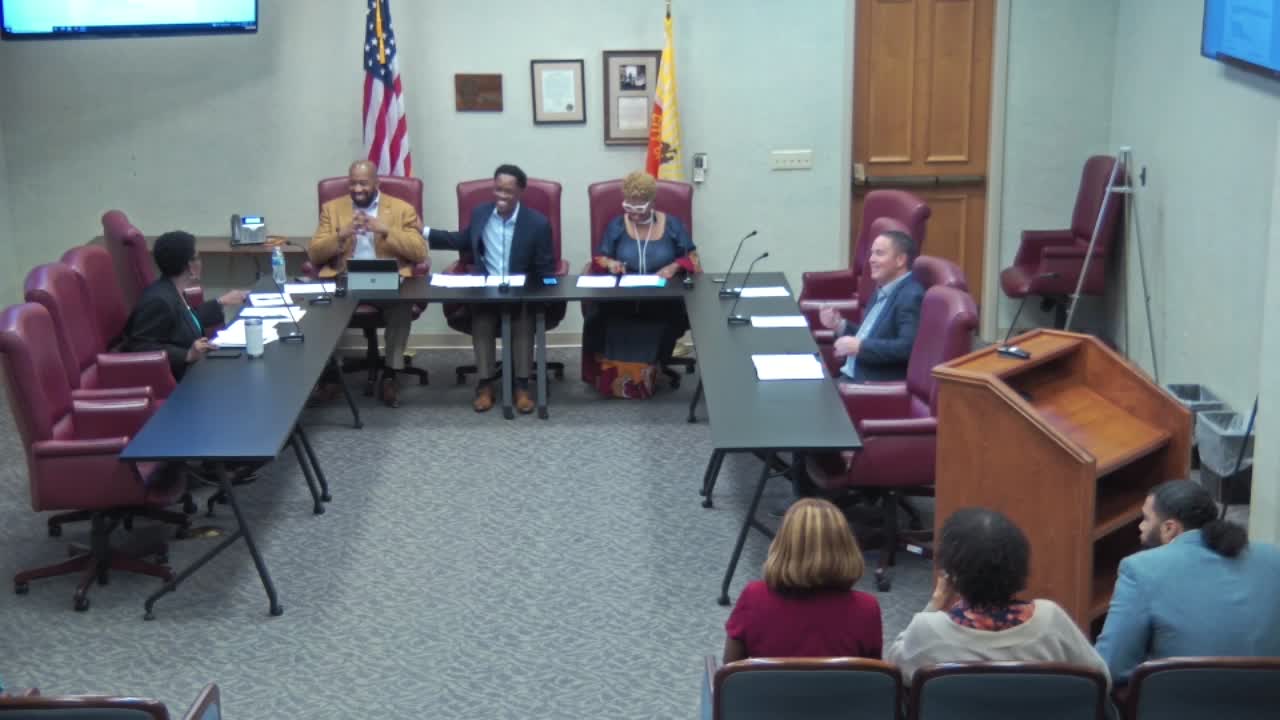
City council members, mayoral staff and residents met to examine recent Walgreens store closures in northwest Jacksonville, review data on local pharmacy access and set follow-up steps including outreach to Walgreens, neighborhood mapping and exploring alternative delivery or local pharmacy incentives.
Jacksonville council members, city health staff and residents met to discuss recent Walgreens store closures that council members said have worsened pharmacy access in parts of the city and could threaten medicine availability for seniors and people with chronic conditions.
Councilman Reginald Gaffney Jr., who convened the meeting, said he had received an “abundance of calls” after a Walgreens in his District 8 closed and that the company had announced plans for more nationwide closures. “My biggest fear is that if the city of Jacksonville don't get in front of this, we could kind of create a travesty,” Gaffney said.
The meeting focused on how closures affect neighborhoods already lacking health resources and on immediate steps the city can take while longer-term solutions are developed. Parvez Ahmed, chief of analytics in the mayor’s office, reviewed data showing life-expectancy and health-care access metrics by council district and said closures will have a greater adverse impact in districts with fewer resources. “If you look at that data, you will see that all of the indicators that determine our health and our well-being… District 8, District 10 have the fewest resources,” Ahmed said.
Speakers described immediate problems at nearby stores that have absorbed demand. Residents and council members reported longer lines, slower prescription fulfillment and shortages of some medicines after nearby Walgreens locations closed. Councilwoman Jacoby Pittman said some stores that remained open are now “overcrowded” and cited examples where wait times and inventory shortages affected people’s ability to pick up medication.
City staff and council members discussed types of data and contacts that could clarify the scale of the problem. Ahmed said the city lacks a single comprehensive list of pharmacies by neighborhood but can perform geospatial mapping to estimate how many residents live within given distances of a closed store. Lynn Sherman, executive director of health programs in the mayor’s office, suggested hospitals’ electronic records could identify where discharged patients or clinic patients have their prescriptions sent; she noted that “all of our hospitals… use Epic as their platform.”
Ed Randolph of the Office of Economic Development said Walgreens had provided a local consultant’s list of stores at risk and that the company’s consultants cited a wide variety of store-level reasons for potential closures, including “shrinkage” (losses from theft), prescription-bidding changes and lease arrangements with landlords. “They gave me an example of… a $10,000 grant helped put a new sign up,” Randolph said, describing one past intervention in another state, but he added that each store’s economics are different and Walgreens had not yet provided store-by-store dollar figures for what it would take to keep specific locations open.
Participants discussed possible interim measures: 1) request prescription- and foot-traffic figures from Walgreens or the company’s consultant for the closed stores; 2) use geospatial analysis and health-system data to estimate how many residents are affected; 3) explore partnerships with transportation providers or delivery services to get medications to homebound residents; and 4) consider incentives or program adaptations that could support smaller independent pharmacies or expand the city’s existing food-desert program to include pharmacy access. Council members asked Randolph to press Walgreens for detailed reasons and specific financial information about the stores at risk.
Public commenters framed the closures as a public-health concern and urged the city not to offer incentives to large chains without protecting neighborhoods. Richard Cuff cautioned against giving tax breaks to national chains that have faced large fines, and Reverend Kenneth Solomon Badger said some residents need life-saving medication and that forcing people to travel farther could create added risk. Several speakers urged the city to include independent “mom-and-pop” pharmacies and mobile or delivery options in any response.
The meeting concluded with follow-up tasks: the mayor’s analytics office will map affected neighborhoods and seek prescription-traffic estimates; economic development staff will press Walgreens for store-level information and discuss what the city can offer; city staff will contact health-care systems for prescription-origin data; and council members will schedule a follow-up meeting and invite a Walgreens regional representative and a pharmacist.
No formal motions or votes were taken at the meeting; participants framed the session as a data-gathering and planning discussion intended to produce specific next steps.
For now, residents in impacted neighborhoods will rely on remaining pharmacies and on interim measures the city may arrange while staff pursue additional data and meet with Walgreens representatives.