Lifetime Citizen Portal Access — AI Briefings, Alerts & Unlimited Follows
Division of Training project hits budget strain; permits and planning milestones set
Loading...
Summary
Assistant Deputy Chief Gareth Miller reported the division of training project has completed 50% construction documents, expects construction start in November for foundation work, but cost estimates exceed the design budget with electrical costs a primary driver.
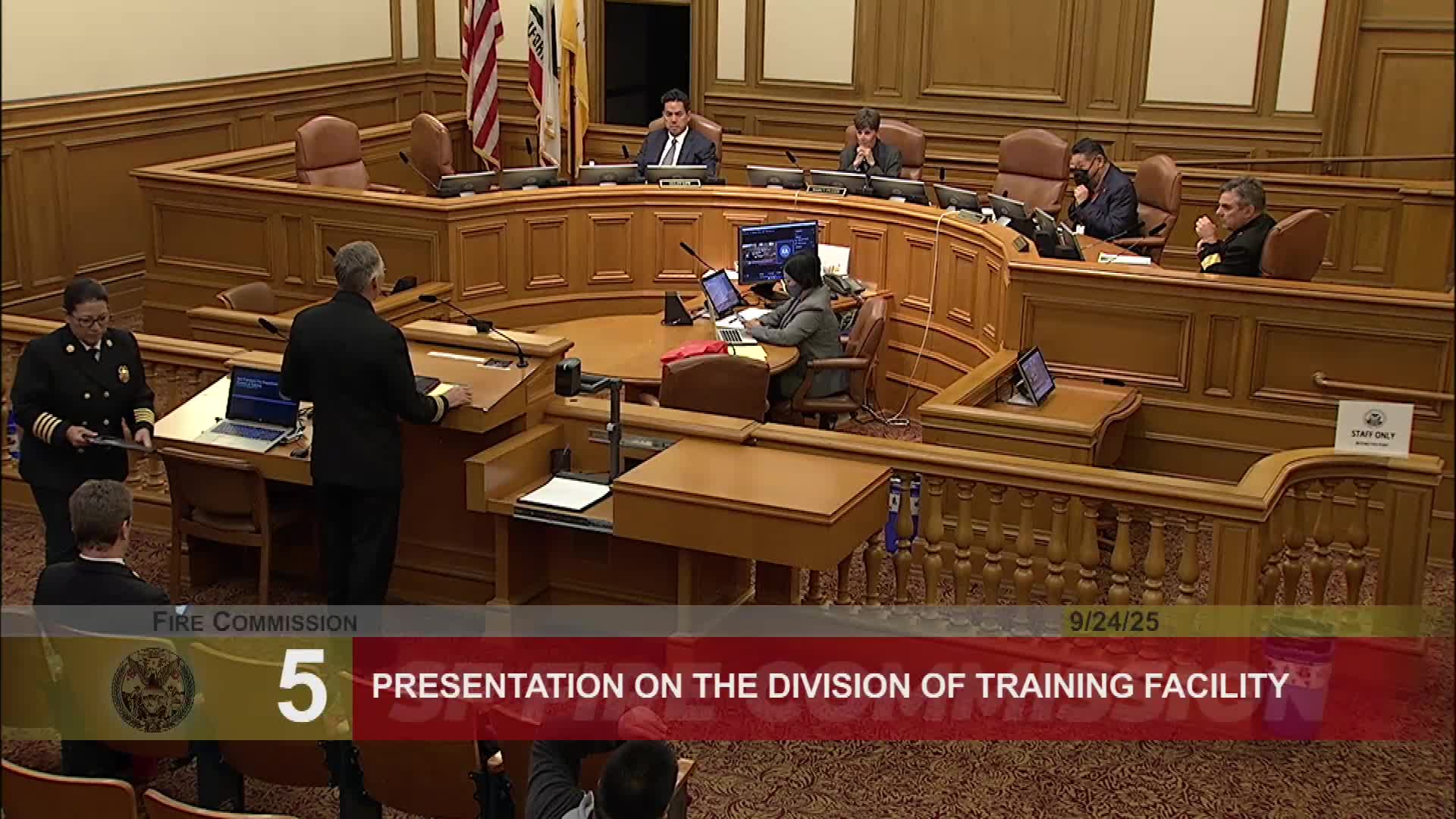
Assistant Deputy Chief Gareth Miller updated the Fire Commission on Sept. 24 about progress and budget pressures for the Division of Training facility.
Miller said 50% construction documents are complete, 75% documents were due Oct. 8 and the project’s 95% documents are scheduled next. He said the construction manager–general contractor (CM‑GC) has solicited bids for several trade packages and that an estimated, limited construction start for deep‑pile testing could begin in November, with substantial completion targeted for 2028.
The project is part of the EASER 2020 capital measure. Miller said the Fire Department’s component of the EASER funding was $275 million, split into land-acquisition, project controls and construction line items: roughly $39 million for land, $54.9 million for project controls and $176.9 million for construction. Actual spending to date, excluding land, was about $17 million.
Independent cost estimates from three sources (the department’s estimator, the executive architect’s estimator and the CM‑GC estimator) showed variance; Miller said the estimates are being reconciled and that as trade contracts are awarded, actual bid amounts will replace estimates. The single greatest current cost pressure identified was electrical components, he said, and the project team is pursuing value‑engineering options while trying to preserve the project’s programmatic goals.
On entitlements, Miller said a CEQA addendum was completed in June, the Department of Building Inspection was reviewing site, demolition and grading permits, the Regional Water Board accepted the proposed work plan, and a memorandum of understanding with the Public Utilities Commission was in final review. Miller said the planning commission hearing was scheduled for Oct. 16.
Miller also briefed commissioners on the city’s art enrichment requirement (2% of construction budget). The project received 159 artist applications; an artist‑qualification panel will narrow the pool before an artist review panel selects finalists. Miller will represent the Fire Department on the panel.
Commissioners asked whether schedule slips were likely, whether the team should wait for 100% documents for hard bids, and where the budget overruns are concentrated. Miller replied he did not expect entitlement dates to slip but that continued estimating at intermediate design stages helps surface problems early; he identified electrical costs as the single largest current pressure.